
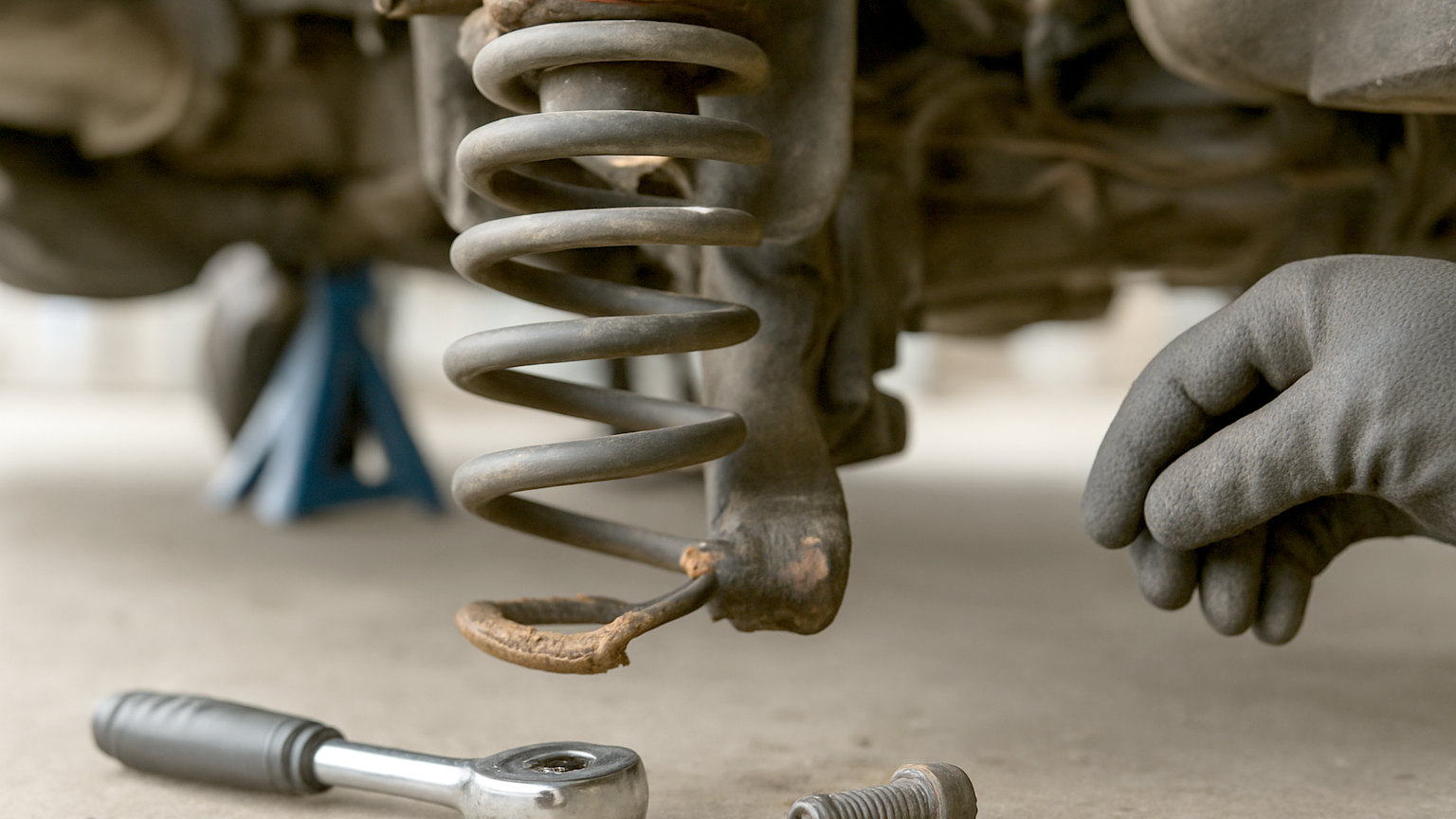
Suspension and steering together account for a large share of MOT failures, and they surprise owners more than most categories because the car frequently drives perfectly well. The test is assessing condition and security rather than how the vehicle feels, so components with wear that the driver has adapted to over months are found and recorded in a few minutes on a lift.
How is suspension actually tested?
The car is raised and each corner examined with the suspension both hanging and loaded, using a pry bar to reveal play in joints and bushes. Dampers are inspected for leaks and security. Springs are examined for breaks and corrosion. Mounting points on the body are checked for corrosion within a prescribed distance of any load bearing attachment.
Which components are failure items?
A broken or badly corroded spring. A damper that is leaking, missing, broken or insecure. Excessive play in ball joints, bushes or mountings. A damaged or missing joint boot allowing contamination. Insecure or corroded suspension mountings on the shell. Anti roll bar links or bushes with excessive play. Any component that has been repaired in a way not permitted, such as a welded spring.
Why is a leaking damper a failure?
Because a damper that has lost its oil is no longer controlling the spring, which affects braking stability and roadholding. The test looks for oil on the body indicating a seal has failed, which is a clear and objective observation. A damper that is simply worn but not leaking will generally pass, since there is no roadside test of damping efficiency.
What about corrosion?
This is where older cars are most vulnerable. Corrosion within a prescribed distance of a suspension mounting point, if it has weakened the structure, is a failure and can be an expensive one since it means welding rather than replacing a component. Subframe corrosion falls into the same category. It is worth inspecting these areas on any car more than about ten years old.
Are torn boots really a failure?
Yes, and it catches people out. A split gaiter on a ball joint or track rod end means the grease has gone and contamination is entering, so the joint is deteriorating whether or not play has developed. It is treated as a defect in its own right. The advantage is that catching it early means replacing a boot or joint rather than dealing with the consequences.
How can you check before the test?
With the car safely raised, rock each wheel at twelve and six o clock for ball joints and bearings, and at three and nine for steering joints. Inspect every rubber boot for splits. Look at the dampers for oil. Turn the steering to full lock and inspect the bottom coils of the front springs. Look for corrosion around mounting points. That covers most of what a tester will find.
Should advisories be acted on?
On suspension, yes. An advisory means wear was found that has not quite reached the failure threshold, and on components that wear continuously it will reach it well before the next test. Acting early is also cheaper, since a worn bush left in place ruins tyres and can damage adjacent components.
Is a bounce test part of the MOT?
No, and this is worth knowing. There is no measurement of damping efficiency in the test, so a car can pass with all four dampers substantially degraded provided none is leaking or broken. That is precisely why an MOT pass should not be taken as confirmation that the suspension is in good condition, and why a separate damper test is worth requesting on a higher mileage car.
What should follow a repair?
A four wheel alignment, since replacing arms, bushes, springs or struts changes the geometry. It should be part of the quote rather than an afterthought, and asking for the printout confirms what was actually measured. Driving away on incorrect alignment after suspension work destroys tyres quickly and undoes much of the benefit.


