
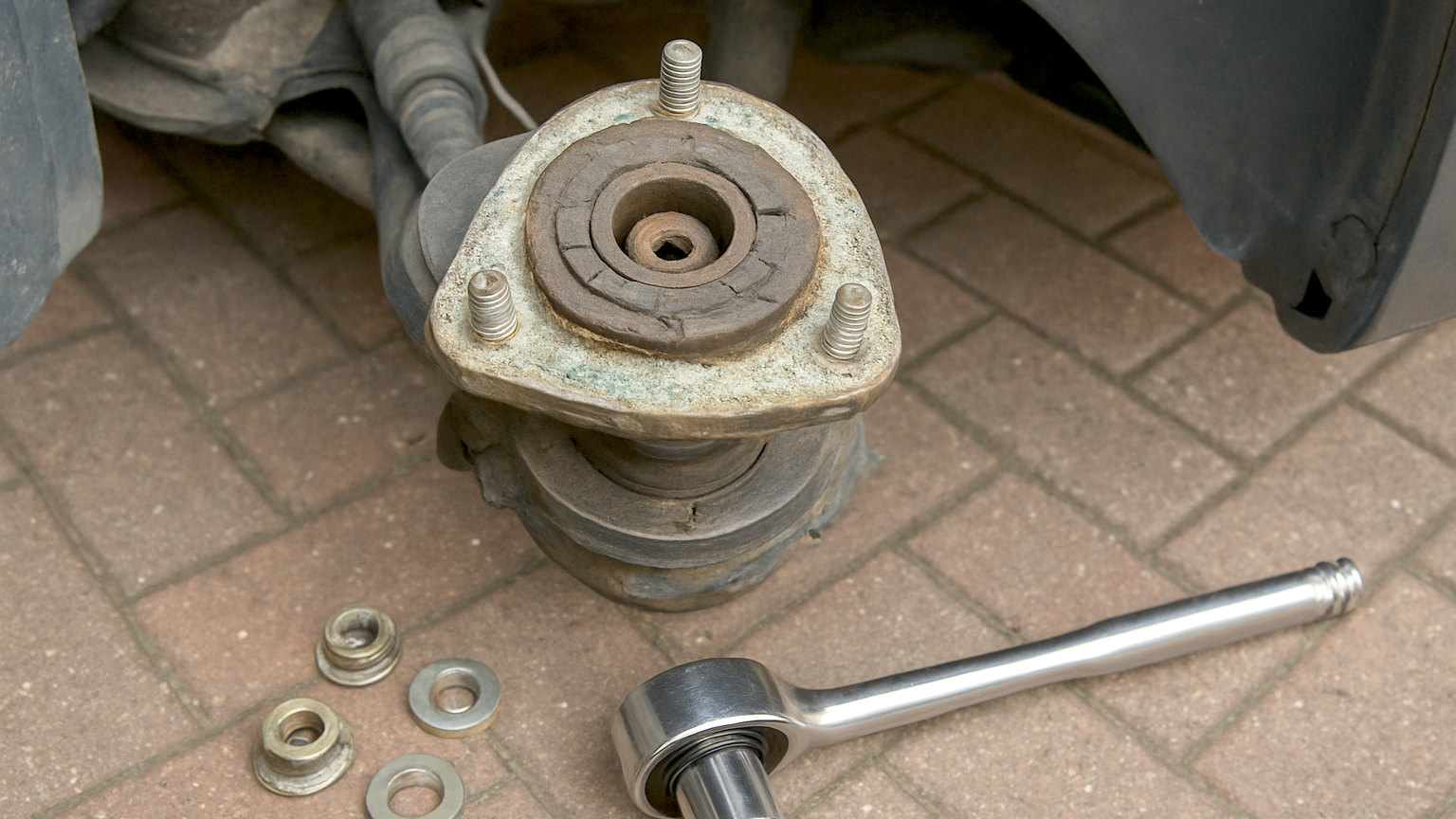
The strut top mount is the connection between the top of the suspension strut and the body of the car, and it does more than simply bolt the two together. It carries the entire vertical load of that corner into the shell, it isolates road noise and vibration through a rubber element, and at the front it includes a bearing allowing the whole strut to rotate as the wheels are steered.
Why does the front mount need a bearing?
Because on a MacPherson strut design the strut itself turns with the wheel. The spring and damper rotate through the steering arc every time you turn, so the top mount must allow that movement while still carrying the load. That bearing is the component that most often fails, and its failure produces noise that is directly linked to steering rather than to bumps.
What are the symptoms?
A knock, creak or graunching from the top of the wheel arch when turning the wheel, often audible while stationary with the engine running. A clunk over bumps. A gritty or notchy feel through the steering as the bearing binds. Occasionally a bang when the steering is turned through a particular point. The connection to steering input is what identifies it.
How do you test one?
Open the bonnet, place a hand on the top mount where it meets the body, and have someone turn the steering slowly from lock to lock with the car stationary. A failing bearing can usually be felt as a graunching or notchiness through the hand. Bouncing the corner of the car while feeling the mount reveals a worn rubber element as movement or a knock.
Why does the rubber matter?
Because it isolates the shell from road impacts and it also locates the top of the strut. When the rubber perishes, cracks or separates from its metal, the strut can move relative to the body under load, producing knocking and altering the suspension geometry slightly. Water reaching the bearing through failed rubber then accelerates the bearing failure.
Does it affect steering feel?
Considerably. A binding bearing adds friction to the steering, producing the notchiness or self centring reluctance covered elsewhere in this section. A worn one allows the top of the strut to move, which changes camber and caster fractionally under load and makes the car feel less precise. Both are frequently attributed to the steering system rather than the suspension.
What should be replaced alongside?
The bearing and the rubber mount as a kit, since they are usually supplied together. The bump stop and dust boot, which are inexpensive and already exposed. The damper if it has any age on it, since the strut has to be dismantled either way and the labour is nearly all in the removal. On a high mileage car the spring is worth inspecting closely at the same time.
Why does the labour make the decision?
Because replacing a top mount requires the strut to be removed from the car and the spring compressed and released. That is the same work as replacing a damper or a spring. Doing all three together costs a modest amount more in parts and saves an entire second labour charge, which is why workshops recommend it and why the recommendation is usually sound rather than opportunistic.
Is spring compression the risky part?
Yes. A compressed coil spring stores enough energy to cause severe injury if a compressor slips, and cheap compressors are a real hazard. This is one of the jobs where the argument for a workshop with proper equipment is strong regardless of confidence, and it is worth knowing before deciding to tackle it on a driveway.
Should both sides be done together?
Generally yes. They are the same age, they have done the same work, and replacing one usually means the other follows within a year. Since much of the cost is labour that is partly shared, and since the car will handle asymmetrically with one new mount and one worn, doing the axle in pairs is the sensible approach.


