
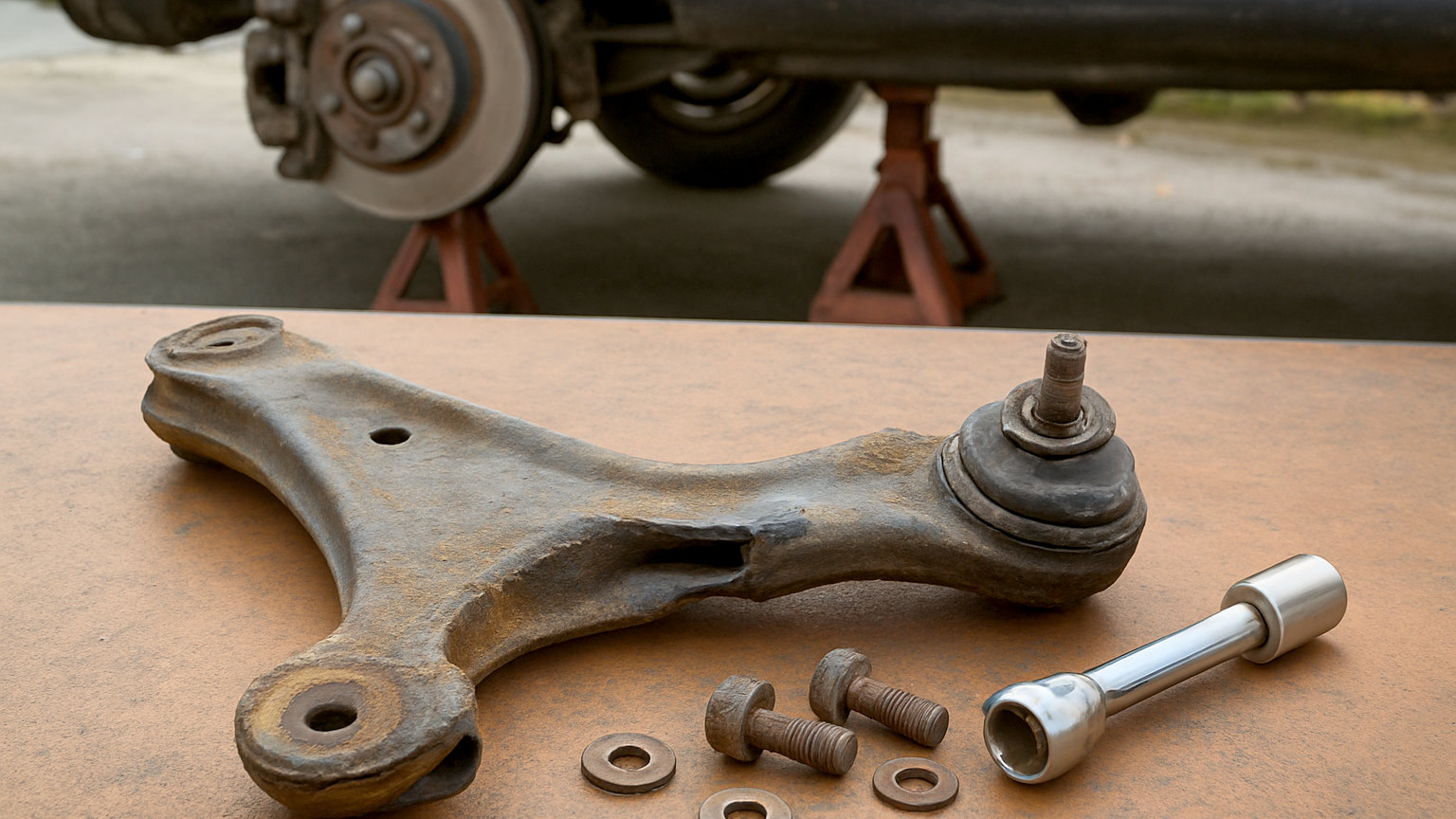
A pothole delivers a sharp, high energy impact into components designed to absorb gradual loads, and the damage it causes is frequently invisible from outside the car. British roads produce a great many of them, and the aftermath of one is among the more common reasons for suspension and wheel repairs. Knowing what to check afterwards, and how quickly, makes a real difference.
What gets damaged first?
Tyres and wheels, since they take the impact directly. A sidewall can be pinched between the rim and the pothole edge, producing internal damage that shows as a bulge in the sidewall days or weeks later. Alloy wheels buckle or crack at the rim, often in a way that is only visible from the inside face. Both are safety critical and both can be missed on a casual look.
What is a sidewall bulge?
A swelling on the side of the tyre where the internal casing cords have broken, allowing air pressure to push the rubber outwards. It is a serious defect that can lead to a sudden blowout, and it is an immediate MOT failure. Any bulge means the tyre must be replaced rather than monitored, and it is worth checking both sidewalls including the inner face.
What suspension components suffer?
Dampers can be bent or their seals damaged, leading to a leak that appears later. Springs can crack, particularly ones already weakened by corrosion. Suspension arms can bend, which changes the geometry permanently. Track rod ends and ball joints take a shock load that accelerates existing wear. Bushes can be torn internally without any external sign.
How does alignment come into it?
A significant impact will frequently knock the alignment out even where nothing is bent, and the first sign is often a pull to one side or rapid tyre wear. Because incorrect toe destroys a set of tyres within a few thousand miles, having alignment checked after a heavy pothole strike is worthwhile even when the car seems to drive normally.
What should you check immediately?
Pull over somewhere safe and look at the tyre and wheel on the affected corner, front and rear, including the inner face of the rim where damage frequently hides. Check for a bulge, a cut or a loss of pressure. Then drive gently and note whether the steering pulls, whether the wheel vibrates, or whether there is a new noise.
What symptoms appear later?
A vibration through the steering at speed, suggesting a buckled wheel or a damaged tyre. A pull to one side, suggesting alignment or a bent component. A new knock over bumps, suggesting a damaged joint or bush. Uneven tyre wear appearing over the following weeks. A damper leak that develops as a damaged seal gives way. Any of these following an impact is not coincidence.
Can a buckled wheel be repaired?
Alloy wheels can often be straightened by a specialist, which is considerably cheaper than replacement and perfectly acceptable for a modest buckle. What should not be repaired is a cracked wheel, since welding a structural crack in a wheel is not something to rely on at speed. A reputable specialist will tell you which category yours falls into.
Can you claim for the damage?
Sometimes, from the authority responsible for the road. Claims generally succeed where the authority knew about the defect and failed to repair it within a reasonable period, so evidence matters: photograph the pothole with something for scale, note the exact location, date and time, and keep all repair invoices. Reporting the pothole also helps, both for your claim and for other drivers.
How can damage be minimised?
Correct tyre pressures give the sidewall its best chance of surviving an impact, since an underinflated tyre allows the rim to strike through more easily. Leaving a sensible gap gives you time to see the road surface. If a pothole cannot be avoided, braking before it rather than during it is better, since braking compresses the front suspension and reduces the travel available to absorb the hit.


