
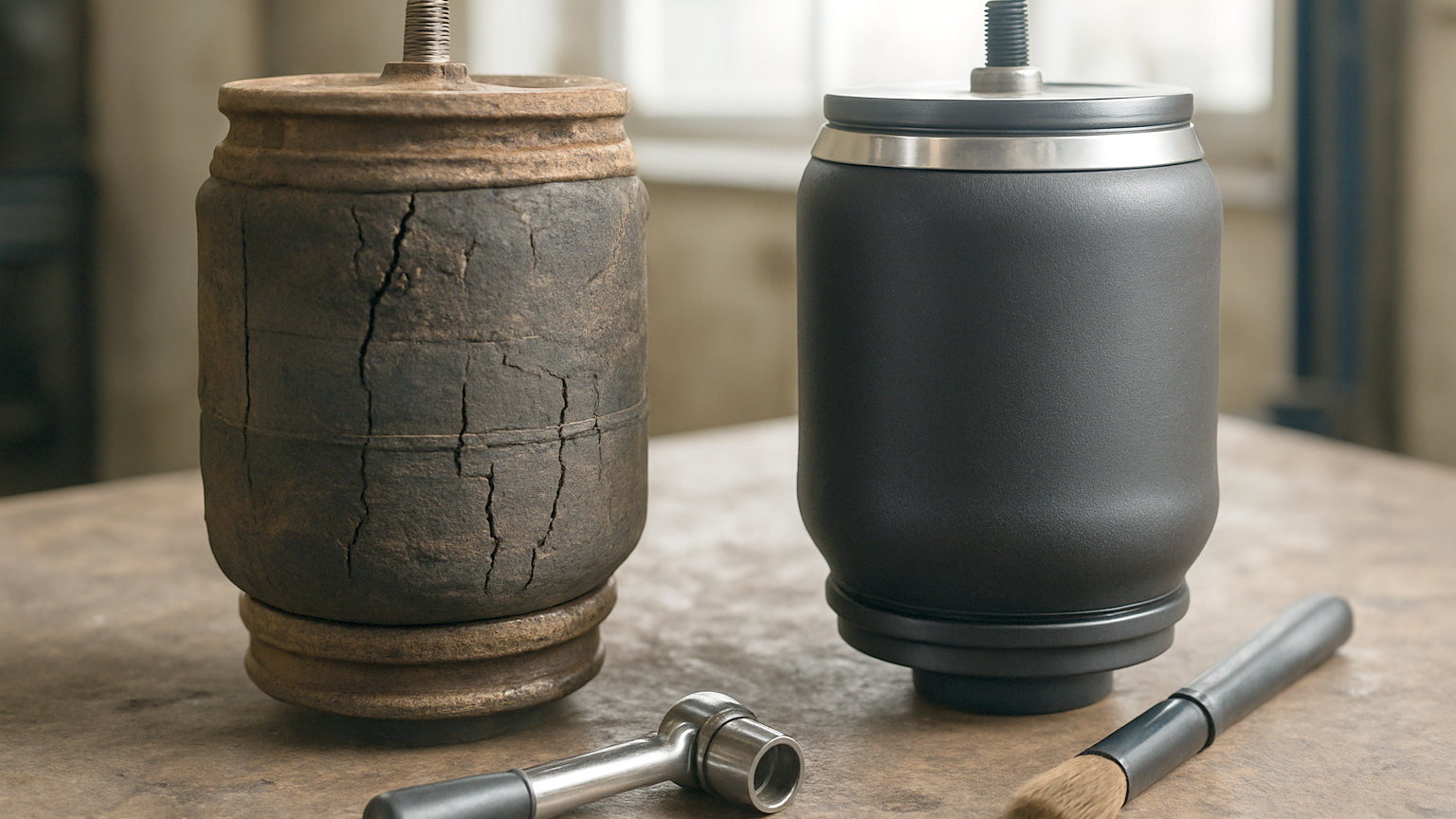
Air suspension replaces conventional steel springs with rubber air springs, inflated and deflated by a compressor under the control of a module reading height sensors at each corner. It gives an excellent ride, allows the car to maintain a constant height regardless of load, and on some vehicles allows the driver to raise or lower the car. It also introduces several failure points that a steel spring simply does not have.
How does the system work?
Height sensors at each wheel report the ride height to a control module. When the car sits low, the module runs the compressor and opens the appropriate valve to inflate that air spring. When it sits high, it vents air. A reservoir on many systems stores pressurised air so that adjustments can be made without running the compressor every time.
What is the most common failure?
A leaking air spring. The rubber bellows flexes constantly, and over years it cracks, perishes or chafes where it folds. Once it leaks, that corner settles overnight and the compressor works harder to compensate during driving. Since the compressor was never designed for continuous running, the leak eventually destroys it too, which is why leaks should be repaired promptly.
What are the symptoms of a leak?
The car sitting low on one corner after standing overnight, then rising when started. A compressor that runs noticeably more often or for longer than it used to. A warning message about suspension. In advanced cases the car sits down completely and refuses to rise, or the system disables itself to protect the compressor.
Why does the compressor fail?
Usually through overwork caused by a leak elsewhere, and sometimes through moisture. Most systems include a desiccant dryer to remove water from the air before it enters the springs, and when that dryer is saturated, moisture gets into the system, corroding valves and freezing in cold weather. Replacing a compressor without fixing the leak that killed it simply repeats the failure.
What else can go wrong?
Height sensors and their linkages, which sit in exposed positions and corrode or break. The valve block, which controls which corner is inflated and can stick or leak internally. Air lines, which chafe or become brittle. And the control module and its wiring. Diagnosis usually requires a tool that can read the system and command individual corners.
Is it safe to drive with a fault?
A car sitting low on one corner has incorrect geometry and altered handling, and if it settles fully the suspension may be resting on its bump stops, which is uncomfortable and hard on components. Many systems limit speed or display a warning when a fault is detected. It is drivable in the short term and it is not something to leave for months.
Is coil conversion a sensible option?
It is a common route on older vehicles where replacing the full system costs more than the car is worth. Conversion kits fit conventional springs and dampers in place of the air units. The trade offs are a firmer ride, the loss of self levelling when loaded, and warning lights unless the module is dealt with. On a car being kept economically it is a pragmatic choice; on a valuable one it usually reduces its worth.
How can leaks be found?
By applying soapy water to the air springs, fittings and lines while the system is pressurised and watching for bubbles. It sounds crude and it is genuinely effective. A workshop can also command the system to hold pressure and monitor the rate of decay, which distinguishes a spring leak from a valve block leaking internally.
What maintenance helps?
Keeping the air springs clean, since accumulated grit accelerates chafing where the rubber folds. Replacing the dryer when the compressor is replaced. Addressing leaks promptly to protect the compressor. And on a car being stored, being aware that the system may settle over weeks, which is normal rather than a fault provided it rises again when started.


