
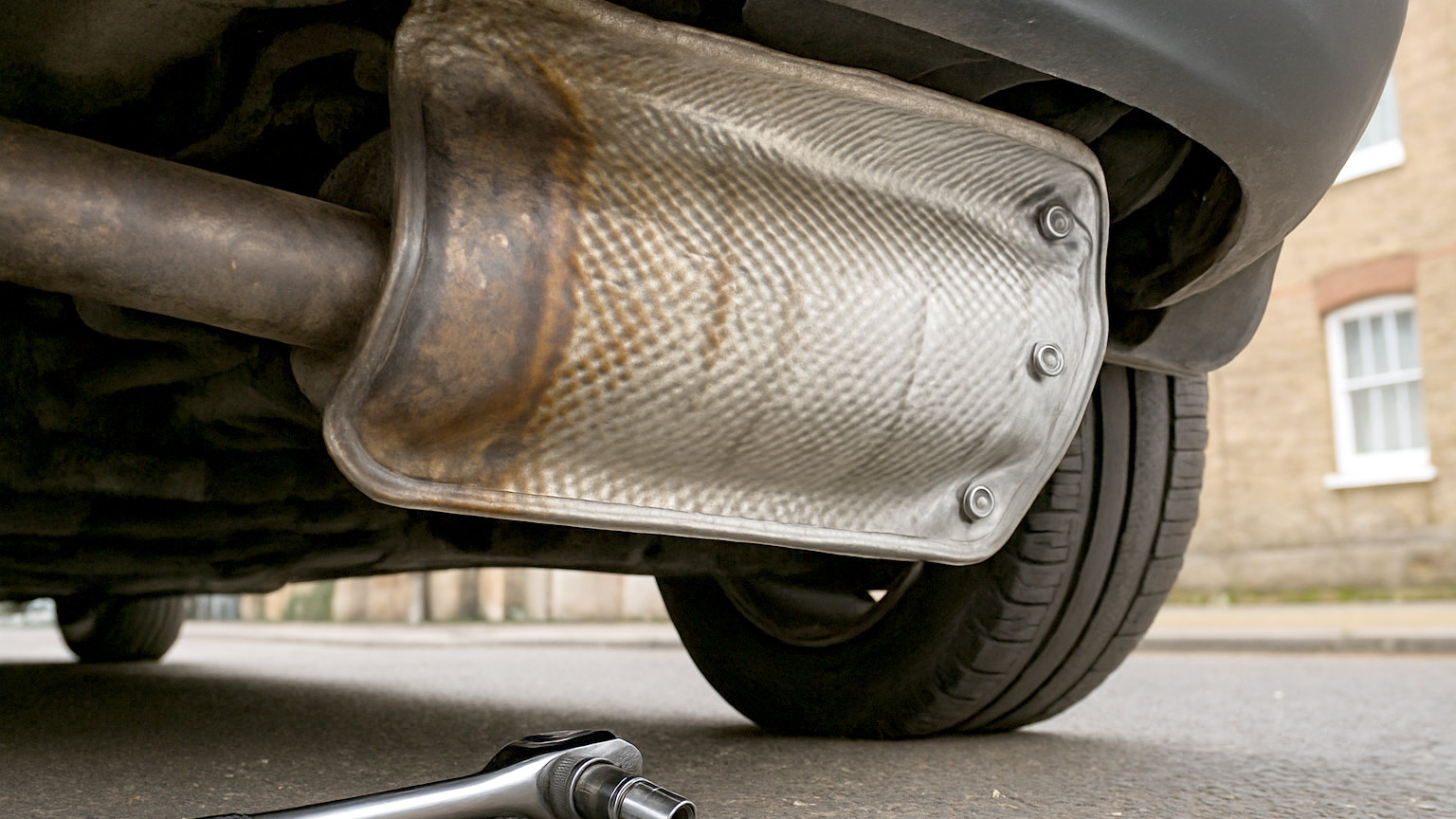
A car that continues making noises for several minutes after being switched off worries a lot of owners, and most of what you hear is entirely normal. Metal contracting, fluids settling and systems running deliberately all produce sounds, and knowing which belong there saves a great deal of unnecessary concern while making the genuinely unusual ones easier to spot.
What is the ticking after a journey?
Metal contracting as it cools, principally the exhaust system. A manifold and downpipe reach several hundred degrees, and as they cool the different metals contract at different rates, producing a distinct irregular ticking or pinging that continues for some minutes. It is entirely normal, it is loudest after a hard drive, and every car does it to some degree.
Why does the cooling fan keep running?
Because temperatures under the bonnet actually rise for several minutes after switch off, since airflow has stopped while the heat has not. Many cars deliberately run the fan after shutdown to protect components from that heat soak, particularly turbocharged cars and those with hot exhaust after treatment systems. A fan running for a few minutes is designed behaviour, though one running for a very long period suggests a temperature sensor or relay fault.
What causes gurgling from the dashboard?
Coolant moving through the heater matrix as circulation stops and the system settles, which sounds exactly like water in a pipe because that is what it is. A small amount is normal. Persistent loud gurgling every time, particularly with a heater that has become less effective, suggests air trapped in the cooling system, which is worth having bled since airlocks cause overheating.
What is the hissing or clicking from the fuel system?
Fuel vapour and pressure equalising. Modern cars seal the fuel tank and manage vapour through a charcoal canister and valves, and those valves click as the system settles. A brief hiss when opening the fuel filler cap is the same system releasing pressure. Both are normal, though a strong smell of petrol alongside is not and deserves investigation.
Why do I hear whirring for a minute or two?
Several systems run after shutdown. Air conditioning may purge condensation. Some cars run a fuel pump briefly. Turbocharged cars may run an electric coolant pump to carry heat away from the bearing housing, which is a genuinely useful function that protects the turbo. Hybrid vehicles run a variety of pumps and fans while managing battery temperature.
Which after shutdown noises are not normal?
Anything that continues indefinitely rather than tapering off. A cooling fan still running after twenty minutes suggests a sensor or relay fault and will flatten the battery. A continuous whirring that does not stop points at a component that has failed to switch off. A hissing accompanied by a sweet smell suggests coolant escaping under pressure, which is a reason to look rather than to walk away.
What about a clunk some time after parking?
Brake discs cooling unevenly can produce a distinct ping or clunk, particularly after heavy braking. Suspension components settling do the same. On cars with electric parking brakes, the mechanism may cycle audibly. These are one off sounds rather than continuous, and a single noise several minutes after parking is very rarely significant.
When should you investigate?
If a fan runs long enough to be draining the battery, if any noise continues for more than a few minutes rather than fading, if there is a smell of fuel or coolant alongside, or if the sounds are new and the car has recently developed other symptoms. Otherwise, a car that ticks and gurgles for a few minutes after a drive is behaving exactly as designed.
Does it differ on hybrids and turbo cars?
Considerably, and it catches people out. Turbocharged cars often run a coolant pump after shutdown to protect the bearing housing, and hybrids run pumps and fans managing battery temperature, sometimes for several minutes and occasionally while parked overnight. Both are designed behaviour rather than faults.


