
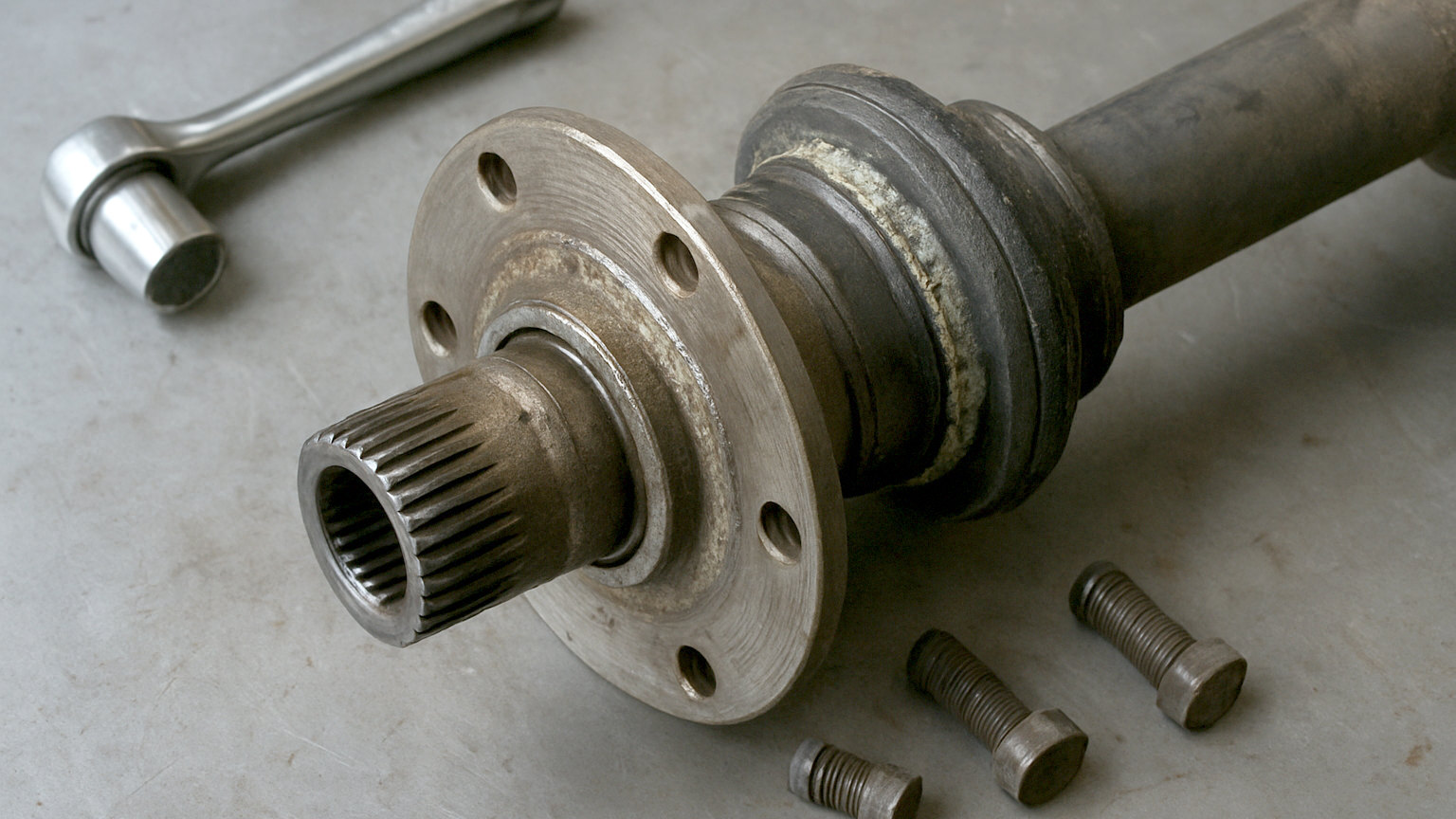
A noise that appears only when you lift off the accelerator, and not when you apply it, is behaving in a specific and informative way. Road speed has barely changed, so nothing rotating has altered its frequency. What has changed is the direction of load through the driveline, and a noise that appears at that moment is play being taken up in the opposite direction from a moment earlier.
What happens when you lift off?
The engine stops driving the wheels and the wheels begin driving the engine, since the car momentum is now turning the driveline against engine braking. Every joint, gear mesh and mounting that was being pushed one way is now being pushed the other, and any clearance between them is taken up with a movement. Where that clearance has grown beyond its design figure, you hear it.
What produces a clunk on the overrun?
Worn engine and gearbox mounts, which let the whole assembly shift as torque reverses. Worn driveshaft or propshaft joints. Excessive backlash in the differential, where the gear teeth move through their clearance before contact. On rear wheel drive cars a worn propshaft universal joint is a classic cause, producing a distinct clonk each time you lift off and again when you reapply the throttle.
How do you tell mounts from driveline?
Mounts usually produce a single dull thump felt through the whole car, and they can be confirmed by watching the engine move when the throttle is blipped with the handbrake on. Driveline play tends to produce a sharper metallic clunk that seems to come from further back or underneath. A mount that is visibly cracked or a hydraulic mount weeping fluid settles the question immediately.
Is some backlash normal?
Yes, and this matters because it prevents unnecessary worry. Every gear pair needs a small clearance to run without binding, and the driveline as a whole has a total figure that is designed in. Almost every car produces some small sound as drive is taken up or released. What is abnormal is a distinct clunk that has appeared or grown noticeably, particularly if accompanied by vibration.
Can it be the exhaust?
Frequently, and it is far cheaper than the alternatives. When you lift off, the engine rocks on its mounts and the exhaust swings with it. A perished exhaust mounting rubber allows the system to contact the underbody or a heat shield at exactly that moment, producing a knock. Pushing the exhaust by hand while the car is cold and watching for excessive movement usually reveals it.
What about the transmission itself?
On a manual, a noise on the overrun that changes with gear selected suggests a gear pair or a bearing. On an automatic, a clunk as the transmission changes state during deceleration can indicate worn mounts or a transmission issue. On a dual clutch gearbox, some noise as the clutches disengage on the overrun is normal, which is worth knowing before pursuing it.
How is it diagnosed properly?
By inspecting all the mounts, checking every driveline joint for play with the car raised, and where appropriate having a technician road test the car and feel for the moment the noise occurs. The load reversal is difficult to reproduce on a lift, which is why the road test matters and why describing exactly when it happens is so useful.
How urgent is it?
Usually moderate. Worn mounts strain everything connected to the engine and should be replaced but rarely fail suddenly. Driveline joints give warning through noise and vibration before failing. What deserves prompt attention is a propshaft universal joint, since complete failure at speed is genuinely dangerous, and any clunk accompanied by a developing vibration.
What should you tell the garage?
That the noise appears specifically on the overrun rather than under acceleration, and roughly what speed and gear. That detail points straight at load reversal and saves a workshop from inspecting components that only load in one direction, which is exactly the kind of information that shortens a diagnosis.


