
Grinding is one of the few car noises that justifies stopping to investigate rather than continuing to the next convenient moment. It means metal is contacting metal somewhere it should not, and in almost every case the contact is causing damage while you listen to it. The circumstances in which it appears identify the source reasonably reliably.
Does it happen only when braking?
Then it is almost certainly the brakes, and most likely pads worn through to their backing plates grinding against the disc. That is destroying the disc with every application, turning a pad replacement into pads and discs. Some pads have a metal wear indicator designed to squeal before this point, so a grinding noise generally means that warning has already been passed.
What if it happens all the time?
A continuous grinding that follows road speed and is present whether or not you are braking suggests a wheel bearing in an advanced state, a brake caliper that has seized with the pad permanently in contact, or a dust shield bent against the disc. The last of those is trivial and free to fix, which makes it worth checking first before assuming the worst.
How does a stone cause it?
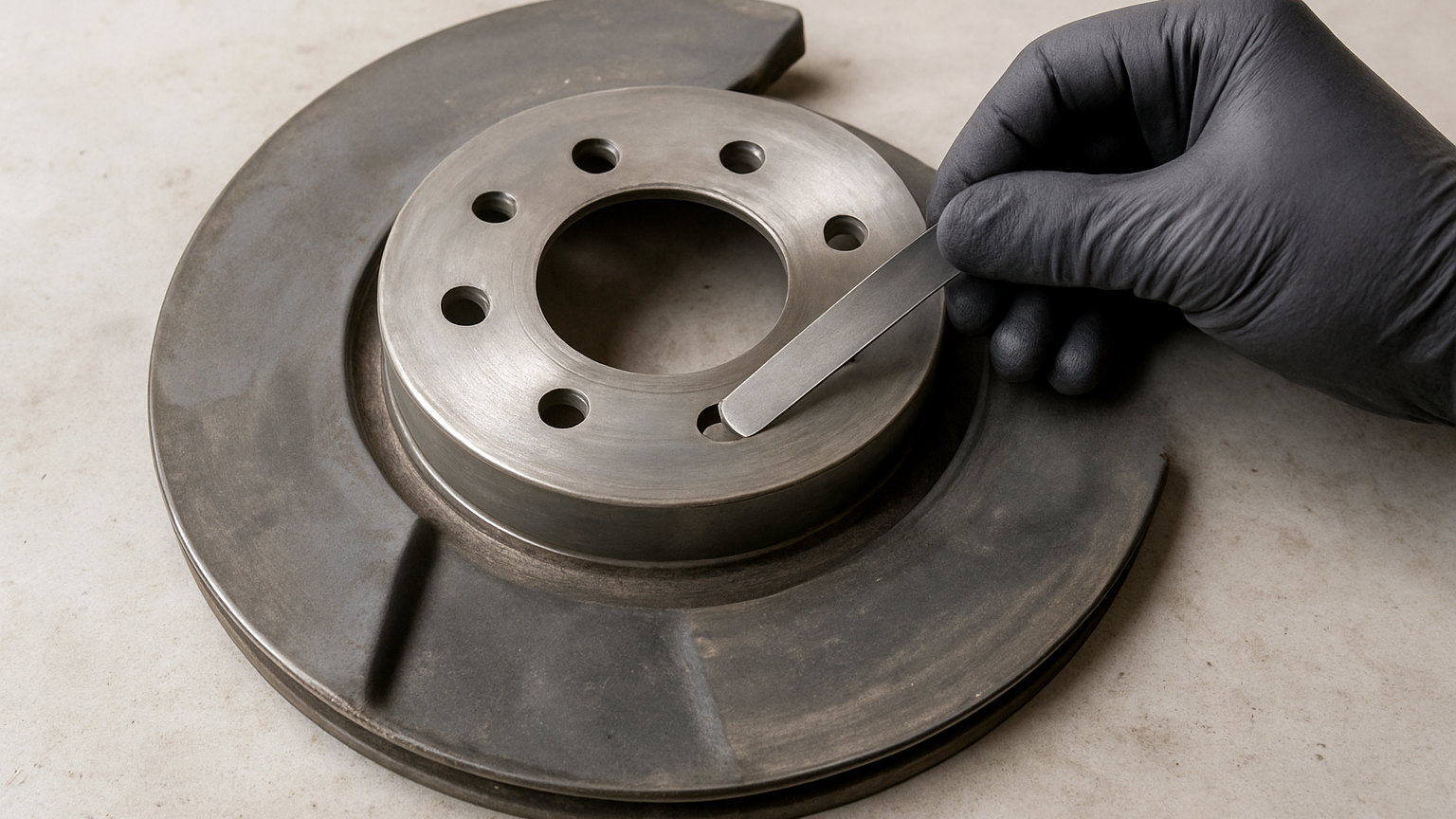
A small stone can lodge between the brake disc and its dust shield, producing a scraping or grinding that follows wheel speed and often comes and goes as the stone moves. It is extremely common, entirely harmless if dealt with promptly, and usually cured by reversing a short distance or by prising the shield gently away from the disc. It is always worth eliminating before booking the car in.
What does a failing bearing sound like at this stage?
By the time a wheel bearing grinds, it has usually been humming and then rumbling for some months. The grinding stage means the bearing has broken down internally and there will normally be play detectable by rocking the wheel. At that point it is genuinely urgent, since a bearing that seizes or collapses at speed affects steering and braking on that corner.
Could it be the gearbox?
A grinding during gear changes rather than while driving is a different matter, usually indicating a clutch that is not fully releasing or worn synchromesh. A grinding present in one gear only while driving suggests a damaged gear pair. Both are transmission faults rather than the wheel end noises covered here, and each has its own diagnostic route.
What about grinding when turning?
A grinding or graunching heard when the steering is turned, particularly at low speed, points at a strut top mount bearing that has failed. A broken coil spring whose end has moved can also contact the tyre or its seat, producing a grind on lock. Both are worth finding quickly, since a broken spring near a tyre is a genuine hazard.
Should you keep driving?
Not far, and not at speed. Grinding brakes are destroying discs by the mile. A grinding bearing may be close to failure. Something contacting a tyre could damage the sidewall. The sensible response is to stop somewhere safe, look at the wheels for anything obvious, feel whether one wheel is unusually hot, and then decide between a short careful drive to a garage or a recovery call.
What can you check at the roadside?
Look through the wheel spokes at the brake discs for a deep scored surface or a pad worn away entirely. Look for a dust shield touching the disc, which shows as a bright circular rub mark. Check for anything caught between components. Carefully assess whether one wheel is much hotter than the others, which suggests a dragging brake. None of this requires tools and it usually identifies the cause.
What happens if it is ignored?
Grinding brakes destroy discs and eventually damage calipers, turning a modest pad replacement into a considerably larger bill. A grinding bearing can seize. In both cases the cost of waiting is measured in weeks rather than months, which makes this one of the poorest noises to postpone.


