
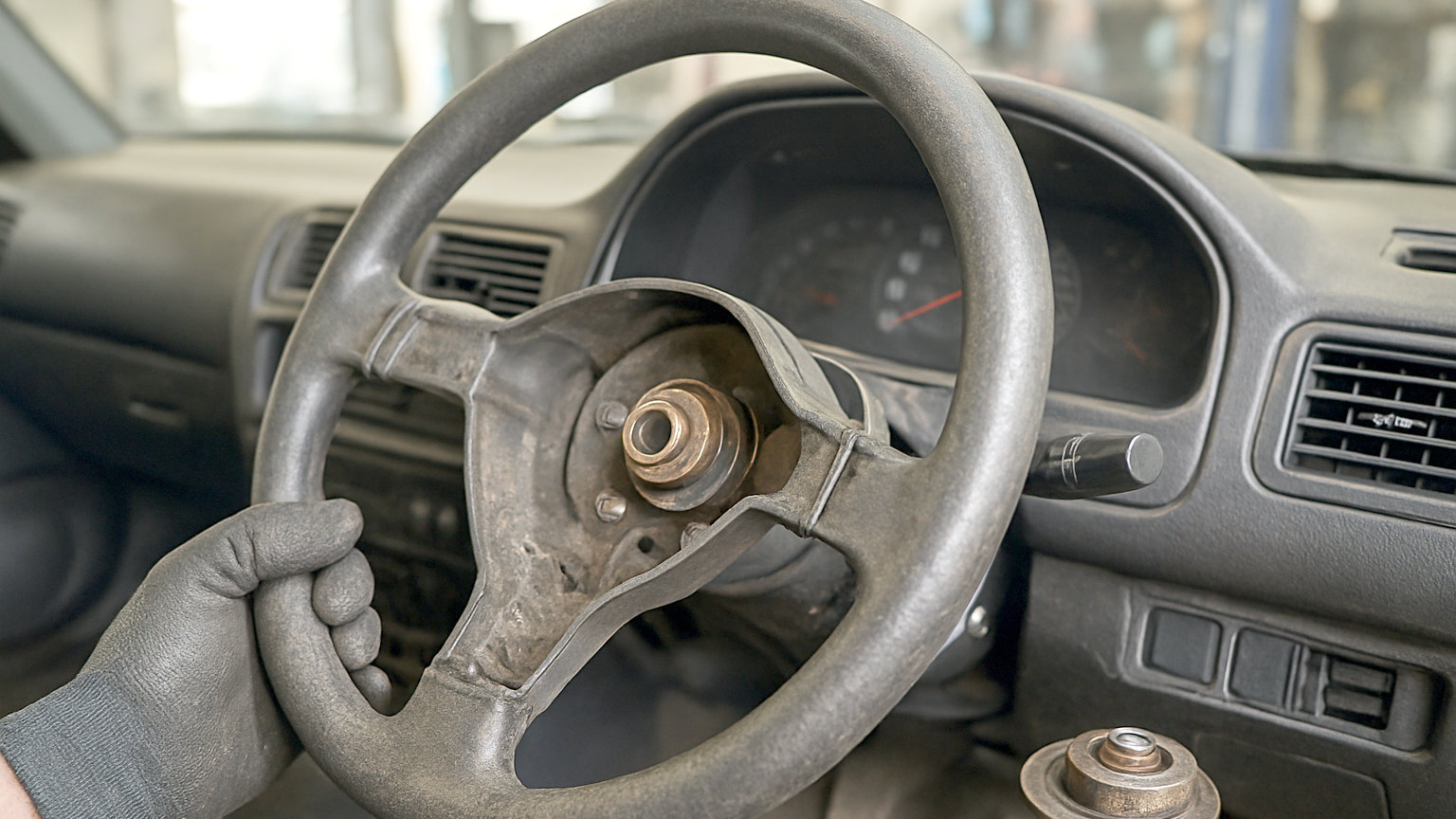
A steering wheel that sits visibly crooked while the car is travelling in a straight line is one of the more irritating faults, partly because the car may otherwise drive perfectly. It is almost always a symptom of how the alignment was set rather than a fault in the steering itself, and understanding why explains what the correct repair is and what it is not.
Why does it happen?
Because the front toe setting is adjusted by lengthening one track rod and shortening the other. The total toe determines how the car tracks, and the balance between the two sides determines where the steering wheel sits when the wheels point straight ahead. Set the total correctly but with the rods unequal and you get a car that travels straight with a crooked wheel.
When does it usually appear?
After alignment work, after replacing track rod ends or a steering rack, or after suspension repairs. It also appears after a kerb impact or a pothole that has moved something, in which case the geometry itself has changed rather than merely the wheel position. If it appeared immediately after a visit to a garage, the alignment procedure is the obvious suspect.
Why should the wheel not simply be removed and repositioned?
Because it treats the symptom while leaving the geometry unequal, and because on modern cars it causes further problems. The steering angle sensor is referenced to the column, so repositioning the wheel misleads the stability control system about where straight ahead is. It also disturbs the airbag and clock spring assembly. It is a shortcut that creates two new faults to solve one cosmetic one.
How should it be corrected?
By setting the front alignment with the steering wheel held straight, which is what alignment equipment is designed to do. The wheel is locked in the centred position with a clamp, the toe is measured, and both track rods are adjusted to achieve the correct total while keeping the wheel central. That is standard practice and it should not cost extra.
What if it persists after a proper alignment?
Then look at the rear. If the rear axle is not square to the vehicle centreline, the car crabs slightly and the front wheels must be steered fractionally off straight to travel forwards. The steering wheel then sits crooked no matter how carefully the front is set. Only a four wheel alignment measuring the rear thrust angle will reveal this, which is why two wheel tracking sometimes fails to fix it.
What causes a rear thrust angle problem?
Worn or perished rear suspension bushes, a bent trailing arm or axle component after an impact, or accident damage to the shell. On cars with adjustable rear geometry it can simply be a setting that has drifted. On those with no adjustment, correcting it means replacing whatever has bent or worn, which is a more substantial job than a tracking adjustment.
Does it matter beyond appearance?
Yes. A crooked wheel usually indicates the geometry is not as intended, which affects tyre wear and stability. It also means the steering angle sensor reference is wrong, which can affect stability control, lane keeping and adaptive cruise systems on cars that have them. And it makes it far harder to notice a genuine pull developing, since the reference point is already skewed.
Is calibration needed afterwards?
On most modern cars, yes. Once the alignment is correct, the steering angle sensor should be calibrated with a diagnostic tool so the electronic systems know the true straight ahead position. Skipping it leaves stability control warnings or subtly incorrect behaviour, and it is a step that is sometimes omitted by workshops without the equipment.
What should you ask for?
A four wheel alignment with the steering wheel clamped centrally, a printout showing the before and after figures including rear thrust angle, and steering angle sensor calibration if the vehicle requires it. Asking for the printout is worth doing, since it demonstrates what was actually measured rather than what was adjusted by eye.


