
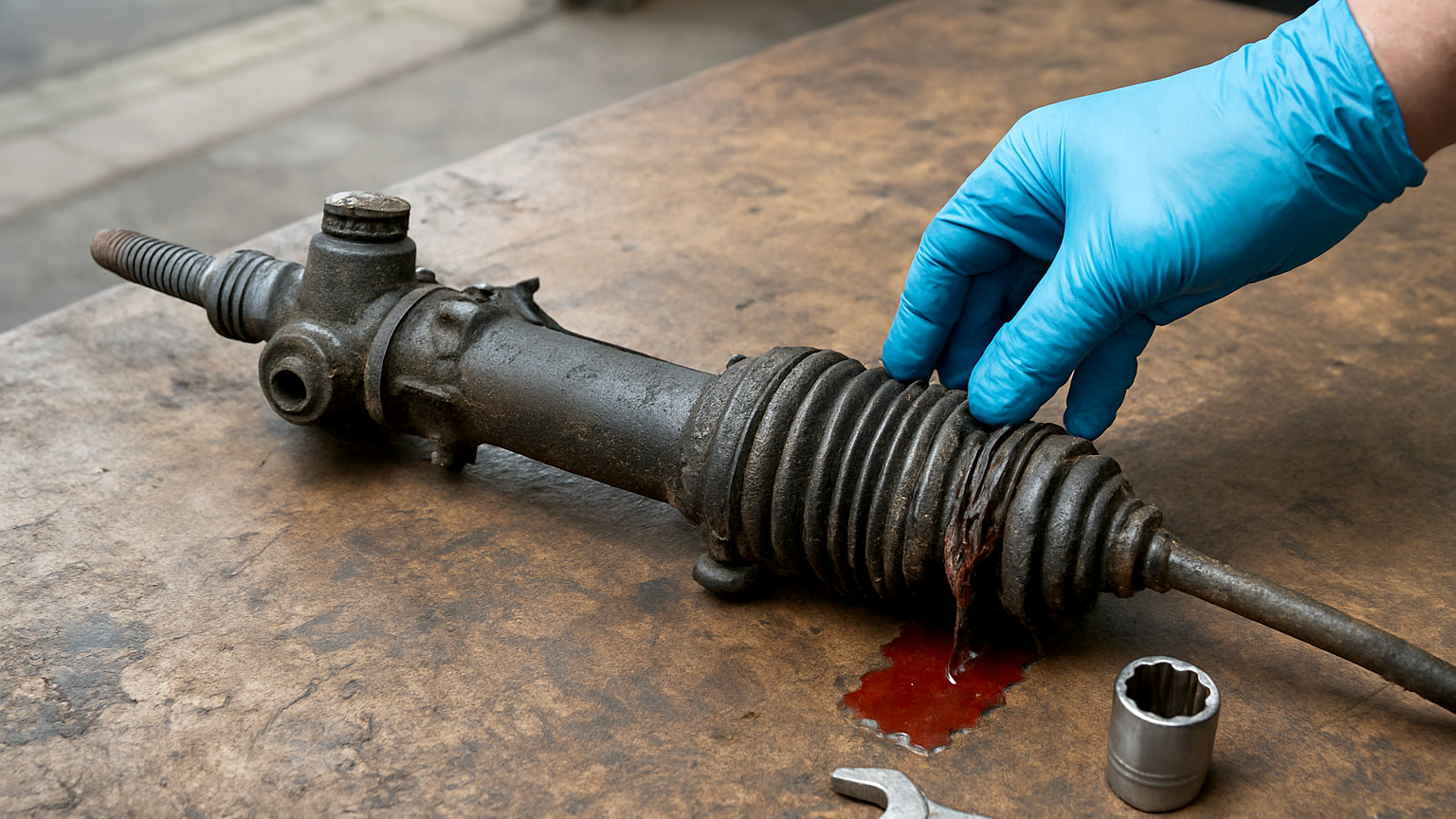
The steering rack converts the rotation of the steering wheel into side to side movement at the track rods, using a pinion gear meshing with a toothed bar. On a hydraulic system it does considerably more than that, containing a rotary valve that senses how hard you are turning and directs pressurised fluid to the appropriate side of an internal piston to provide assistance.
How does the assistance work inside it?
A torsion bar in the pinion twists slightly as you apply steering effort, and that twist operates a valve directing fluid to one side of a piston mounted on the rack bar. The harder you turn, the more the bar twists and the more assistance is delivered. It is an elegant mechanical arrangement, and it depends entirely on internal seals holding pressure where it is supposed to be.
Why do they leak?
Because those seals are rubber running against a moving shaft, and they harden with age and heat. Once a seal begins to pass, fluid escapes into the rack gaiter, then out of it. Contaminated or overheated fluid accelerates the process, as does a system that has been run low and allowed to aerate. Corrosion on the rack bar itself will destroy a new seal quickly.
What does a split gaiter mean?
The concertina rubber boots at each end keep grease in and water out around the inner track rod joints. A split lets road spray and grit reach the joint, which then wears rapidly, and on a hydraulic rack it also allows fluid to escape if a seal is passing. A torn gaiter is an MOT failure in its own right and it is inexpensive to replace if caught before the joint has worn.
How do you tell a rack leak from a hose leak?
By where the fluid is. A rack seal leak shows as fluid inside or running out of the gaiters, typically worse on one side. A hose leak shows higher up, around the connections at the rack or the pump, and often sprays under pressure. Cleaning the area thoroughly and driving for a few days makes the source obvious, since fresh fluid appears at the actual point of escape.
Can a rack be repaired rather than replaced?
Yes, and it is worth exploring. Seal kits exist for many racks, and specialist rebuilders strip, inspect, hone and reseal them properly, replacing the bar if it is pitted. A professionally reconditioned rack from a rebuilder is usually considerably cheaper than a new original part and often comes with a meaningful warranty. Home resealing is possible but requires cleanliness and care.
What else fails besides the seals?
The rack bar bushes wear, producing a knock over bumps and play at the wheel. The pinion bearing wears. The centre section of the teeth wears from constant small movements, producing a notchy or vague zone around straight ahead. The inner track rod joints wear, which is a separate repair often possible without removing the whole rack.
Does a leaking rack fail an MOT?
A steering rack leaking fluid is assessed, and a significant leak is a failure. A torn or damaged gaiter is a straightforward failure regardless of leakage. Excessive play in the rack is also a failure. Given that these are all safety related items on a component that steers the car, testers examine them carefully and advisories here should be taken seriously.
Is replacement a big job?
Moderate to substantial depending on the car. The rack is bolted to the subframe with track rods and hydraulic lines attached, and on many vehicles the subframe must be lowered to extract it. The hydraulic system then needs refilling and bleeding, and alignment must be reset afterwards without exception since the track rods have been disturbed.
What should be done at the same time?
New gaiters, since they are inexpensive and already coming off. New track rod ends if they show any wear, for the same reason. A full fluid change, because old contaminated fluid will damage the new seals. And a four wheel alignment afterwards, which should be part of the quote rather than a surprise addition.


