
Steering is examined more thoroughly at the MOT than almost any other system, because a failure here removes control of the vehicle entirely. Several faults are straightforward failures regardless of how the car feels to drive, which is why owners are frequently surprised by a result on a car that seemed perfectly normal on the way to the test.
How is steering actually tested?
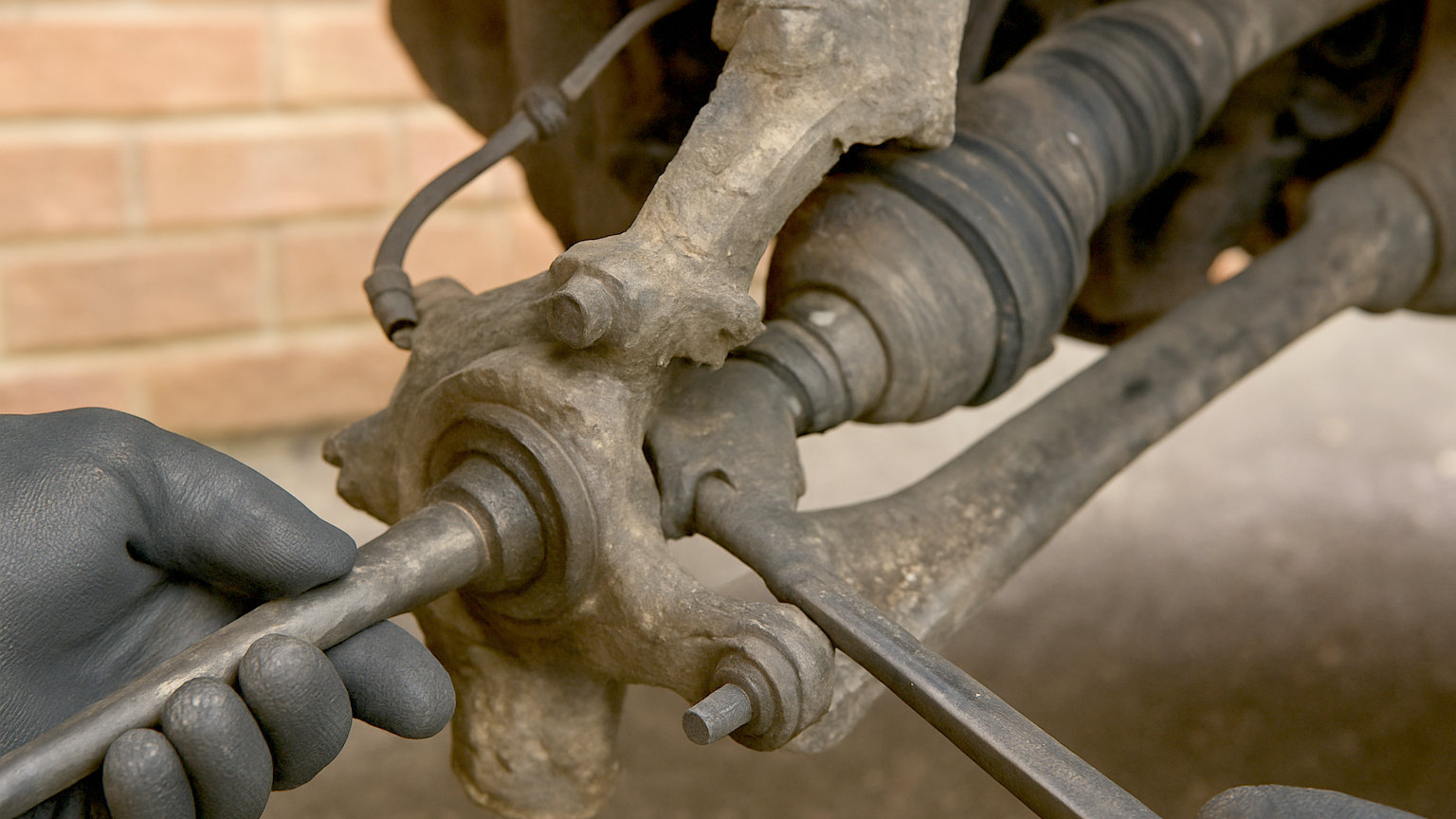
With the front wheels on turning plates, allowing them to move freely while the tester works the steering wheel from side to side and observes every joint. The car is then raised and each joint is checked with a pry bar for play while an assistant or the tester rocks the wheel. It is a thorough physical inspection rather than a driving assessment.
What counts as excessive play?
Any perceptible relative movement in a ball joint, track rod end or rack mounting where none should exist. The standards are stricter than most drivers assume, and a joint with movement small enough to be undetectable from the driving seat can still be a failure. Free movement at the steering wheel rim before the wheels respond is assessed against limits that depend on the steering type.
Which components are failure items?
Worn track rod ends and ball joints. A steering rack with excessive play or insecure mountings. Torn or missing rack gaiters and joint boots. A steering column with play or insecure attachment. Excessively worn or damaged steering wheel and column adjustment mechanisms. Anything corroded to the point of weakness in a structural steering area.
Why is a torn boot an automatic failure?
Because the boot is what keeps grease in and water out, so a torn one means the joint is deteriorating whether or not play has developed yet. Testers treat it as a defect in its own right rather than waiting for the consequence. It is also inexpensive to address, and catching it means replacing a boot or a joint rather than dealing with a knocking front end.
Does power steering feature in the test?
Yes. A power steering system that is not working, a fluid leak from the pump, hoses or rack, a damaged or insecure hose, and a power steering warning lamp illuminated on vehicles where it applies are all assessed. On electric systems the warning light is checked in the same way as other safety system lamps, including during the initial bulb check.
What about the steering wheel itself?
It is checked for security, for excessive movement on the column, and for damage that could injure the driver. On cars fitted with an airbag, the airbag must be present and its warning system functioning, so a missing airbag or an illuminated warning is a failure. Aftermarket steering wheels that remove the airbag cause problems here.
How can you check before the test?
With the car safely raised, rock each front tyre at three and nine o clock and watch the track rod ends and rack for movement. Inspect every rubber boot for splits. Look for fluid around the rack gaiters and hoses. Check whether the steering wheel has play before the wheels move. Twenty minutes of this identifies most of what a tester will find.
Should advisories be acted on?
On steering, yes. An advisory means the tester found wear that has not yet reached the failure threshold, and on joints that wear continuously it will reach it well before the next test. Acting on a steering advisory is also cheaper than waiting, since a worn joint left in place ruins tyres and can damage the components around it.
What should happen after any repair?
A wheel alignment check, since replacing any track rod component changes the toe setting. This is worth confirming is included when a garage quotes for steering work, because driving away on incorrect alignment ruins a set of tyres within a few thousand miles and undoes much of the benefit of the repair.


