
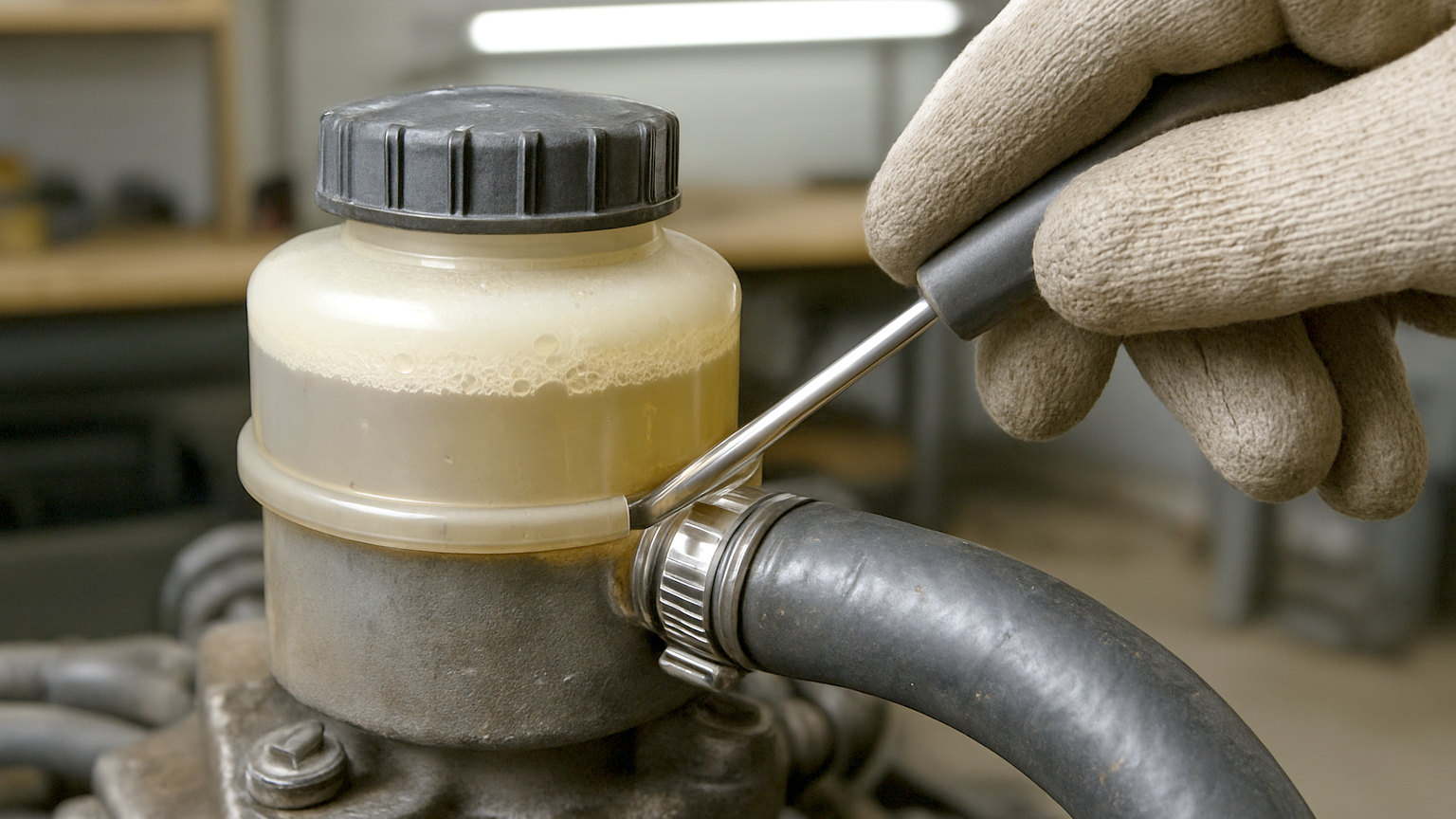
A whine from the front of the engine that rises as you turn the steering wheel, and is loudest at full lock, is one of the more clearly identifiable noises a car makes. It comes from the hydraulic power steering pump, and in most cases it is telling you about the fluid rather than about the pump itself, which is fortunate because fluid is considerably cheaper.
Why does turning the wheel make it louder?
Because the pump is working hardest at that moment. Turning the wheel, particularly with the car stationary, requires the pump to generate its maximum pressure against the resistance of the tyres pressed against the ground. Any weakness shows up under that load, which is why the noise appears on lock and fades to nothing when travelling in a straight line.
What is aeration and why does it whine?
Air drawn into the fluid, which then forms bubbles that collapse violently under pressure inside the pump. That produces a distinctive whine or groan and, in the reservoir, fluid that looks foamy, cloudy or lighter in colour than it should. Aerated fluid also provides inconsistent assistance, so the steering may feel light in places and heavy in others.
Where does the air come from?
Usually a low fluid level, allowing the pump to draw air along with fluid. It can also enter through a loose connection or a perished hose on the suction side, which sucks air in without leaking fluid out, so the level stays normal and nothing drips on the ground. That version is genuinely difficult to find and worth suspecting when a system whines with a correct level.
What should you check first?
The fluid level and its appearance, which takes a minute. The reservoir usually has cold and hot level markings and often a small dipstick in the cap. Look at the colour: healthy fluid is clear red or amber depending on type, while dark brown or black fluid has overheated and degraded, and foamy fluid confirms aeration. Since the system is sealed, a low level means a leak.
Where do these systems leak?
The high pressure hose between pump and rack, which lives in a hot environment and eventually splits or weeps at its crimped ends. The rack seals, which show as fluid running down the rack gaiters. The pump shaft seal. The reservoir itself, which is often plastic and cracks with age. Following the system round with a torch after cleaning it usually finds the source.
Does the fluid type matter?
Considerably, and mixing types causes real problems. Some systems specify a dedicated power steering fluid, others use automatic transmission fluid, and the two are not interchangeable despite both being red. Using the wrong one can attack the seals and produce exactly the leaks and noise you were trying to cure. The handbook or the reservoir cap states which applies.
How is air removed from the system?
With the front wheels raised and the engine running, turning the steering slowly from lock to lock several times allows trapped air to work its way back to the reservoir, topping up as the level falls. Doing it slowly matters, since rapid movement churns more air in. Some systems benefit from a vacuum bleed, and a few require a specific procedure that is worth checking.
When is the pump genuinely failing?
When the noise persists after the fluid has been corrected and bled, when assistance is weak even with the correct level, or when the whine is accompanied by a rumble suggesting bearing wear. A pump that has been run on aerated or contaminated fluid for a long period will have suffered internal wear, which is why fixing a leak promptly protects the more expensive component.
Is it urgent?
Moderately. A whining pump running low on fluid is damaging itself, and a system that loses all its fluid loses assistance entirely, which is unwelcome at a junction. Avoid holding the wheel at full lock for more than a few seconds while the fault exists, since that is the condition that generates the most heat and pressure.


