
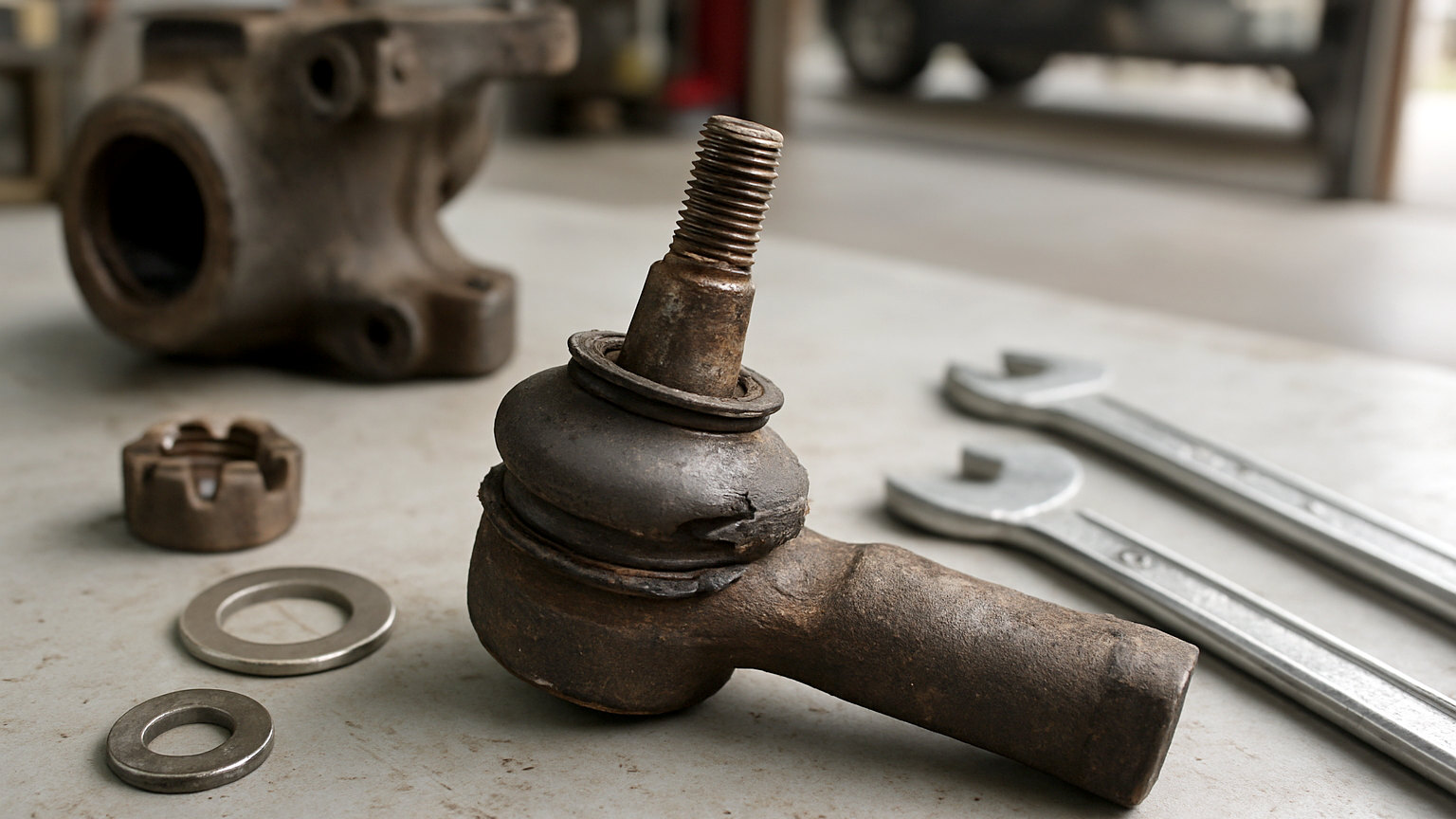
Play in the steering is free movement at the rim before the front wheels begin to respond. A small amount is normal on many older cars, and a noticeable amount means wear somewhere in the chain running from the wheel through the column and rack to the hubs. Because each joint in that chain gives itself away under a different test, locating the culprit is methodical rather than difficult.
How much play is acceptable?
Very little on a modern car with a rack and pinion system, where free movement should be barely perceptible. Older cars with steering boxes tolerate more by design. As a practical guide, if the wheel can be moved appreciably without the front tyres moving at all, something is worn and it is worth investigating rather than accepting as character.
What is in the chain?
The steering wheel and column, with universal joints along its length. The rack itself, containing the pinion and the rack bar with its bushes. The inner track rod joints at each end of the rack, hidden inside the rubber gaiters. The outer track rod ends connecting to the hubs. And the suspension ball joints and bushes, which allow movement that feels like steering play even though they belong to the suspension.
How is a track rod end tested?
With the wheel raised, gripping the tyre at the three and nine o clock positions and pushing and pulling alternately. Any knocking or visible movement at the joint indicates wear. Watching the joint while someone else rocks the wheel makes it obvious. A torn rubber boot on a track rod end is a failure in itself, since the joint will have lost its grease and taken in water.
How do you find inner joint wear?
By feeling through the rack gaiter while the wheel is rocked, since the inner joint sits inside it. Wear there produces a knock that can be felt through the rubber. It is easily missed on a quick inspection, and it is a common source of play on higher mileage cars. Replacing an inner joint requires the gaiter to come off and the alignment to be reset afterwards.
What about the rack itself?
Internal wear in the rack produces play that persists even when every joint checks out, and it is usually accompanied by a knock felt through the wheel over bumps. Some racks have an adjuster that can take up excess clearance, though over adjustment causes stiffness and is not a substitute for a worn rack. A rack that is also leaking is generally due for replacement rather than adjustment.
Could it be the column?
Yes, and it is frequently overlooked. The column contains one or more universal joints between the wheel and the rack, and these wear or seize. A worn joint produces play, while a seizing one produces stiffness and notchiness. Having someone rock the wheel while you watch the column joints from the engine bay usually reveals it immediately.
Does play affect anything besides feel?
It does. Worn joints allow the geometry to change under load, so the car wanders, tramlines and wears its tyres unevenly. It also delays the response to steering input, which matters in an emergency. And a badly worn joint can eventually separate, which is why these components feature so prominently in the MOT inspection.
Is it an MOT failure?
Excessive play in steering joints, a worn rack, a torn gaiter or a damaged track rod boot are all failure items. Testers check with the wheels on turning plates and by rocking the wheel while observing the joints, which is why faults that a driver has grown used to are found at the test. Anything found as an advisory is worth acting on rather than deferring for a year.
What should be done after the repair?
A wheel alignment check, without exception. Replacing any track rod component changes the toe setting, and driving on incorrect alignment ruins tyres within a few thousand miles. Any workshop replacing steering joints should include or recommend alignment as part of the job, and it is worth confirming before the work starts.


