
A car that requires continual small steering inputs to hold a lane is genuinely tiring on a long journey and reduces the margin available in an emergency. It is a different complaint from a car that pulls consistently in one direction, and the causes differ accordingly. What has usually been lost is either the self centring effect that returns the wheel to straight, or the geometric stability that keeps it there.
What makes a car self centre?
Caster angle, which tilts the steering axis backwards so that the contact patch trails behind the pivot point, exactly as a shopping trolley castor does. That trailing effect generates a force returning the wheels to straight ahead. Too little caster, whether by design or through worn or damaged components, produces steering that does not want to come back and a car that needs constant guidance.
How do worn bushes cause it?
By letting the geometry move under load. Suspension bushes locate the arms precisely, and when the rubber perishes or delaminates, the wheel can shift its angle as cornering, braking and acceleration forces change. The car therefore behaves differently moment to moment, requiring correction. Front lower arm rear bushes are a particularly common culprit and produce exactly this vague wandering feel.
Can tyres be responsible?
Frequently. Tramlining, where the car follows ruts and white lines, is often a characteristic of wide low profile tyres rather than a fault. Uneven wear, mismatched tyres across an axle, or a tyre with internal damage all produce wandering. Underinflation makes the sidewalls flex more, which delays and softens the response to steering input and feels like vagueness.
What role does alignment play?
A significant one. Toe out at the front makes a car feel darty and unstable in a straight line, since each wheel is trying to steer the car outwards and the balance is easily upset. Incorrect camber or unequal caster side to side adds a pull that must be corrected continuously. A four wheel alignment measuring the rear as well as the front is what identifies these.
Could the rear axle be involved?
Yes, and it is often overlooked. A rear axle that is out of alignment or has worn bushes allows the back of the car to move independently, producing a wandering feel that no amount of front adjustment will cure. On cars with rear toe adjustment, a setting that has drifted produces instability. The thrust angle measurement in a four wheel alignment reveals this directly.
Do dampers affect stability?
Considerably. Worn dampers allow the body to move more than intended over undulations, which changes the loading on each tyre continuously and produces a floating, wandering sensation at speed. The car may also feel unsettled over crests and take longer to recover after a bump. Dampers wear so gradually that the decline is almost never noticed until they are replaced.
Is the steering system itself at fault?
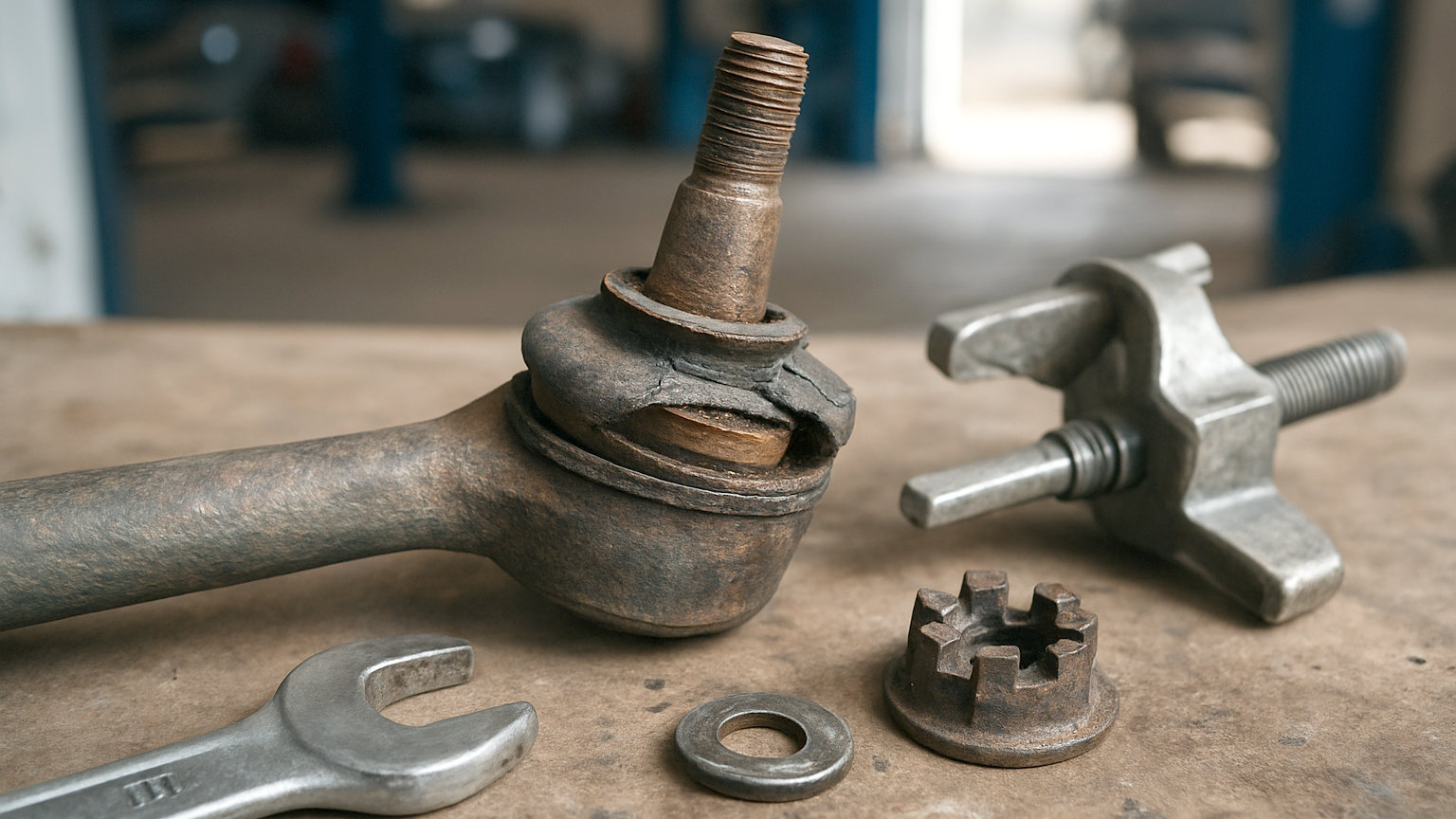
Sometimes. Wear in the centre section of the rack produces a vague zone around straight ahead where small inputs do nothing, so corrections become larger and more frequent. Play in track rod ends or the column adds to it. Excessive power assistance on some designs removes feel, which makes it harder to sense what the car is doing even when nothing is worn.
How do you narrow it down?
Start with tyre pressures and condition, then have the car inspected for play in the steering and suspension joints and bushes with the weight off the wheels and again loaded. Then a four wheel alignment. That order deals with the free and cheap possibilities first, and it means any alignment is carried out on a car with sound components rather than being wasted.
Is it worth pursuing?
Yes, both for comfort and for safety. A car that wanders is more tiring, wears its tyres faster and responds less predictably when a sudden manoeuvre is needed. Because the causes are usually wear items rather than catastrophic failures, the repairs tend to be reasonable, and the improvement in how the car drives is often striking.


