
A car that does not hold a straight line is doing one of two things: being actively pulled to one side, or failing to return to centre and hold itself there. They feel similar from the driving seat and they have quite different causes, so the first step is establishing which you have by noticing whether the car pulls consistently in one direction or simply wanders about.
What should you check before anything else?
Tyre pressures, on all four wheels, with a gauge rather than by eye. Unequal pressures across an axle are the single most common cause of pulling, and the difference required is smaller than most people assume. It costs nothing, takes five minutes and resolves a meaningful proportion of complaints before any money is spent on alignment or suspension.
How do tyres themselves cause it?
Beyond pressure, a tyre with internal construction faults can pull persistently, which is why swapping the front tyres side to side is a useful test. If the pull reverses direction, a tyre is responsible. Mismatched tyres across an axle, different tread patterns, or one significantly more worn than the other all contribute. Tramlining, where the car follows ruts in the road, is often a tyre characteristic rather than a fault.
Could it be a brake dragging?
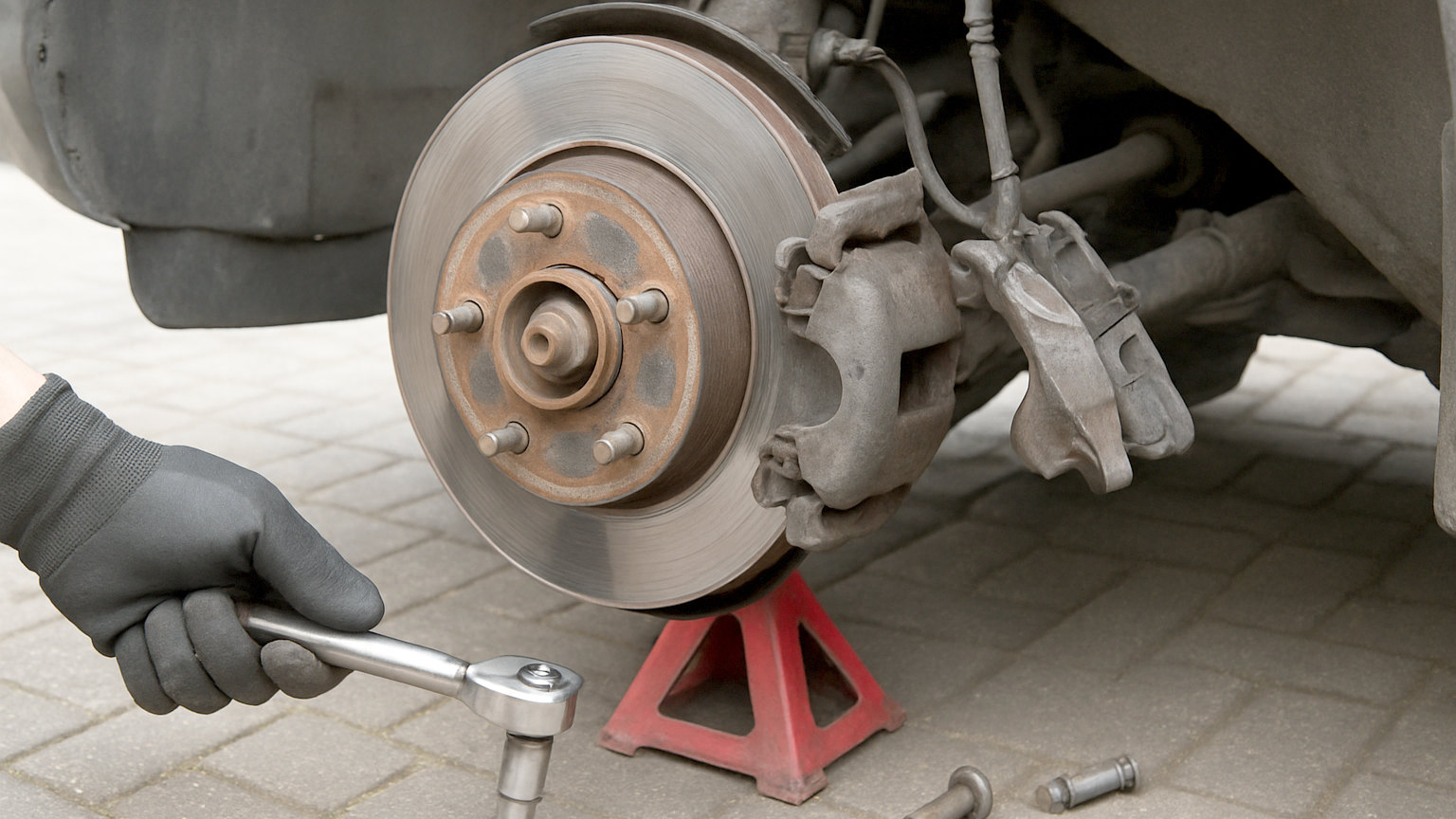
Frequently, and it produces a pull that is often worse under braking or after a period of driving. A seized caliper or a sticking handbrake mechanism drags one wheel continuously, which pulls the car and heats that wheel noticeably. After a drive, carefully feeling whether one wheel is much hotter than the others identifies it quickly, though care is needed since they can be extremely hot.
When does alignment come into it?
When pressures and tyres are eliminated. Incorrect toe or camber makes the car pull or wander, and it also wears the tyres in a distinctive pattern that is worth looking for. Alignment drifts after kerb impacts, potholes and suspension work, so a pull that appeared after any of those has an obvious suspect. A proper four wheel check measures the rear as well, which is where some persistent pulls originate.
What causes wandering rather than pulling?
Wear that allows the geometry to move under load. Worn suspension bushes, particularly the front lower arm bushes, let the wheel change angle as forces change, so the car follows every camber and needs constant correction. Worn track rod ends and ball joints do the same. The characteristic feel is a car that requires small continuous inputs rather than one that heads determinedly for the verge.
Can the rear axle be responsible?
Very much so, and it is often missed because attention naturally goes to the front. A rear axle that is not square to the front, through worn bushes, a bent component or accident damage, makes the car crab slightly and requires a steering offset to travel straight. This is exactly what a four wheel alignment check is designed to find, and it is why two wheel checks sometimes fail to solve a problem.
Is the road itself a factor?
More than people expect. Most roads are cambered to drain water, which produces a slight consistent pull towards the kerb on a normally crowned road. Testing on a flat surface such as an empty car park, or comparing the pull on both sides of a straight road, distinguishes a genuine fault from a car simply obeying the camber it is driving on.
Does it matter beyond the annoyance?
It does. Constant correction is tiring on a long journey and reduces the margin available in an emergency. A pull caused by a dragging brake wastes fuel and destroys the brake and possibly the wheel bearing. A wander caused by worn bushes will eventually become an MOT failure. And any misalignment ruins tyres, which is an expensive way to ignore something.
What is the sensible order?
Check pressures, then swap the front tyres side to side and see whether the pull follows, then check for a hot wheel indicating a dragging brake, then have a four wheel alignment carried out. That sequence covers the cheap causes first, and by the time you reach alignment you will know the geometry is the problem rather than paying to have it measured twice.


