
Shunt is the fore and aft rocking sensation that occurs when moving between accelerating and coasting, particularly at low speed in a high gear. The car surges forward slightly, then falls back, and in bad cases the motion repeats. It is caused by the accumulated clearance in the driveline being taken up first one way and then the other as the direction of torque reverses.
Why does reversing torque produce it?
Because under acceleration the engine drives the wheels, and on a closed throttle the wheels drive the engine. Everything between them is loaded in the opposite direction, so every gear mesh, spline and joint moves through its clearance before contact is made again. On a car with worn components, that total movement becomes large enough to feel as a distinct lurch rather than a smooth transition.
When is it most obvious?
At low speed in a gear that is too high for the conditions, where the engine is near its lugging range and torque changes sharply for small throttle movements. Traffic that keeps moving and stopping produces it constantly. It is also worse on cars with strong engine braking, since the transition between drive and overrun is more abrupt.
Which components make it worse?
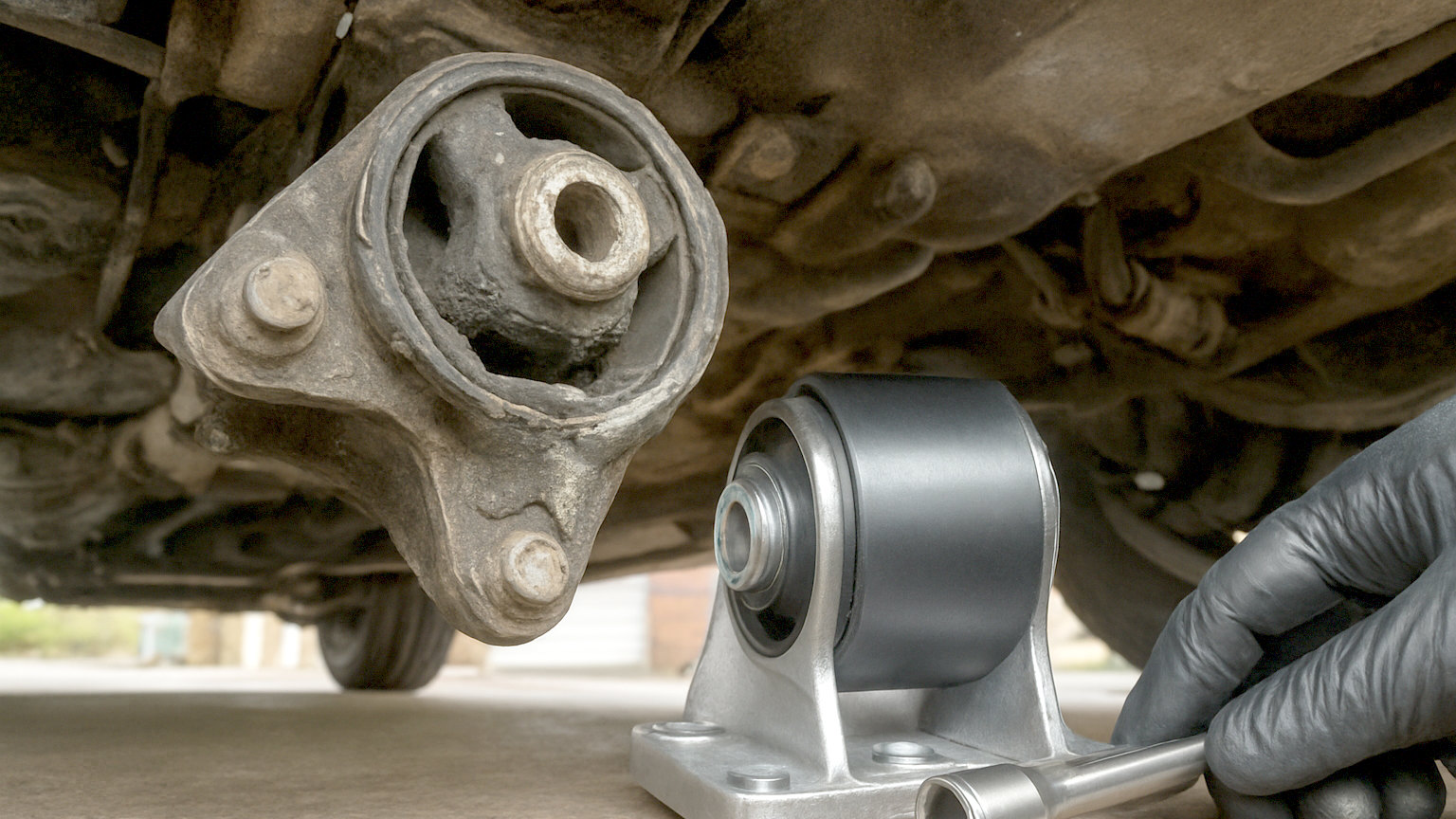
Worn engine and gearbox mounts, which let the powertrain rock as torque reverses and which are the most common contributor. Worn driveshaft or propshaft joints. Excessive differential backlash. On a manual, a dual mass flywheel that has lost its damping, since damping that motion is precisely what it exists to do. Worn suspension bushes allow the axle to move as well, adding to the effect.
How much is normal?
Some is inherent in every car, and it is more noticeable on some designs than others. Cars with long driveline paths, strong low speed torque or aggressive throttle mapping show it more. What matters is whether it has increased, since a car that has always been slightly snatchy in traffic is displaying a characteristic while one that has become progressively worse has developed wear.
Can throttle mapping be responsible?
Partly. Electronic throttles are programmed with a response curve, and some are deliberately sharp near the closed position to make the car feel responsive. That amplifies shunt at low speed. Aftermarket throttle controllers and remaps can make it considerably worse, and if the symptom appeared immediately after such a change, that is the obvious suspect.
Does driving technique help?
Considerably. Selecting a lower gear so the engine is above its lugging range, and moving the throttle progressively rather than on and off, largely eliminates it. Leaving a larger gap in traffic so you can drive at a constant small throttle opening rather than repeatedly accelerating and coasting makes a substantial difference. None of that fixes worn components, but it reveals how much of the sensation is technique.
How is it distinguished from a fault?
By checking for play. If the mounts are sound, the driveshaft and propshaft joints have no measurable movement, and the differential backlash is within specification, then what you are feeling is the car characteristic rather than a defect. If any of those show wear, dealing with them reduces it noticeably.
What should be checked first?
The engine and gearbox mounts, because they are inexpensive, commonly worn and easy to inspect by watching the engine move under throttle with the handbrake applied. Then driveline joints for play. On a manual, whether there is a rattle at idle suggesting a dual mass flywheel. Working through those covers the practical causes and separates them from an inherent characteristic.
Is it worth fixing?
Where worn mounts are responsible, absolutely, since they are inexpensive and they strain everything attached to the engine. Where everything measures sound and the car has always been snatchy in traffic, adapting the gear you use is a more realistic answer than chasing a characteristic built into the design of the car itself.


