
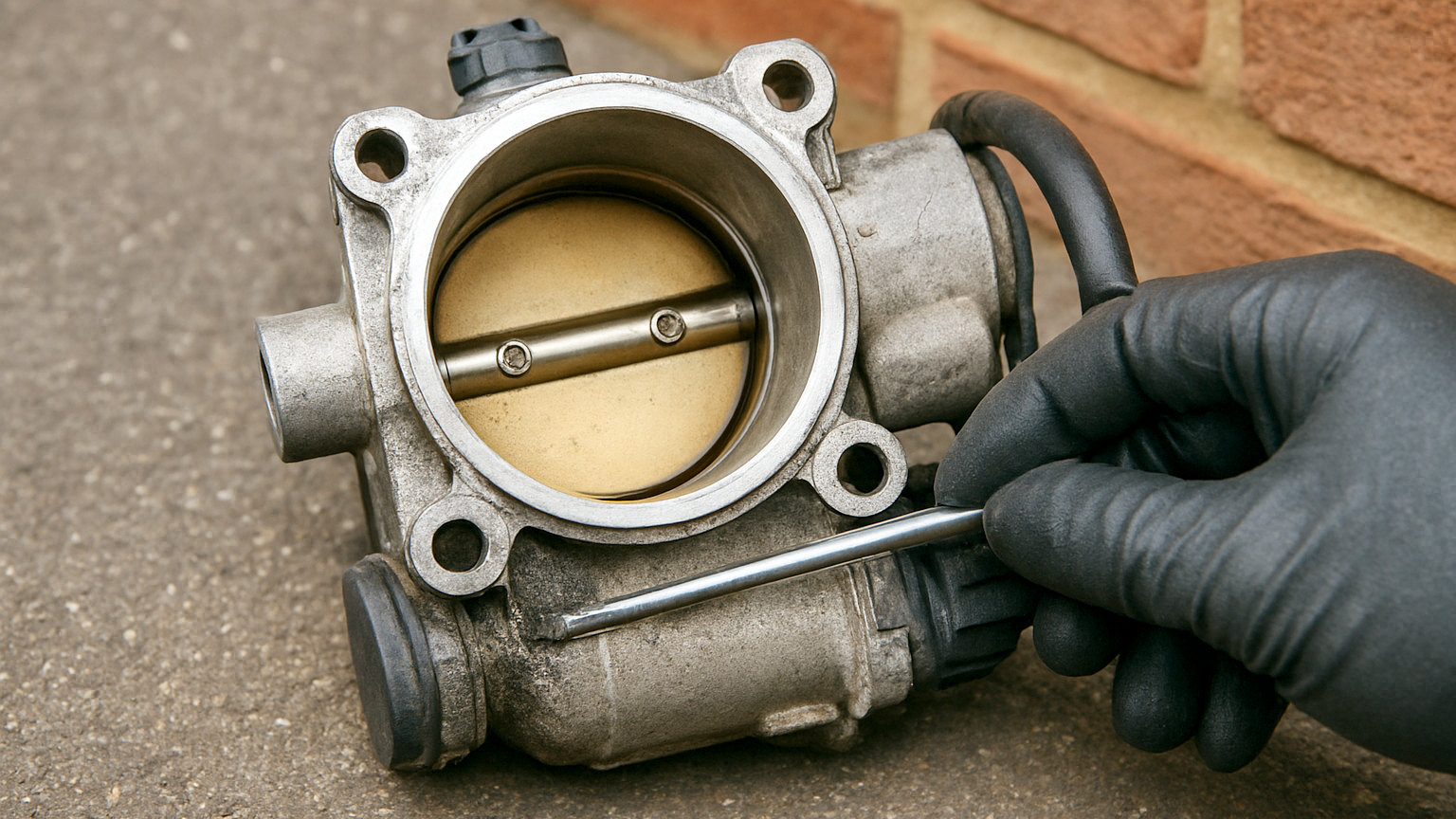
A judder that appears under light throttle and disappears the moment you accelerate properly is a genuinely useful symptom, because very few faults behave that way. Light load is the condition where fuelling errors are proportionally largest, where lock-up clutches engage, and where combustion is at its least robust. Several quite different faults reveal themselves there and hide everywhere else.
Why does light load expose fuelling faults?
Because the quantities involved are small. At a gentle cruise the engine draws little air and injects little fuel, so an air leak or a delivery inconsistency represents a large percentage of the total. Open the throttle properly and the same absolute error becomes a small fraction of a much larger flow, so the mixture returns to something the engine can burn evenly.
What is lock-up clutch judder?
On an automatic, the torque converter contains a clutch that locks the engine directly to the transmission at cruising speed to eliminate slip and save fuel. It engages under light load, which is exactly when this symptom appears. When the friction material or the fluid degrades, it grips unevenly and produces a shudder often described as driving over rumble strips. Applying more throttle unlocks it and the judder vanishes.
How do you confirm it is the lock-up clutch?
By noting whether the judder disappears the instant you press the accelerator or brake, since both commands unlock the converter. A diagnostic tool comparing engine speed against turbine speed shows lock-up engaging and slipping directly. On many cars a fluid change with the exact specified fluid resolves it, which makes it worth trying before a converter is condemned.
Can a misfire appear only at light load?
Yes, and it surprises people who expect misfires to be worst under acceleration. A lean mixture is harder to ignite reliably, and light load with a small charge in the cylinder is where a marginal spark struggles most. Worn plugs with excessive gaps, a failing coil or an air leak can therefore produce a judder at a gentle cruise while running acceptably when the throttle opens.
What about the EGR system?
Exhaust gas recirculation operates specifically at light load, feeding inert exhaust gas back into the intake to reduce combustion temperatures. When the valve sticks partly open or admits too much, the mixture becomes difficult to burn and the engine runs unevenly. Because the system closes under acceleration, the symptom disappears entirely when you press on, which fits this pattern precisely.
Could it be the fuel?
Contaminated or water affected fuel produces misfiring that is worst where combustion is most marginal, which is light load. If the judder appeared within a tank of an unfamiliar forecourt, running the tank down and refilling elsewhere is inexpensive and worth trying. On a diesel, water in the fuel is genuinely damaging and worth taking seriously rather than dismissing.
Does it happen at a particular speed?
Often, and it is worth noting. Lock-up clutch judder typically appears within a fairly narrow speed and load window, since that is when the clutch is engaged but only lightly loaded. A fuelling fault tends to appear across a broader range. Recording the speed and gear where it happens gives a workshop something specific to reproduce rather than a general complaint.
What should be checked first?
Fault codes and fuel trims, which reveal lean running or misfires even without a warning light. Spark plug replacement history. On an automatic, transmission fluid condition and whether lock-up slip is measurable in live data. Those checks separate an engine fault from a transmission one, which is the distinction that determines whether this is a set of spark plugs or a torque converter.
Should you keep driving?
A light throttle judder is not dangerous, though a persistent misfire damages the catalytic converter and a slipping lock-up clutch sheds material into the transmission fluid. Neither improves with time, so it is worth diagnosing rather than adapting your driving to avoid the conditions that reveal it.


