
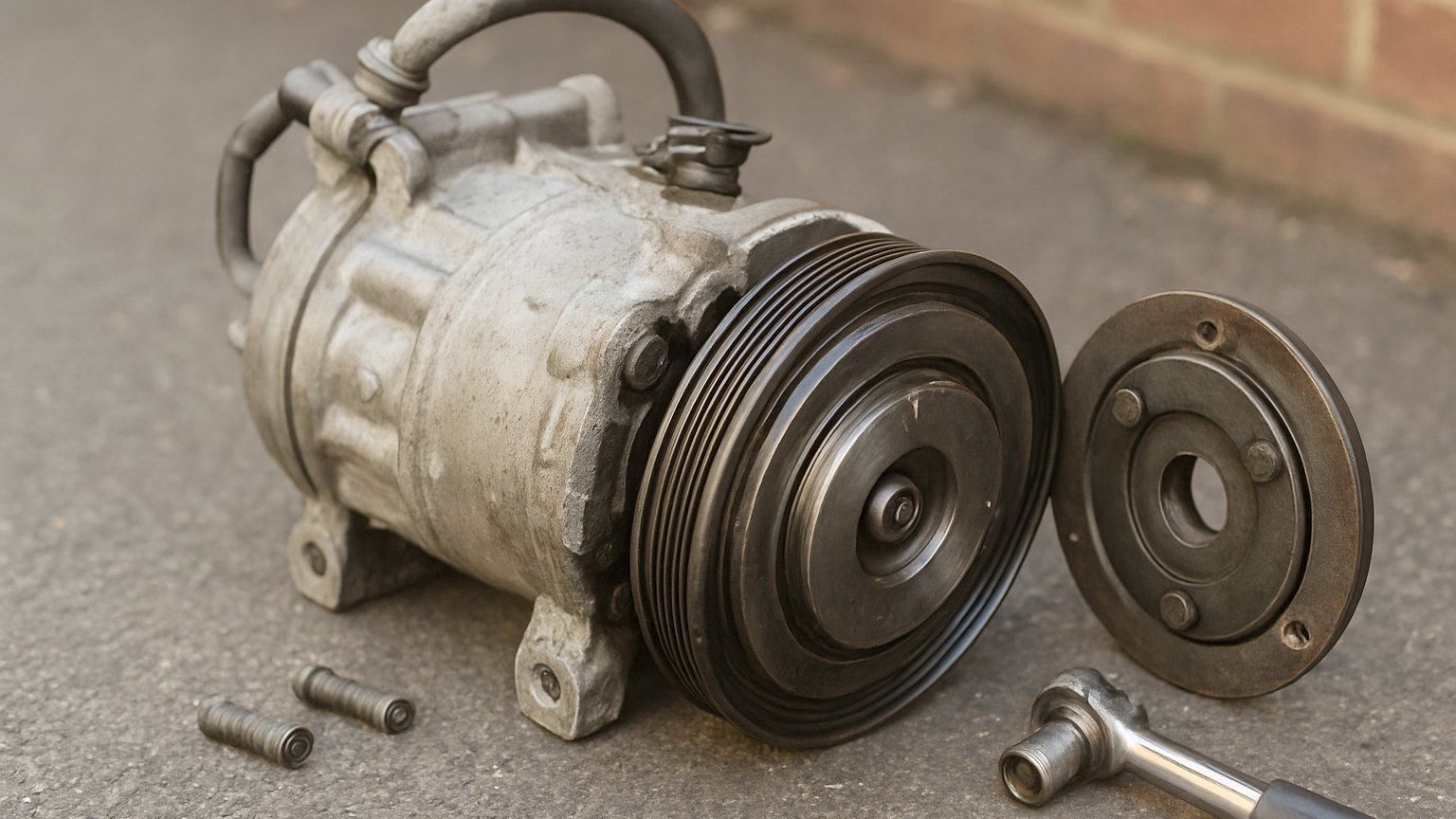
An air conditioning compressor does not run continuously. It cycles on and off to maintain the target temperature and pressure, and each engagement applies a real mechanical load to the engine within a fraction of a second. On a healthy car that produces nothing more than a small change in engine note. On one with no idle margin, every cycle is felt as a distinct jerk.
What is supposed to happen?
The engine management knows the compressor is about to engage, because it controls the clutch that engages it. It raises the idle speed and adjusts fuelling a moment beforehand so the load arrives on an engine already prepared for it. That anticipation is called idle up, and when it works the driver notices almost nothing.
Why would that anticipation fail?
Usually because the idle control cannot admit any more air. A throttle body coated with carbon, a sticking idle air control valve on older cars, or an electronic throttle that has run out of adaptation range all limit how much extra air can be supplied on demand. An unmetered air leak elsewhere means the system is already compensating and has nothing left in reserve.
How much load does the compressor apply?
More than most people expect, particularly on a hot day when the system is working hard. At idle, where the engine produces very little power, that load is proportionally large. Add the condenser fans switching on at the same moment, which loads the alternator, and the total demand arriving in one step is substantial for a small engine.
Could the compressor itself be at fault?
It can. A compressor with failing internal bearings takes far more effort to turn than a healthy one, and in the worst case it seizes and stops the engine or shreds the auxiliary belt. Warning signs include a loud clunk or grinding at the moment of engagement, a squeal from the belt as it engages, and air conditioning that has become progressively less cold.
Does refrigerant pressure matter?
Considerably. An overfilled system, or one with a condenser blocked by leaves and insects, runs at high pressure and makes the compressor much harder to turn. That also explains air conditioning that works reasonably at speed and poorly in traffic, which frequently accompanies this complaint. Checking the system pressures and cleaning the condenser are worthwhile before assuming an engine fault.
Is frequent cycling itself a symptom?
It can be. A system low on refrigerant cycles rapidly because the low pressure switch keeps cutting the compressor out, so instead of one engagement every minute you get one every few seconds, each producing a jerk. Rapid cycling combined with weak cooling suggests the system needs attention rather than the engine.
Should you just leave it switched off?
Not really, for two reasons. The underlying idle weakness will eventually cause stalling and rough running without the air conditioning too, since these faults progress. And air conditioning systems deteriorate when unused, because the compressor seals depend on oil circulating with the refrigerant, so a system left off for a year is more likely to develop a leak.
What should be checked?
The throttle body for carbon, the fuel trims for unmetered air, and the intake hoses for splits, since those cover the idle control side. On the air conditioning side, the system pressures, the condenser condition and the compressor for noise at engagement. Between them those checks distinguish an engine that cannot supply the power from a system demanding too much of it.
Is it worse in hot weather?
Usually, since the system works hardest when the cabin needs most cooling, and higher ambient temperatures raise the pressures the compressor works against. A jerk that appears only on the hottest days is describing a system operating at its limit rather than one that has failed, which is worth mentioning when describing the symptom to a workshop.
It is also worth noting whether the cooling itself has become weaker, since that points at refrigerant level rather than at the engine.


