
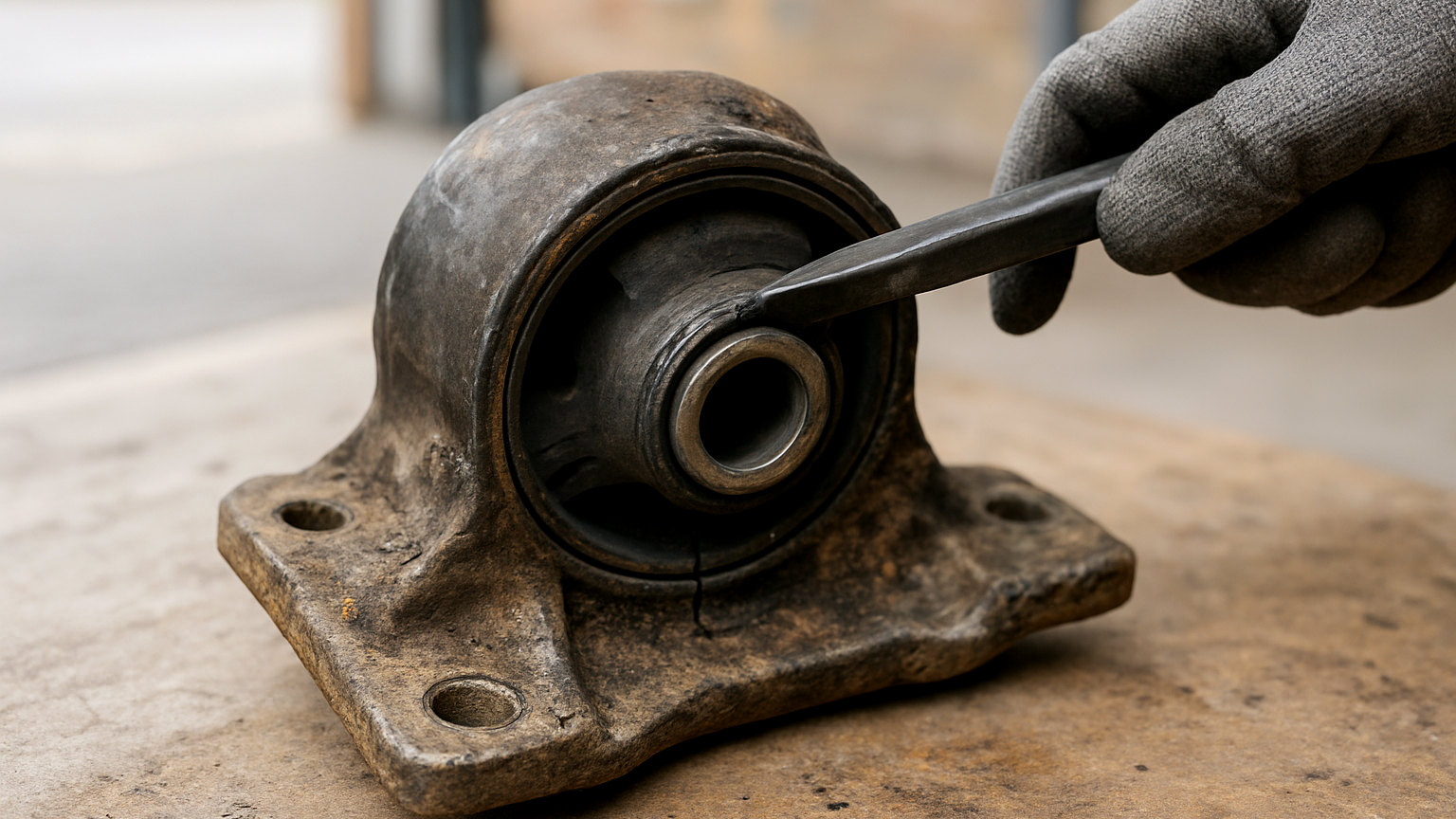
A distinct clunk or lurch at the moment the car begins to move is different from a shudder while it is moving. It is a single event rather than a repeating one, and it happens because clearance somewhere between the engine and the wheels is being taken up as load is applied. Small amounts are designed in; a noticeable jolt means the clearance has grown.
What is driveline backlash?
The total clearance through every gear mesh, spline and joint between the engine and the wheels. Gears need a small clearance to run without binding, and joints need it to move freely. When you apply drive, all of that slack is taken up in sequence, and on a healthy car the result is a barely perceptible take up. Wear increases each individual clearance and the total becomes audible.
Which components are usually responsible?
Engine and gearbox mounts most often, since worn ones let the whole assembly shift before drive reaches the wheels. Then driveshaft joints, propshaft universal joints on rear wheel drive cars, and differential backlash. Worn suspension bushes allow the axle to move relative to the body under torque, which adds to the effect and produces a similar clunk.
How do you check the mounts?
Apply the handbrake firmly, put the car in gear, and have someone blip the throttle while you watch the engine from a safe position outside. A small movement is normal; the assembly lifting or twisting noticeably is not. Look also for cracked or separated rubber and for a hydraulic mount weeping fluid. It is a two minute check and it identifies the most common cause.
What causes it on an automatic?
A delay before engagement followed by a clunk usually indicates low hydraulic pressure, which could be low fluid, a worn pump, internal leakage or a blocked filter. That is a more serious symptom than backlash, because it suggests the transmission is struggling to apply its clutches. Worn mounts produce the same clunk without the delay, so the timing distinguishes them.
Is a clunk into reverse different?
Slightly, because reverse loads the driveline in the opposite direction and takes up all the slack the other way. That is why a worn car often clunks noticeably when shifting between forward and reverse, and why a clunk that appears only in reverse is still describing the same accumulated play. It is a useful confirmation rather than a separate fault.
Could the clutch be involved?
On a manual, yes. A clutch that engages abruptly rather than progressively produces a jolt, whether from oil contamination, a warped plate or a dual mass flywheel that has lost its damping. The distinguishing feature is that a clutch problem produces a shudder or grab as drive takes up, while backlash produces a single clunk before the car moves at all.
Does it matter?
Moderately. The clunk itself is not dangerous, but the components producing it continue wearing, and worn mounts strain everything attached to the engine including exhaust joints, hoses and wiring. A propshaft universal joint that has developed enough play to clunk should be dealt with promptly, since complete failure at speed is genuinely serious.
What should you check first?
The mounts, because they are cheap, common and easy to inspect. Then have the driveshaft or propshaft joints checked for play with the car raised. On an automatic, the fluid level and condition, particularly if there is a delay before engagement. Working in that order deals with the likely and inexpensive causes before anything larger is considered.
Can driving technique reduce it?
To a degree. Taking up drive progressively rather than abruptly gives the slack time to close gently, and avoiding sudden changes between throttle and overrun in traffic reduces how often it happens. That is worth knowing while a repair is arranged, though it does not slow the underlying wear, and a clunk that has become pronounced is reporting play that will keep growing.


