
Diesel engines produce most of their torque at low engine speeds, which means low revs under load is exactly where they work hardest. Any shortfall in fuelling, boost or air quality therefore shows up there first, and a diesel that jerks or hesitates pulling from low revs in a high gear is reporting something in that chain rather than a general engine problem.
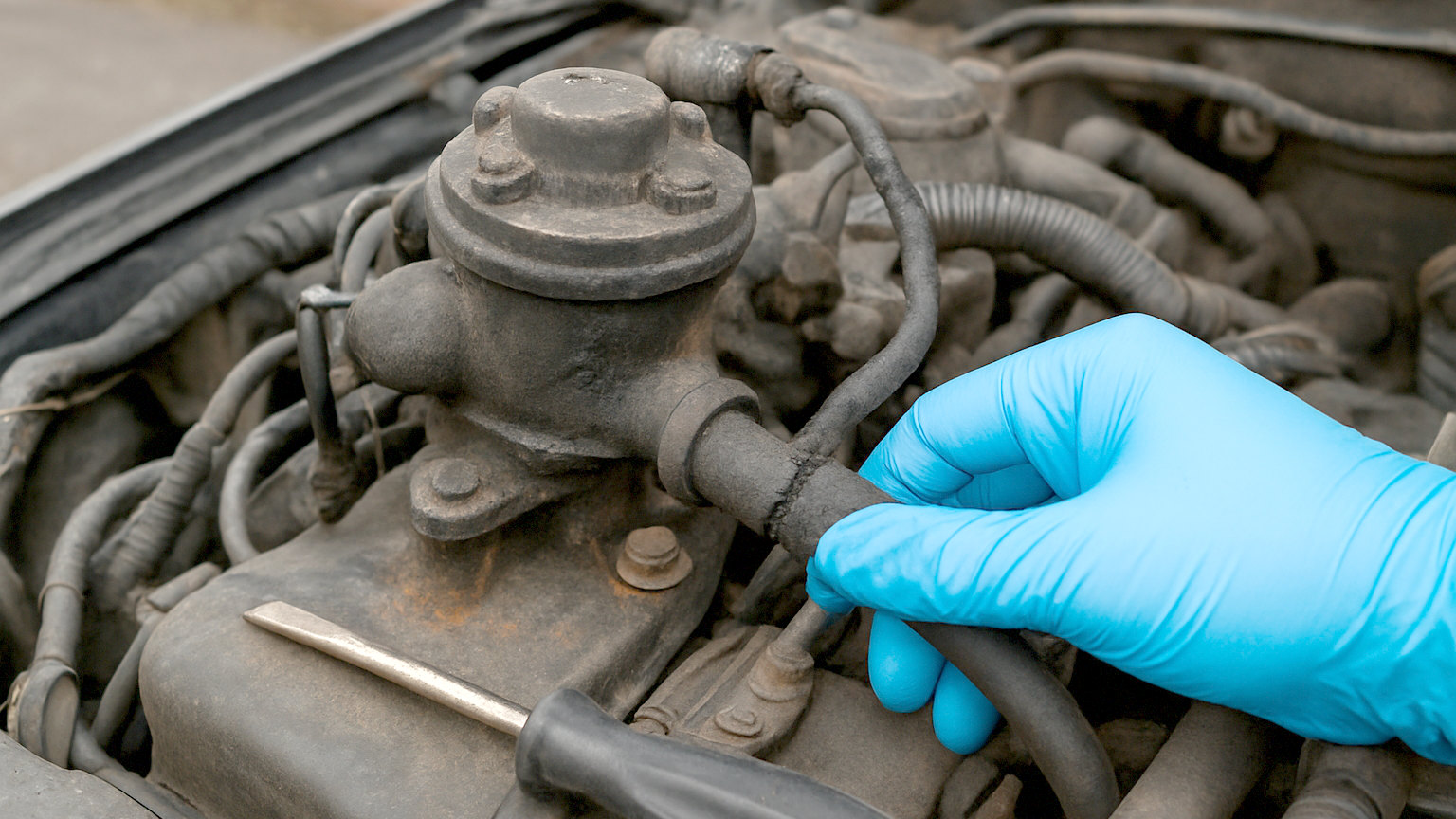
What does a sticking EGR valve do?
The exhaust gas recirculation valve feeds inert exhaust gas back into the intake at light load to reduce combustion temperatures, and it operates in a filthy environment that clogs it with soot. A valve stuck partly open admits exhaust gas when the engine needs fresh air, producing rough running, black smoke and a distinct hesitation or judder under load. Cleaning is a common and effective repair.
How does the turbo contribute?
A diesel relies on boost to supply enough oxygen for the fuel it injects, and low revs is where the turbo is only beginning to deliver. A split intercooler hose, a sticking variable vane mechanism or a failing actuator all mean boost arrives inconsistently, which produces surging and jerking exactly in that range. Sticking vanes are particularly common on cars used for short journeys.
What do worn injectors feel like?
Uneven running that is worst at low load, since the quantities injected are smallest and the spray pattern matters most. There may be a harsher knock than usual, more smoke, and a rough idle alongside. A garage can read injector correction values on a diagnostic tool, which shows how far the management is compensating for each injector and identifies a weak one far more reliably than driving impressions.
Is a particulate filter regeneration involved?
Frequently, and it catches people out because nothing is actually wrong. During a regeneration the management alters injection timing to raise exhaust temperature, and the car can feel flat, hesitant or slightly rough for fifteen or twenty minutes. If the symptom lasts about that long, occurs on longer runs and is followed by a hot smell and a fan running, it may simply be the car cleaning itself.
Could it be fuel quality?
It can, and it is worth ruling out first because it costs nothing beyond a tank. Water or contamination in diesel produces misfiring and jerking under load and can damage the injection system over time. Many diesels have a water separator that requires periodic draining and is routinely forgotten. If the problem began within a tank of an unfamiliar forecourt, that is the obvious place to start.
What about limp mode?
A diesel that jerks and then loses power sharply, refusing to rev beyond a certain point, has entered limp mode rather than developing a mechanical fault. That is a protective response to a recorded fault, most often relating to boost pressure or the particulate filter. Reading the stored codes identifies the trigger, and a restart often clears it temporarily without fixing anything.
Does driving in too high a gear make it worse?
Considerably. Labouring a diesel below its comfortable range asks for maximum torque at the point where boost is lowest and combustion is roughest, which exaggerates every fault described here. Changing down and letting the engine breathe is easier on the whole driveline, and it also distinguishes a genuine fault from a car simply being driven outside its happy range.
What should be checked?
Fault codes including any stored while no light is showing, boost pressure and EGR operation in live data, injector correction values, and the intercooler pipework for splits. That combination covers the likely causes in one diagnostic session, which is far better value than replacing components in the order they appear online.
Does the driving pattern matter?
Enormously. Short urban journeys foul the EGR valve, gum the turbo vanes and prevent the particulate filter regenerating, which are three of the causes listed here. A weekly run of half an hour at sustained speed genuinely reduces all of them and costs nothing beyond the fuel.


