
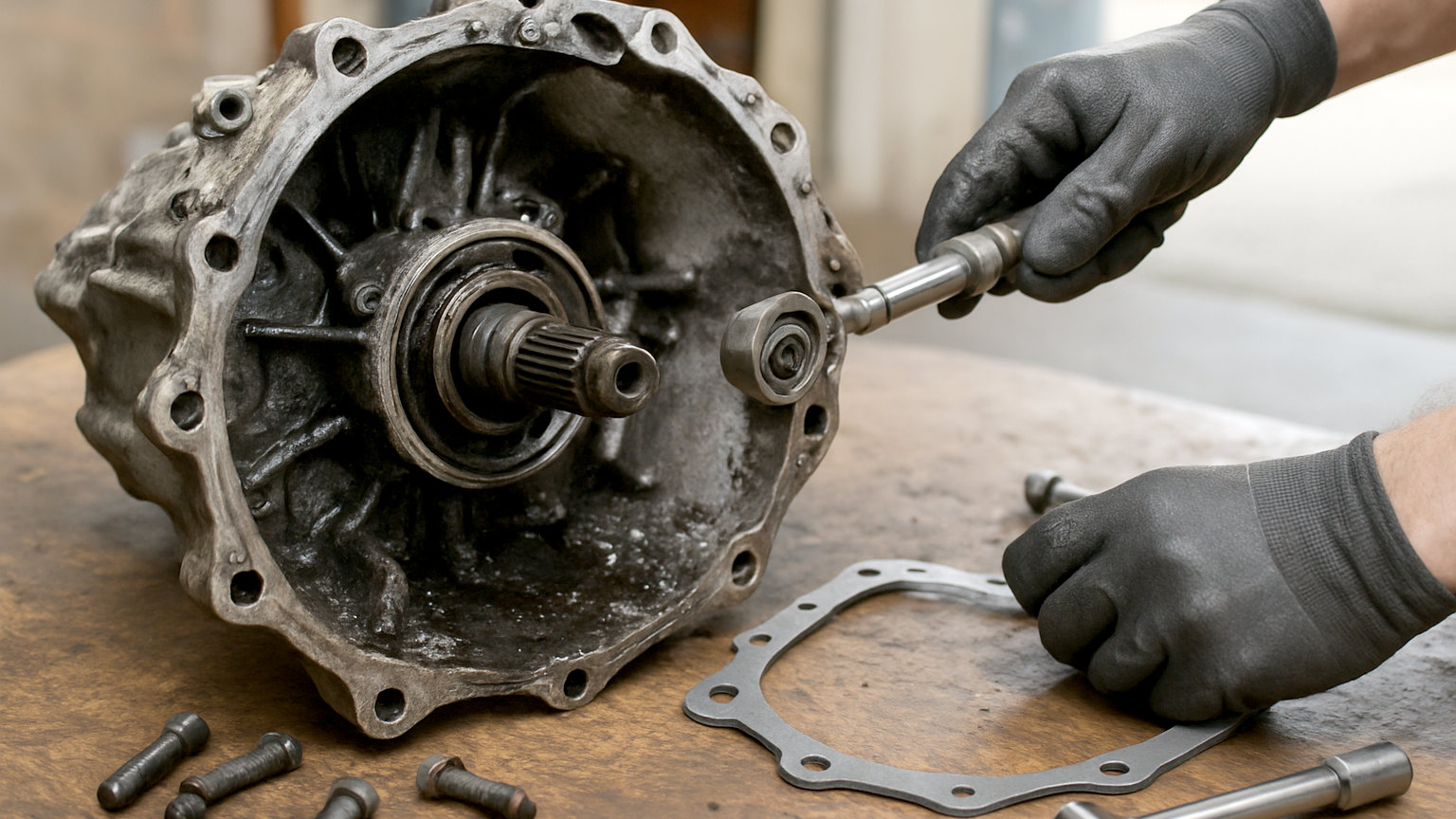
Being told a gearbox has failed presents four realistic options, and the right one depends on the value of the car, the nature of the failure and how much of the cost is labour rather than parts. Since the labour to remove and refit a transmission is broadly the same whichever route you take, that figure is the anchor for the whole decision.
What are the four options?
Repairing the existing unit in place where the fault is external, such as a linkage or a seal. Rebuilding the existing gearbox by dismantling it and replacing worn components. Fitting a used gearbox from a breaker. Or fitting an exchange reconditioned unit. Each has a different balance of cost, risk and warranty, and none is universally correct.
When does a rebuild make sense?
When the car is worth keeping, when the failure is confined to identifiable components, and when used units are scarce or expensive for that model. A rebuild by a specialist replaces the worn parts along with all bearings and seals, and the result can be better than a used unit of unknown history. It is usually the most expensive option and often the most thorough.
What are the risks of a used gearbox?
You are buying an unknown. It may have identical wear to the one being removed, and a mileage figure from a breaker is not a condition report. On common vehicles they are inexpensive enough to be attractive, and reputable dismantlers offer a limited warranty. The gamble is that the labour to fit it is the same whether it lasts a decade or a fortnight.
What does exchange reconditioned mean?
A unit already rebuilt and tested, supplied on the basis that your old one goes back as a core. It costs more than used and usually less than a bespoke rebuild, and it comes with a meaningful warranty. Availability is the practical constraint, since these are stocked for common applications and may not exist for less popular vehicles.
How much of the cost is labour?
Frequently more than half, and on some vehicles considerably more, particularly where the subframe must be lowered or the engine supported. That figure changes the arithmetic entirely, because saving on the unit itself is a false economy if there is any real chance of doing the job twice. Ask for the labour time as a separate figure before comparing quotes.
What else should be replaced at the same time?
On a manual, the clutch, release bearing and any spigot bearing, since the labour to reach them has already been paid and a worn clutch behind a fresh gearbox is a poor outcome. The input shaft seal. Gearbox mounts if perished. On an automatic, the torque converter and a thorough flush of the cooler lines, since debris left there will contaminate the replacement.
What questions should you ask about warranty?
How long, what it covers, and crucially whether it includes the labour to refit. A parts only warranty on a job with substantial labour is worth far less than it sounds. Ask also whether the warranty is void if the fault that caused the original failure is not addressed, since a supplier is entitled to expect a contaminated cooler or a worn clutch to be dealt with.
Why did it fail in the first place?
Worth establishing, because fitting a replacement into the same conditions repeats the outcome. Low or degraded fluid, a leaking seal, a failed cooler contaminating the fluid, worn mounts or a dragging clutch can all be the underlying cause. A supplier or specialist who asks this question before quoting is demonstrating something useful about their approach.
When is the car simply not worth it?
When the total exceeds what the vehicle is worth with a working gearbox, which happens frequently on older cars. That is a legitimate conclusion, and it is better reached before paying for removal and inspection than after. Get a written estimate covering parts, labour and any additional items before committing, and be realistic about the rest of the car condition.


