
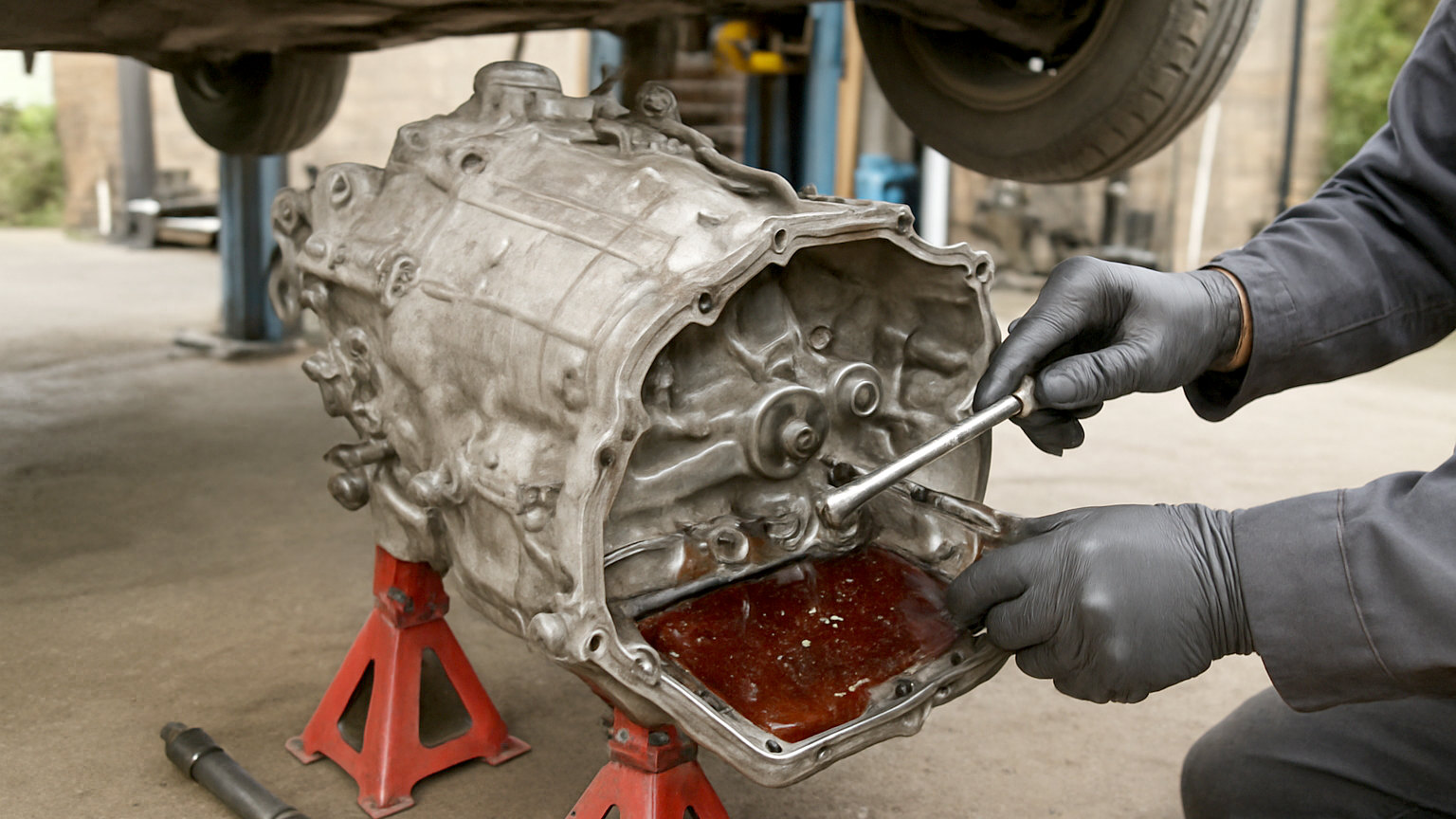
Automatic transmission fluid is the single most informative thing an owner can look at, because it is in constant contact with every friction surface inside the unit and it carries the evidence. Its colour, smell and contents amount to an internal inspection without removing anything, and reading it correctly can identify a developing problem long before it becomes a symptom.
What should healthy fluid look like?
Bright red or amber, translucent, and smelling faintly oily. It darkens gradually with age and heat, and a mid brown colour on high mileage fluid is not necessarily alarming on its own. What matters is the combination of colour with smell and clarity, since fluid can darken from age alone or from damage, and the smell distinguishes them.
What does burnt fluid mean?
Dark brown or black fluid with a distinctly acrid burnt smell means the transmission has been overheating and the clutches have been slipping. That smell is unmistakable once encountered. It indicates damage already done rather than damage about to happen, and a transmission with fluid in this condition usually has worn friction material and a limited remaining life.
What do particles in the fluid indicate?
Fine dark specks suspended in it are worn clutch friction material, which is normal in small quantities and concerning in larger ones. Glittery metallic particles indicate wear from gears, bearings or the pump, and are more serious. Wiping the dipstick on a clean white cloth reveals what colour reading alone cannot, and it is worth doing every time you check.
What if the fluid is pink and milky?
That is coolant contamination, and it is one of the more serious findings. Many cars route transmission fluid through a cooler inside the radiator, and when that cooler fails internally, coolant and transmission fluid mix. The resulting emulsion destroys the clutch material rapidly. It also means transmission fluid is entering the cooling system, so the coolant will look wrong too.
How should the level be checked?
Following the specific procedure for your vehicle, which usually means the engine running, the transmission at operating temperature, the car level, and the selector moved through every position before returning to park or neutral. Checking it cold or with the engine off gives a reading that can be wildly wrong. The handbook states which applies, and getting this wrong is the most common source of false alarms.
What about cars with no dipstick?
Many modern automatics are sealed and have no dipstick at all, which is where the sealed for life description comes from. Checking those requires raising the car level, bringing the fluid to a specified temperature measured with a diagnostic tool, and removing a level plug so excess fluid runs out. It is a workshop procedure rather than a driveway one, and doing it wrong is worse than not doing it.
Why is overfilling as bad as underfilling?
Because rotating components churn excess fluid into foam, and foam cannot transmit hydraulic pressure. The result is slipping, overheating and erratic shifting, which are the same symptoms as being low. Overfilled fluid also expands as it heats and can be forced out of the breather. The correct level on these units is genuinely narrow, which is why the temperature specification matters.
How often should it be checked?
On a car with a dipstick, every few months and before any long journey or towing. Sealed units cannot be checked casually, so the practical approach is to watch for symptoms and have the level verified whenever the car is serviced. Any automatic that has developed a leak, however slow, should be checked promptly, since these units hold less spare capacity than people assume.
What should you do if it looks wrong?
Do not simply top up dark or burnt fluid and carry on, since the level is only part of the story. Have the transmission assessed, and take a sample if you can, since a specialist can tell a great deal from it. If the fluid is milky, stop driving and have the cooler checked, because continuing circulates coolant through the clutch packs and destroys them quickly.


