
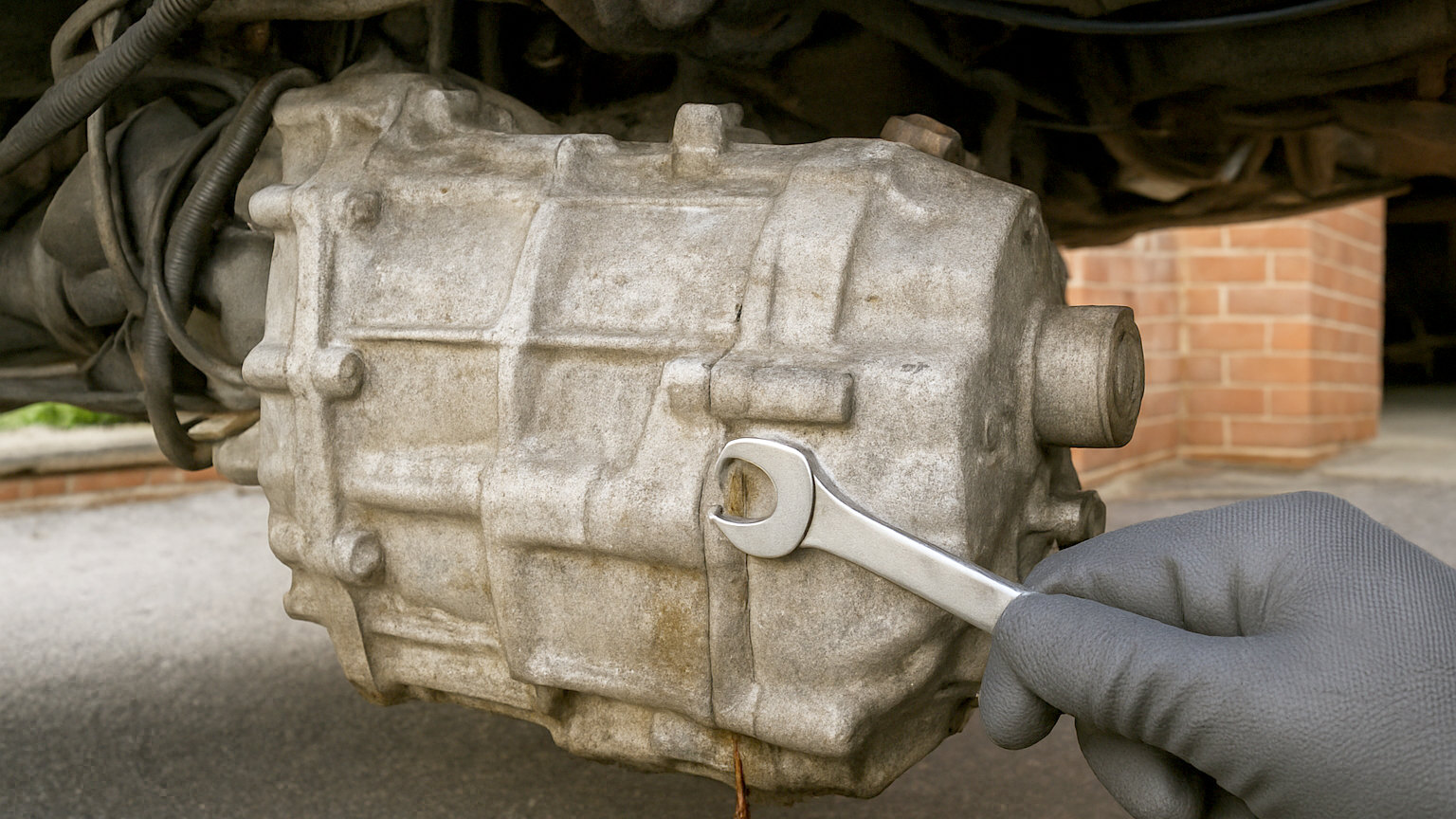
Gearbox leaks are treated less seriously than engine leaks, and that is a mistake for one simple reason: capacity. An engine might hold five litres of oil, so losing a hundred millilitres barely moves the dipstick. A manual gearbox may hold under two litres, and losing the same amount is a substantial proportion of everything protecting the bearings and gears.
Where do gearboxes leak from?
Driveshaft output seals are the most common, since they run against a rotating shaft in an exposed position. The input shaft seal behind the clutch leaks into the bellhousing, which often shows as oil dripping from the bottom of the housing. Selector shaft seals, the casing joint where two halves meet, the drain and filler plugs, and on automatics the sump gasket and cooler lines all feature.
How do you tell gearbox oil from engine oil?
By colour and smell. Automatic transmission fluid is red or reddish brown and thin. Manual gearbox oil is usually amber to dark brown, thicker, and has a distinctive sulphurous smell from its extreme pressure additives that is quite unmistakable once encountered. Engine oil is black when used and smells of combustion. Placing clean cardboard under the car overnight gives both a sample and a position.
Why does the breather matter?
Because a gearbox heats up and the air inside expands, and a breather lets that pressure escape. When it blocks with dirt, pressure builds and pushes oil out past the seals, so the leak is a symptom rather than the fault. It is a cheap thing to check and clean, and doing so occasionally cures a leak that would otherwise have meant replacing seals.
What does the clutch have to do with it?
A leaking input shaft seal drips oil onto the clutch friction plate, which then slips and judders. So a gearbox leak in that particular position causes a clutch problem, and replacing the clutch without renewing the seal simply contaminates the new one. Any clutch replacement should include inspecting that seal, and any oil found in the bellhousing needs explaining before the box goes back on.
Are automatic leaks more urgent?
Generally yes, because an automatic depends on fluid for hydraulic pressure as well as lubrication. Losing fluid means losing pressure, which means clutches slipping, which destroys them quickly. An automatic that is leaking should have its level checked frequently until the leak is repaired, and a sudden loss should be treated as a reason to stop rather than to monitor.
How do you check the level on a manual box?
Usually through a filler plug on the side of the casing, with the car level. Correct level is typically at the bottom of that plug hole, so oil should just be reaching the threads. It is a simple check that almost nobody performs, and on a high mileage car it is worth doing once even if there is no visible leak, since slow seepage over years adds up.
What damage does running low cause?
Bearings and gear teeth run without an adequate oil film, which produces whining, then pitting of the gear surfaces, and eventually failure. The damage is progressive and irreversible, and a gearbox that has been run low will often continue to whine even after the level is corrected. That is why a small leak found early is worth attending to rather than monitoring indefinitely.
How difficult are the repairs?
Driveshaft seals are often accessible without removing the gearbox, which makes them a reasonable job. Input shaft seals require the gearbox to come off, so they are usually done alongside a clutch. Casing joint leaks mean splitting the box. Cost therefore varies enormously depending on which seal, which is why identifying the source precisely matters before getting a quote.
What should you do about a slow seep?
Clean the area thoroughly so you can see fresh oil, then monitor and check the level regularly. A very slow seep on an older car may reasonably be watched rather than repaired. What should not be ignored is any leak fast enough to leave a daily mark, any oil visible in the clutch bellhousing, or any automatic that is losing fluid at all.


