
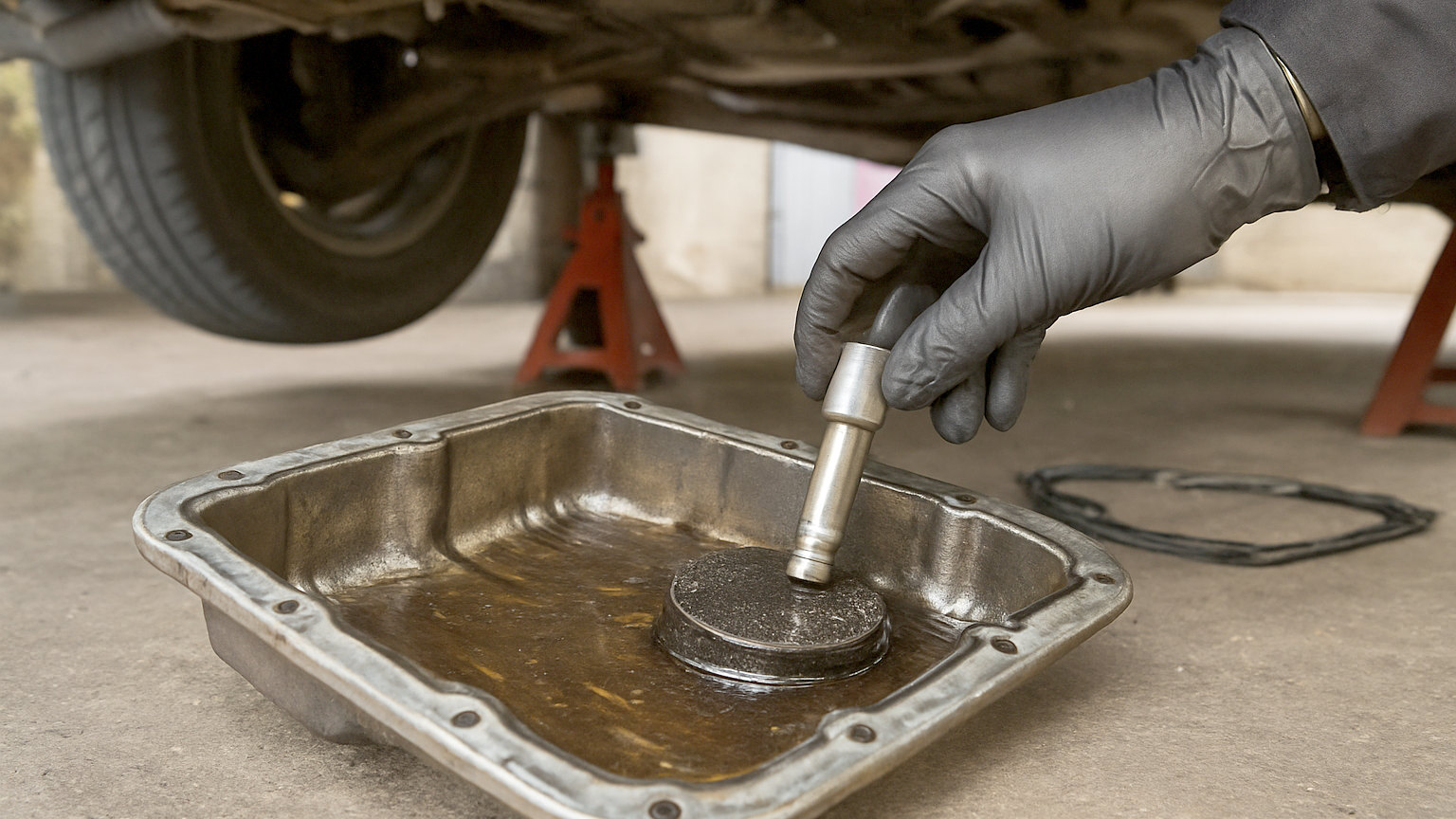
Few maintenance questions produce more disagreement than whether automatic transmission fluid needs changing. Manufacturers describe many modern units as sealed for life and specify no interval at all, while transmission specialists spend their working lives rebuilding those same units. Both positions are defensible once you understand what the phrase actually means.
What does sealed for life mean?
The life the manufacturer had in mind, which is a design life rather than the life of the vehicle in your ownership. It reflects warranty periods and running cost comparisons rather than a claim that the fluid never degrades. Anyone intending to keep a car to two hundred thousand miles is operating well outside the assumptions behind that description.
Does the fluid actually degrade?
Yes, unquestionably. Transmission fluid works as a lubricant, a hydraulic medium and a friction modifier, and heat degrades all three properties. It also accumulates worn clutch material and metal particles. A sample taken from a high mileage sealed unit rarely looks like fresh fluid, and laboratory analysis consistently shows depleted additives and contamination.
Why do specialists recommend changing it?
Because they see the consequences. Overheated fluid loses the friction characteristics the clutch packs depend on, which causes slipping, which generates more heat. Fresh fluid at sensible intervals interrupts that cycle. Many specialists suggest somewhere between forty and sixty thousand miles, and considerably sooner for vehicles that tow, sit in traffic or are driven hard.
What is the argument against changing it?
The widely repeated claim that changing fluid in a neglected high mileage unit causes failure. The mechanism usually proposed is that detergents in fresh fluid dislodge deposits which then block passages. The more likely explanation in most cases is that the transmission was already failing, and the fluid change coincided with rather than caused the failure. It is a correlation that has hardened into folklore.
What is the difference between a flush and a drain?
A drain and fill removes whatever comes out of the sump, typically less than half the total, since the rest sits in the torque converter and cooler lines. A flush uses a machine to exchange nearly all of it. Flushing is more thorough and more aggressive, and many specialists prefer repeated drain and fills on an older unit, which dilutes the old fluid gradually over a few services.
Should the filter be changed too?
Where one is accessible, yes, and it is frequently overlooked. Many automatics have an internal filter in the sump that traps debris, and a blocked one restricts flow and lowers pressure. Changing it requires dropping the sump, which usually means a new sump gasket, so it costs more than a simple drain and fill and is worth doing at longer intervals.
Does the fluid specification matter?
Enormously, more than with engine oil. Modern automatics are calibrated around specific fluid friction characteristics, and using a general purpose or universal fluid where a manufacturer specification is required produces harsh shifting, shudder and premature wear. Only fluid meeting the exact specification should be used, and any workshop offering a one size fits all product should be questioned.
What about manual gearboxes?
They are simpler but not exempt. Manual boxes carry a modest quantity of oil that shears and degrades over time, and many manufacturers specify no change interval on those either. Replacing it every eighty thousand miles or so is inexpensive and noticeably improves shift quality on a high mileage car, and it flushes out the metal particles that accumulate.
What is the sensible conclusion?
If you intend to keep the car, change the fluid at sensible intervals using the correct specification, and start doing so before the unit shows symptoms. If the transmission is already slipping, a fluid change is unlikely to rescue it and the money is better spent on a proper assessment. The worst position is a hundred and twenty thousand miles of neglect followed by hope.
Keep the receipts either way, because a documented fluid history is worth real money when selling an automatic and it is one of the first things a knowledgeable buyer will ask about.


