
A car that starts, revs freely and refuses to move is an alarming situation, and the natural assumption is a destroyed gearbox. That is sometimes correct and frequently not. Several much cheaper faults produce exactly the same result, and working through them in order of cost before accepting the worst diagnosis is worth an hour of anyone time.
Is the selector actually moving the gearbox?
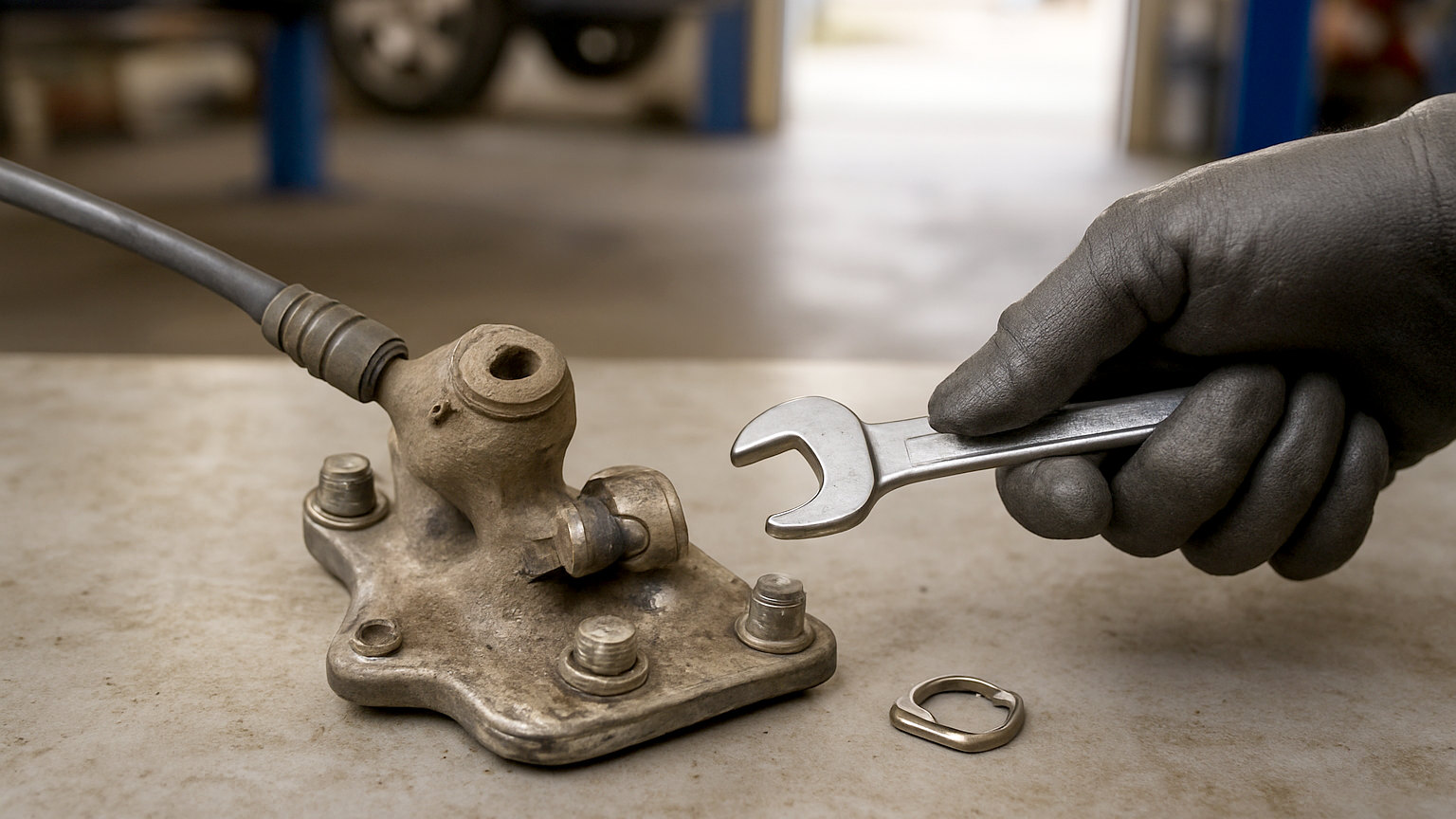
The first thing to check, and one of the most common answers. The lever is connected to the transmission by a cable or linkage, and when a cable snaps, stretches or a bush fails, the lever moves normally while the transmission stays where it was. The clue is that the dashboard display may not match the lever position, or the lever feels unusually light with no detents.
What is the shift interlock?
A mechanism preventing the car being taken out of park unless the brake pedal is pressed and the ignition is on. When its solenoid or switch fails, the lever will not move at all. Most cars have a manual override, a small slot near the lever that can be pressed with a key while shifting. Finding that in the handbook is worth doing before assuming the transmission has failed.
Could it be the fluid level?
Very much so, and it is checked far too late. A transmission low on fluid cannot generate the pressure to apply its clutches, so it revs without transmitting drive. If the level has dropped suddenly, there is a leak, and finding it matters as much as topping up. On sealed units the level check is a workshop procedure at a specified temperature rather than a casual look.
What does limp mode look like?
Many transmissions default to a single gear, often third, when they detect a fault, so the car will move but pulls away sluggishly and has no other ratios. That is a protective state rather than mechanical failure, and it is frequently triggered by a solenoid, a speed sensor or a wiring fault. A transmission module scan usually identifies it immediately, and the repair can be modest.
Does it engage in some positions and not others?
A useful distinction. Drive working but not reverse, or the opposite, points at a specific clutch pack or band rather than at a general loss of pressure, since different elements are applied for different directions. Nothing working at all in any position suggests fluid, the pump or the torque converter, which affect everything equally.
What if there is a delay before it engages?
A pause of several seconds before drive takes up, followed by a clunk, indicates low pressure building slowly. That points at a worn pump, internal leakage past seals, a blocked filter or low fluid. It is usually a symptom that has developed gradually and been ignored, and once it becomes a complete failure to engage the internal damage is generally extensive.
Could the torque converter be at fault?
Yes, and it produces exactly this symptom when it fails internally. Since the converter is what transmits engine power into the transmission at all, a broken one means the engine revs with nothing behind it. Fortunately it is a less common failure than the alternatives, and a stall speed test or live data comparison of engine and turbine speed distinguishes it.
What should you not do?
Rev the engine repeatedly hoping it will engage, since that generates heat and can cause damage if something is slipping rather than disconnected. Do not tow the car with the driven wheels on the ground unless the handbook specifically permits it, because on many automatics the gearbox is not lubricated when the engine is not running and towing destroys it.
What is the sensible sequence?
Check the fluid level and condition, check the selector cable actually moves the transmission lever, scan for transmission codes, and only then consider internal failure. Those three checks are inexpensive and they identify a meaningful share of cases. If they come back clear, a transmission specialist rather than a general garage is the right next call.


