
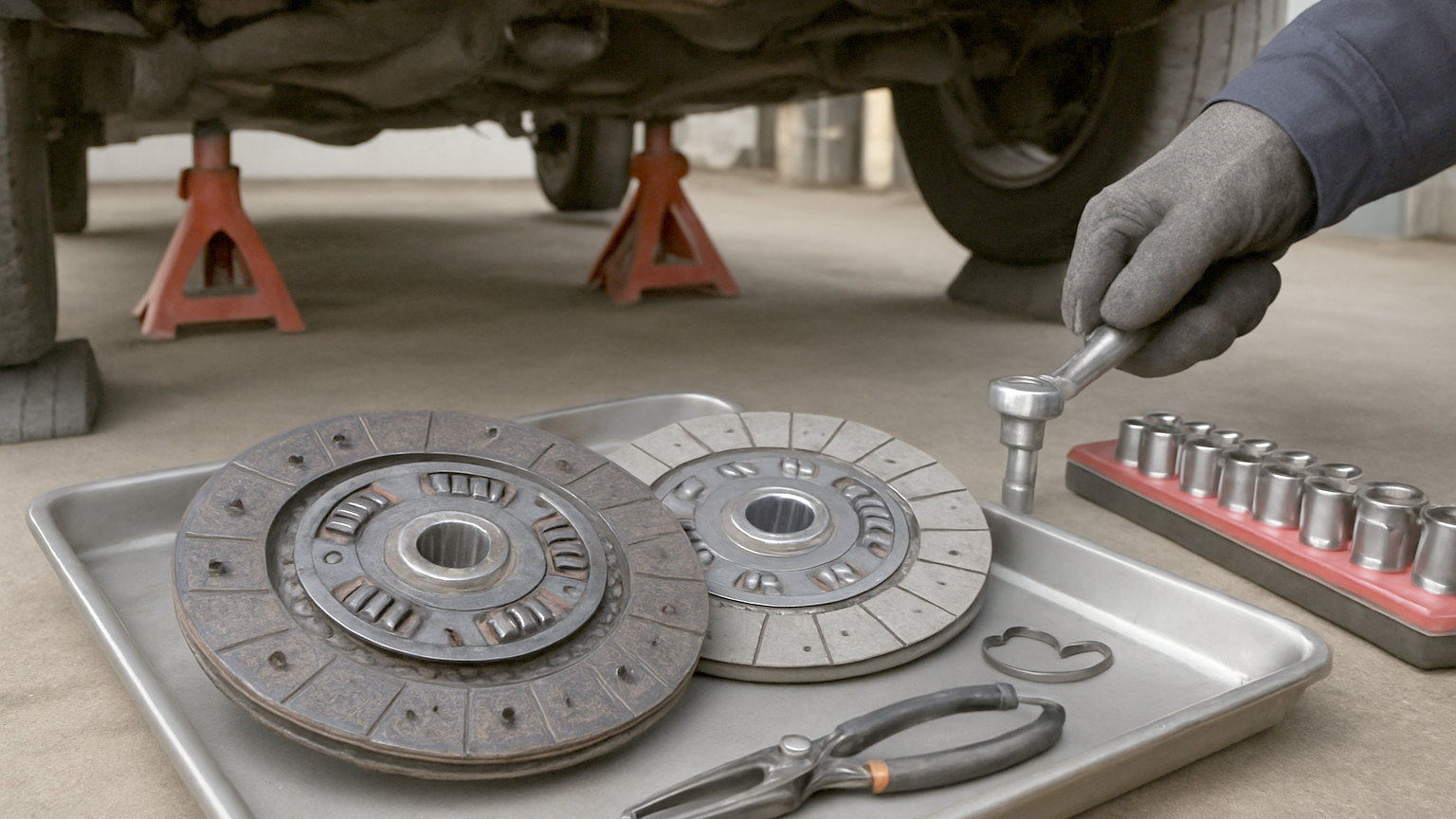
Slipping in an automatic gearbox is unmistakable once you know what to listen for. The engine revs rise without a matching increase in speed, either during a change or under acceleration in a fixed gear. It means drive is being lost somewhere inside the transmission, and it is the symptom where the gap between acting early and acting late makes the largest financial difference.
What is actually slipping?
Inside a conventional automatic are sets of clutch plates and brake bands that lock different parts of a gear train to select each ratio. They are applied by hydraulic pressure. Slipping means one of those elements is not holding, either because the friction material has worn, because the hydraulic pressure applying it is too low, or because the fluid has degraded and lost its friction properties.
What is flaring?
A brief rise in revs during the change itself, as one element releases before the next has fully engaged. It feels like a momentary loss of drive between gears. Early on it may only happen on a particular change, such as second to third, or only when the fluid is hot. It is an early stage of the same problem and should be treated as a warning rather than a quirk.
Why does fluid level matter so much?
Because the fluid is not just a lubricant, it is the hydraulic medium that applies the clutches and transmits drive through the torque converter. Low fluid means low pressure, and low pressure means slipping. It is also the cheapest possible cause, which is why the level and condition should always be checked first. Note that many automatics have no dipstick and require a specific procedure at a set temperature.
What does the fluid condition tell you?
A great deal. Healthy fluid is red or amber and smells oily. Fluid that is dark brown or black and smells burnt has been overheated, which destroys its friction characteristics and indicates the clutches have been slipping for some time. Fine dark particles are worn friction material. Fluid in that state is evidence of damage already done rather than a problem about to start.
Why does slipping accelerate the damage?
Because a slipping clutch generates heat, heat degrades the fluid, degraded fluid provides less friction and lower pressure, and that causes more slipping. It is a loop that feeds itself, which is why a transmission that has been slipping mildly for months can fail completely in a short period. Continuing to drive is genuinely expensive rather than merely risky.
Could it be the torque converter?
Yes. The lock-up clutch inside the converter engages at cruising speed to remove the small amount of slip inherent in the design, and when it wears or its control solenoid fails, the revs sit higher than they should at a steady speed. That can feel like slipping without any gear change taking place. Live data showing engine speed against turbine speed distinguishes it.
Can it be electronic rather than mechanical?
Sometimes, which is the more hopeful outcome. Pressure control solenoids and shift solenoids fail, and the module controls line pressure through them. A solenoid fault or a wiring problem can cause slipping while the clutches themselves are perfectly sound. This is why a scan of the transmission module and a look at live pressure values is worth doing before anyone talks about a rebuild.
Will a fluid change fix it?
Occasionally, if caught very early and the fluid is simply old or low. Once the friction material has worn, new fluid changes nothing, and there is a long standing debate about whether changing badly neglected fluid can precipitate failure. The honest position is that fresh fluid in a healthy transmission is beneficial, and fresh fluid in one that is already slipping rarely rescues it.
What should you do immediately?
Check the fluid level and condition using the correct procedure, have the transmission module scanned for codes, and stop driving it hard. Avoid towing, hills and heavy loads. Then get it assessed by a transmission specialist rather than a general garage, because the diagnosis here genuinely benefits from experience with the particular unit.


