
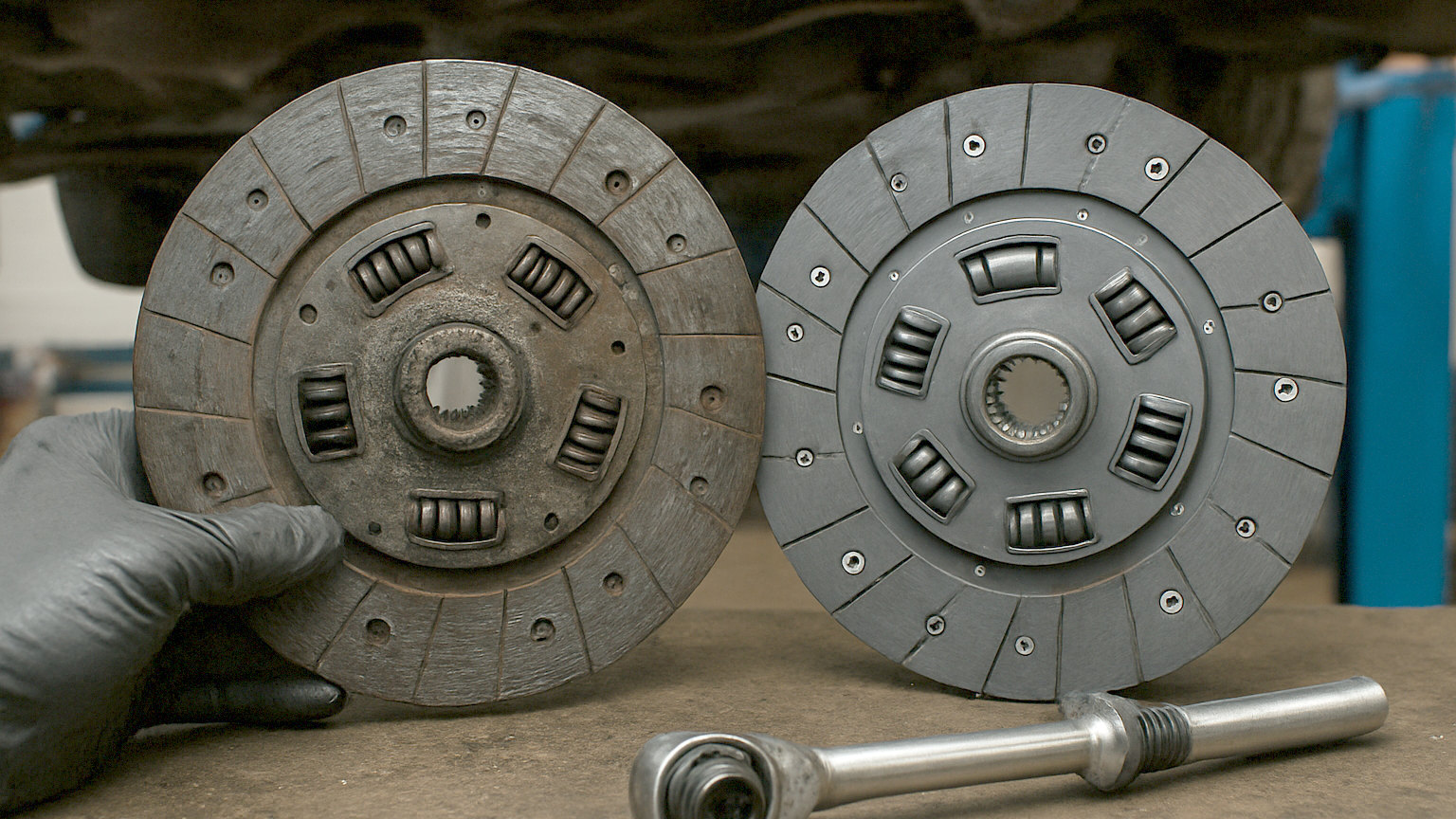
A clutch sits between the engine and the gearbox, which means reaching it requires separating the two. That single fact explains almost everything about the cost, the labour time and why decisions about what else to replace matter so much. The parts themselves are rarely the largest figure on the invoice.
How is the job actually done?
The gearbox is separated from the engine and removed, which on a front wheel drive car usually means disconnecting driveshafts, the selector linkage, the starter, wiring and mountings, supporting the engine, and on many vehicles lowering or removing part of the subframe. With the gearbox out, the pressure plate unbolts from the flywheel and the friction plate comes away, exposing the flywheel face.
What comes in a clutch kit?
Typically the friction plate, the pressure plate assembly and the release bearing, along with an alignment tool. Some kits include a concentric slave cylinder where fitted. What is generally not included is the flywheel, the spigot bearing, the crankshaft or input shaft seals, or the clutch hydraulics, all of which may need attention and should be discussed before the work starts.
What else should be replaced while it is apart?
The release bearing without exception, the spigot or pilot bearing where the input shaft locates in the crankshaft, and any concentric slave cylinder, since all three require the same access and all are inexpensive. The gearbox input shaft seal and the engine rear main seal should be inspected and renewed if there is any sign of leakage. Gearbox mounts should be checked while they are accessible.
What about the flywheel?
A conventional solid flywheel can often be machined flat if the surface has hot spots or scoring, which is inexpensive. A dual mass flywheel cannot be machined and must be inspected for free play and heat damage, then replaced if worn. That decision is where the quote can change substantially, and it is worth agreeing in advance what happens if it is found to be marginal.
Why does labour vary so much between cars?
Access. Some longitudinal engine layouts allow the gearbox to come out downwards with relatively little dismantling. Many transverse installations require the subframe to be dropped, the engine supported from above and driveshafts removed. A few vehicles require the engine and gearbox to come out together as an assembly. The same job can be four hours on one car and twelve on another.
Is it a job worth doing yourself?
Only with proper equipment and space. It requires the car raised securely on stands well above axle stand height, a transmission jack or a very willing assistant, an engine support, and the ability to manoeuvre a heavy awkward assembly in a confined space. It is achievable for an experienced home mechanic on the right car and genuinely unsafe with inadequate support.
What should the finished job include?
The flywheel face cleaned or machined, the friction plate fitted the correct way round and centred with an alignment tool, the pressure plate bolts tightened evenly to the specified torque, the gearbox refitted without hanging its weight on the input shaft, and the hydraulics bled properly. The splines should be lightly greased with a suitable high temperature product and never packed with grease that will fling onto the plate.
How should a new clutch be treated?
Gently for the first few hundred miles. The friction surfaces bed in during that period, and heavy use before they have mated properly can glaze the material and shorten its life. Avoid towing, hard acceleration and prolonged slipping initially. It is a modest inconvenience against the size of the bill just paid.
What should you ask before agreeing?
The labour time quoted, exactly which parts are included, what happens if the flywheel is found to be worn and whether that has been priced, and whether the hydraulics and seals are covered. Those questions prevent the common experience of a quote that grows once the gearbox is off and the car is already in pieces.


