
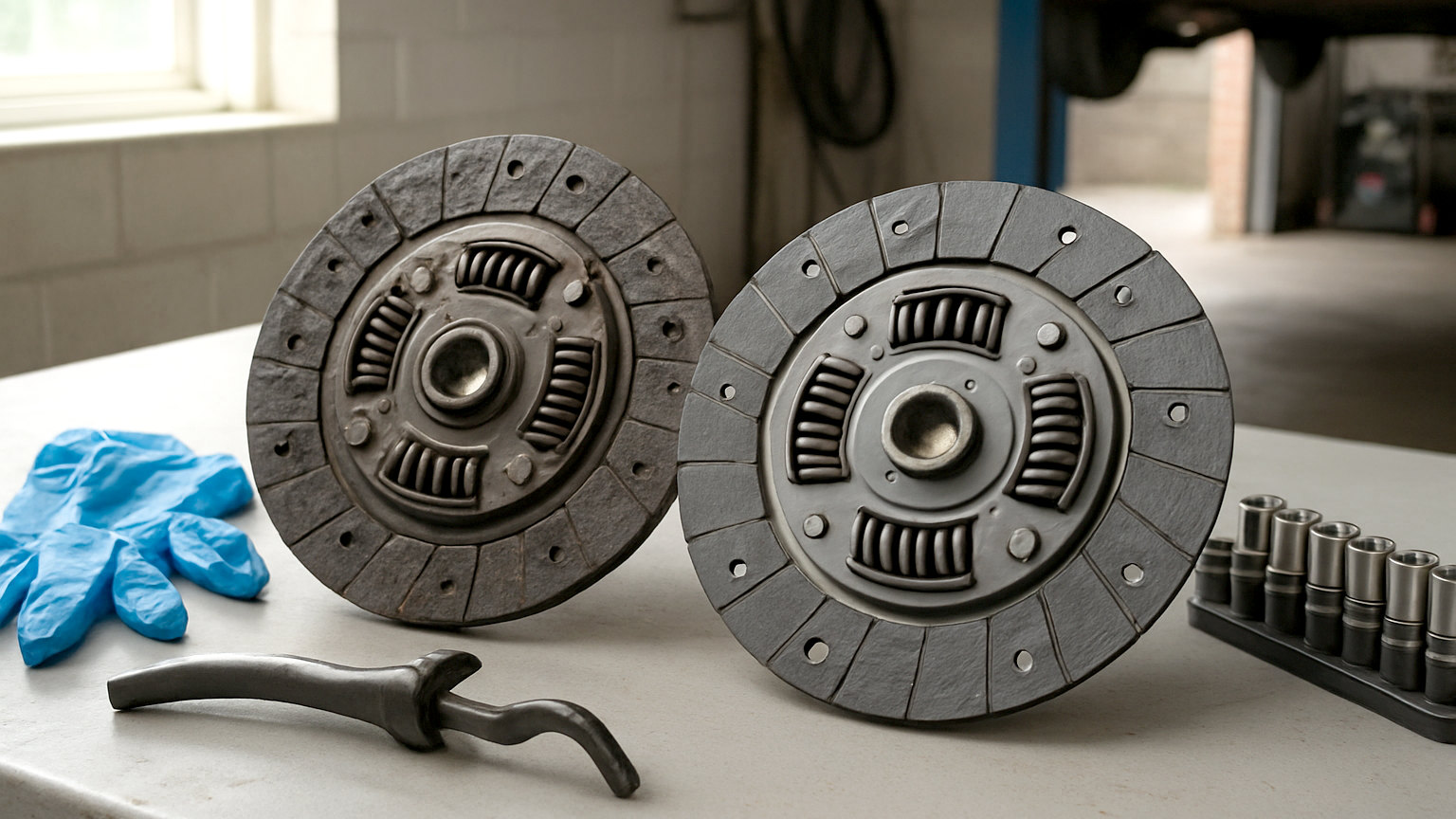
Oil and clutch friction material are fundamentally incompatible. The entire operation of a clutch depends on a predictable coefficient of friction between the plate and the flywheel, and oil destroys that predictability completely. Once a friction plate has been contaminated it cannot be cleaned, degreased or recovered, and any attempt to do so is a waste of the labour involved in reaching it.
Where does the oil come from?
Two seals, on opposite sides of the same space. The engine rear crankshaft seal sits behind the flywheel and leaks engine oil into the bellhousing. The gearbox input shaft seal sits behind the release bearing and leaks gearbox oil in from the other direction. Both are hidden, both are inexpensive parts, and both can only be reached when the gearbox is removed.
What are the symptoms?
Judder when pulling away is usually the first, as the plate alternately grips and slips across contaminated areas. Slipping under load follows, since oil reduces the clamping friction available. There may be an oily drip from the bottom of the bellhousing, where most designs have a drain hole specifically so that a leak becomes visible rather than accumulating.
Why can it not be cleaned?
Because the friction material is porous by design, so oil soaks into it rather than sitting on the surface. Cleaning the face with solvent removes what is visible and leaves the material saturated underneath, which then works back to the surface with heat. Every attempt at this ends the same way, usually within a few hundred miles, which is why specialists simply replace it.
What must be done during the repair?
Identify which seal is leaking and replace it, clean the bellhousing thoroughly of all oil residue, and check the drain hole is clear. Replacing the clutch without renewing the seal guarantees the new one will be contaminated, usually within weeks. Any workshop finding oil during a clutch job should be telling you about it, and any quote should include the seal.
How do you tell which seal it is?
By the oil itself. Engine oil is black when used and smells of combustion. Gearbox oil is amber to brown with a distinctive sulphurous smell from its additives. Automatic transmission fluid where fitted is red. A mechanic with the gearbox off can usually see which side the oil has come from by where it has run, and identifying it correctly determines which seal is renewed.
Why do these seals fail?
Age and heat harden the rubber until it no longer conforms to the rotating shaft. Wear on the shaft surface where the seal runs creates a groove that a new seal cannot bridge, which is why some repairs include a speedi sleeve to restore the surface. Excessive crankcase pressure from a blocked breather system pushes oil past a seal that would otherwise be adequate.
Should the breather be checked too?
Yes, and it is frequently overlooked. If crankcase pressure has been forcing oil past the rear main seal, fitting a new seal without clearing the breather system simply repeats the failure. That is a cheap check while everything is apart, and it explains a proportion of the cases where a rear seal fails again shortly after replacement.
What if oil is found but the clutch seems fine?
Replace the clutch anyway if the gearbox is already off. The labour has been paid, the plate has been exposed to oil whether or not it is currently misbehaving, and returning to the job in six months costs the entire labour charge again. It is one of the clearest cases where doing the extra work now is straightforwardly cheaper.
How do you spot it before it fails?
Look underneath for oil around the joint between engine and gearbox, and for drips from the bellhousing drain hole. Judder that has appeared gradually with no other explanation is a reasonable prompt to investigate. Catching a leak before it soaks the clutch means renewing a seal during other work rather than paying for a full clutch job.


