
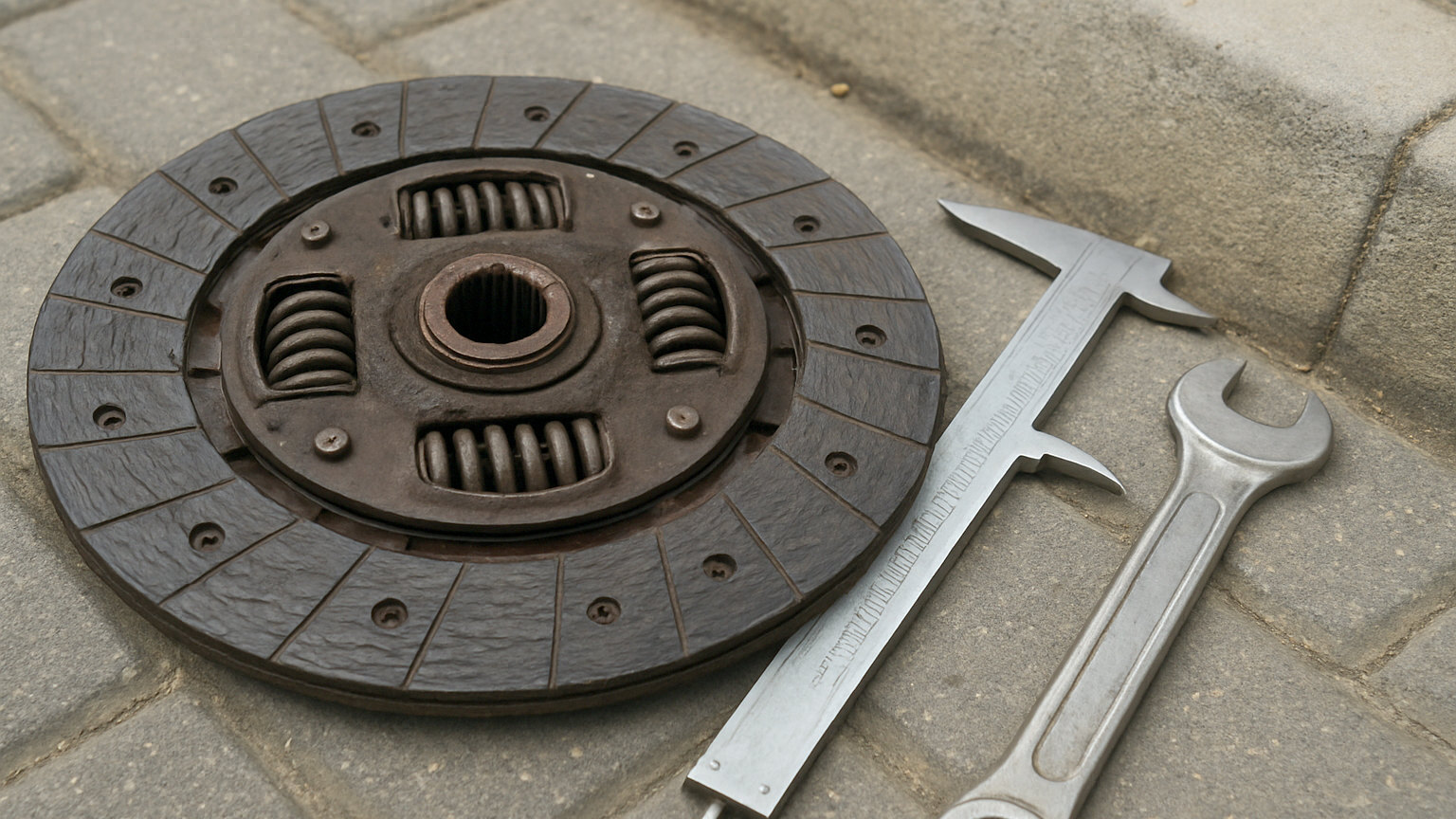
A slipping clutch is one of the more straightforward faults to identify once you know what you are looking for, and one of the easiest to live with unknowingly for months. The defining symptom is a mismatch between engine speed and road speed: the revs rise while the car fails to accelerate at the same rate, because the friction plate is turning at a different speed from the flywheel it is supposed to be locked against.
What is the definitive test?
Find a quiet stretch of road, get the car to around thirty in fourth or fifth gear, then accelerate firmly. A healthy clutch pulls, the revs climb slowly and the speedometer climbs with them. A slipping clutch lets the revs shoot up while the speed barely changes. The higher the gear and the lower the speed, the more load is placed on the clutch and the more obvious a marginal one becomes.
What are the early signs?
Before it becomes obvious, a slipping clutch usually announces itself in specific situations first. Struggling on a steep hill in a gear that used to be fine. Poor acceleration when the car is fully loaded or towing. A momentary flare of revs during a gear change under hard acceleration. Each of those is the clutch failing under maximum load while coping perfectly with everything else.
Why does the biting point change?
Because the friction material wears thinner, the pressure plate has to travel further to clamp it, and the release mechanism therefore engages later in the pedal travel. A biting point that has moved noticeably towards the top of the pedal on a hydraulic system is a classic sign of a clutch nearing the end of its life. It is worth noticing, because it usually appears before slipping does.
What does the smell tell you?
A slipping clutch generates friction heat, and burning clutch material has an acrid smell often compared to burning paper or a hot brake. If you notice it after a hill start, a heavy load or a period of stop start traffic, the clutch has been slipping enough to overheat. Repeated overheating glazes the friction surface, which makes it grip less effectively and accelerates the decline.
Is slipping always the friction plate?
Not always, which is worth knowing before agreeing to a replacement. A weak pressure plate diaphragm spring, a hydraulic system that is not allowing the clutch to fully engage, a maladjusted cable on older cars, or oil contamination from a leaking seal will all cause slipping with friction material that still has life in it. Establishing which matters, because the underlying cause needs addressing either way.
Could the problem be somewhere else entirely?
Sometimes. An engine down on power produces slow acceleration, though in that case the revs and the speed rise together rather than diverging. An automatic gearbox slipping internally produces a similar sensation. Dragging brakes make a car feel gutless. The high gear test distinguishes them, because only a slipping clutch produces revs climbing away from road speed.
How long will it last once it starts?
Unpredictably, and usually less time than people hope. Slipping generates heat, heat glazes and hardens the friction material, and glazed material grips less well and slips more. It is a loop that accelerates, so a clutch that slips only on steep hills in April may be slipping in third gear by August. Once it starts, plan the repair rather than waiting to see.
Can you make it last longer?
To an extent. Change up earlier and avoid labouring the engine in high gears at low speed, since that is exactly the condition that produces slip. Avoid towing, heavy loads and steep hill starts where possible. Do not rest your foot on the pedal, and do not hold the car on the clutch at junctions. None of that repairs anything, but it can buy several weeks.
Is it dangerous to keep driving?
Not immediately, though a clutch that cannot transmit full power leaves you short of acceleration when joining fast roads, which is a genuine hazard. The larger risk is that a badly slipping clutch can overheat enough to damage the flywheel surface, which turns a clutch replacement into a clutch and flywheel replacement and increases the bill considerably.


