
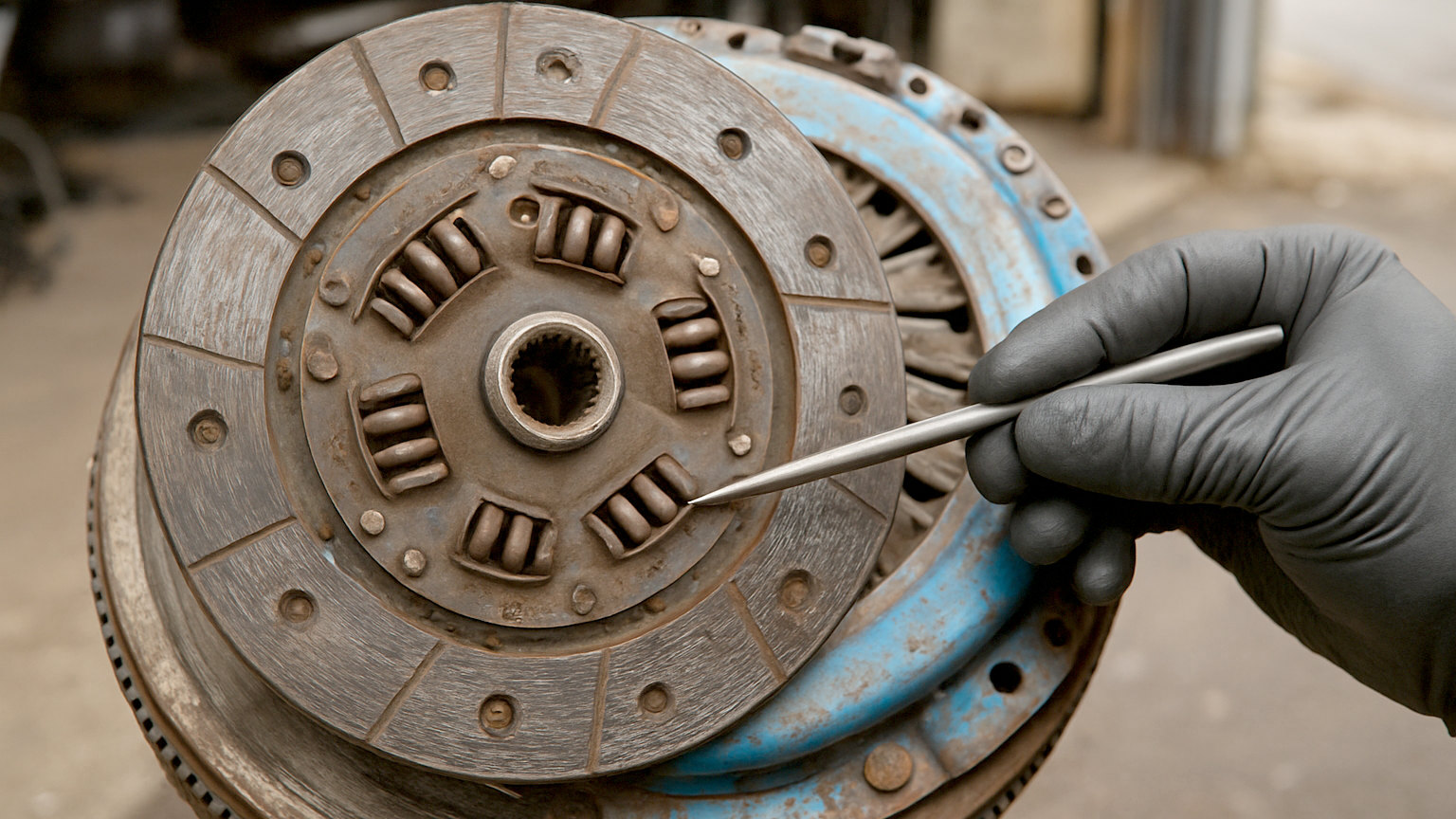
A clutch wears only during the moments it is slipping, and never once it is fully engaged. That single fact explains every piece of advice about extending clutch life, because all of them come down to the same thing: reducing the number of seconds the plate spends slipping against the flywheel. A few habits account for the great majority of avoidable wear.
Why is resting a foot on the pedal so damaging?
Because even light pressure can begin to load the release bearing against the pressure plate. That wears the bearing continuously, and if the pressure is enough to slightly reduce clamping force, the friction plate slips under load without you noticing. It is the single most common avoidable habit, and the fix is simply to move the left foot to the floor or the footrest.
What about holding the car on a hill?
Balancing a car stationary on a slope using clutch slip means the plate is slipping continuously against a stationary output with nothing to carry the heat away. Thirty seconds of that generates a great deal of heat in a small area. Using the handbrake instead costs nothing, and on cars with hill hold assist the system does it for you if you let it.
Does pulling away technique matter?
Considerably. Feathering the clutch gently for several seconds while creeping forward wears more than engaging briskly with a few more revs, because the slipping period is longer even though it feels gentler. The aim is to reach full engagement quickly and smoothly rather than to prolong the transition. Excessive revs with a slow release is the worst combination, producing both heat and wear.
How does town driving compare with motorway use?
Enormously. A motorway journey involves perhaps a dozen gear changes and no pulling away at all, so the clutch experiences almost no wear across a hundred miles. The same distance in urban traffic might involve hundreds of engagements, each one slipping the plate. That is why identical cars in different hands can have clutch lives differing by a factor of three.
Should you be in gear at traffic lights?
Neutral with the handbrake on is kinder, because holding the clutch down for extended periods loads the release bearing continuously. It is also safer, since a car in neutral cannot lurch forward if your foot slips. On a long queue this makes a genuine difference to release bearing life, which is the component most affected by the habit.
Does labouring the engine wear the clutch?
Indirectly but really. Driving in too high a gear at low revs means the engine is producing torque at the point where it is roughest, which loads the clutch and the dual mass flywheel heavily. It also tempts drivers to slip the clutch to smooth the delivery. Changing down and letting the engine breathe is easier on the whole driveline.
What about towing and heavy loads?
Both extend the slipping period on every departure, which is where the wear happens. Towing cannot be avoided if that is what the car is for, but the technique matters: use more revs, engage decisively, avoid hill starts where possible and let the clutch cool between manoeuvres rather than making repeated attempts.
Do any habits help beyond avoiding harm?
Matching revs on downshifts reduces the work the clutch and synchromesh do. Changing up promptly rather than holding gears reduces the number of high load engagements. Keeping the pedal fully depressed during changes rather than partway ensures the clutch is properly disengaged. None of these are difficult, and together they can add tens of thousands of miles.
Is it worth changing how you drive?
Given that a clutch replacement is one of the larger routine bills a manual car produces, and that the labour dominates that cost, extending its life by fifty percent is worth real money. The habits involved cost nothing and make the car pleasanter to drive, which makes this one of the better returns available for no expenditure at all.


