
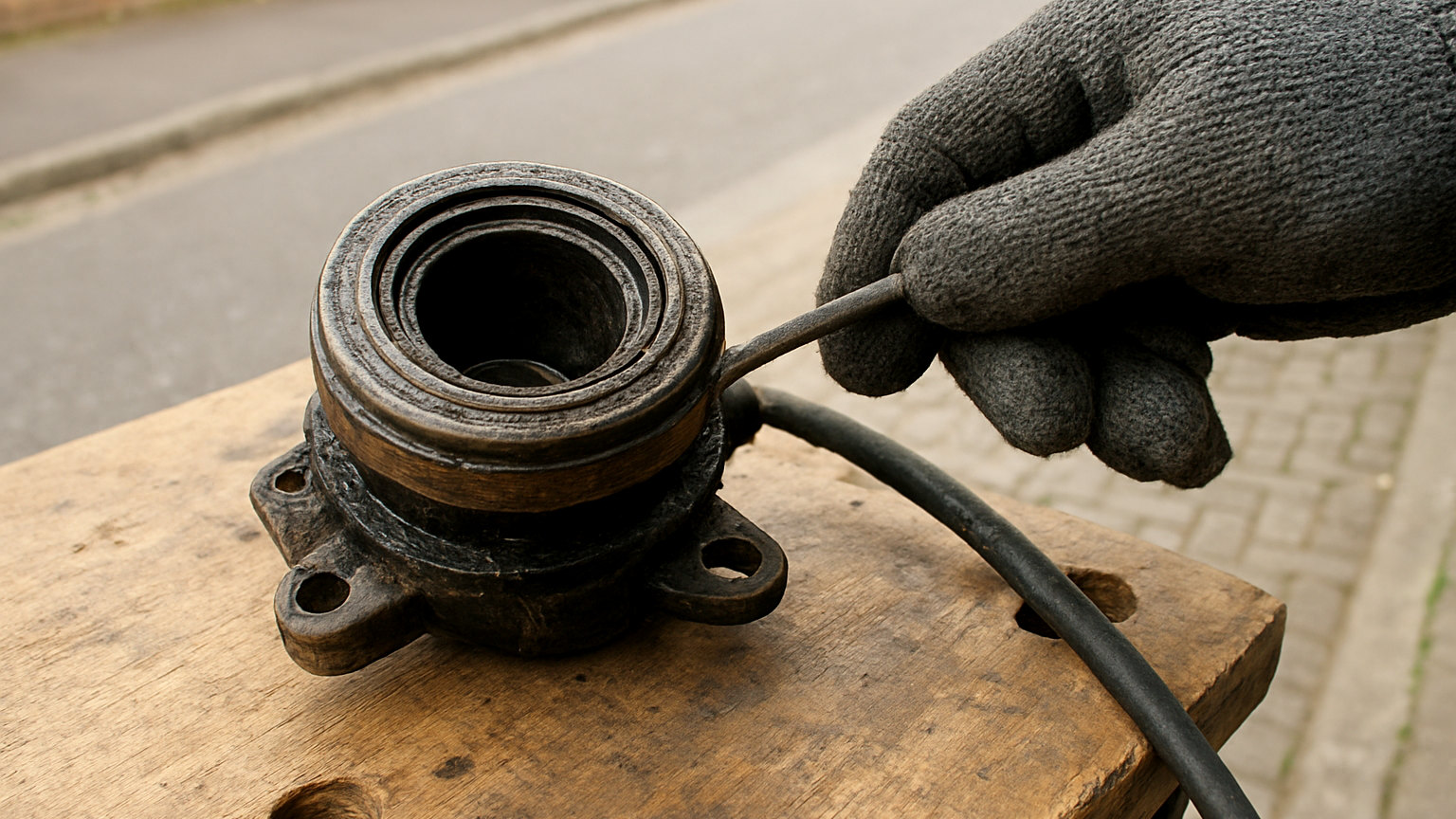
Clutch noises are among the more diagnosable sounds a car makes, because one simple observation separates most of them. What matters is whether the noise appears when the pedal is pressed or when it is released, since different components are turning and loaded in each case. Establishing that takes one journey and points at the answer immediately.
What does a noise with the pedal pressed mean?
The release bearing, in the great majority of cases. It only spins and takes load when the pedal is down, pressing against the rotating pressure plate fingers. A whirring, rumbling or squealing that appears as the pedal goes down and disappears as it comes up is close to a definitive diagnosis. The bearing is inexpensive but sits inside the bellhousing, so replacing it means removing the gearbox.
What does a noise with the pedal released mean?
A rattle at idle in neutral that stops when the clutch pedal is pressed usually indicates the gearbox input shaft and its gears rattling, which is normal to a degree on some cars, or a worn dual mass flywheel. Pressing the pedal disconnects the engine from the gearbox and stops the rattle, which is why that test is so revealing.
How do you recognise a failing dual mass flywheel?
A distinct rattling or chattering at idle, often worse when the engine is warm and in neutral, which changes or stops when the clutch is depressed. There may be a rumble on start up and shut down as the engine passes through its resonant speed. Judder pulling away frequently accompanies it. On modern diesels this combination is common enough to be almost characteristic.
What causes a squeal rather than a rumble?
A dry or worn release bearing typically squeals or screeches rather than rumbling, and it may come and go with pedal position. A squeal as the clutch takes up while pulling away can also come from the clutch plate itself if the friction material or its hub splines are worn. On older cars with a clutch cable, a dry cable can squeak in a way that mimics both.
Can it be something outside the clutch?
Yes, and it is worth eliminating before agreeing to a gearbox removal. A squeal from the auxiliary belt is common and unrelated, though it can appear at similar moments. A worn gearbox input shaft bearing produces noise in neutral with the pedal up, which overlaps with the flywheel test. Listening carefully with the bonnet up while someone operates the pedal usually separates them.
What does a graunching noise on selection mean?
A grinding as a gear engages usually points at the clutch not fully releasing rather than at a noisy component. That is a hydraulic or adjustment problem, and it damages the synchromesh every time it happens. It should be dealt with promptly, since the cost of clutch hydraulics is far below the cost of a gearbox rebuild.
How urgent is release bearing noise?
Moderately. A bearing that has begun to rumble will eventually seize or break up, and if it fails completely the clutch may become inoperable, leaving the car undrivable. It rarely happens without weeks of warning. The practical consideration is that replacing it requires the same labour as a clutch, so it is almost always done together rather than on its own.
What should you tell a garage?
Precisely when the noise occurs relative to the pedal, whether it is present in neutral, whether it changes as the engine warms, and whether there is any judder or slipping alongside. That description narrows the diagnosis before the car is lifted, and it distinguishes a release bearing from a flywheel, which is a meaningful difference in the eventual bill.
Should you replace it straight away?
Not necessarily on the first rumble, but do plan for it. Because the labour is the same as a clutch job, the sensible approach is to have the clutch, release bearing and flywheel assessed together and do everything at once rather than returning for each component as it fails. Splitting the work means paying the largest part of the bill twice.


