
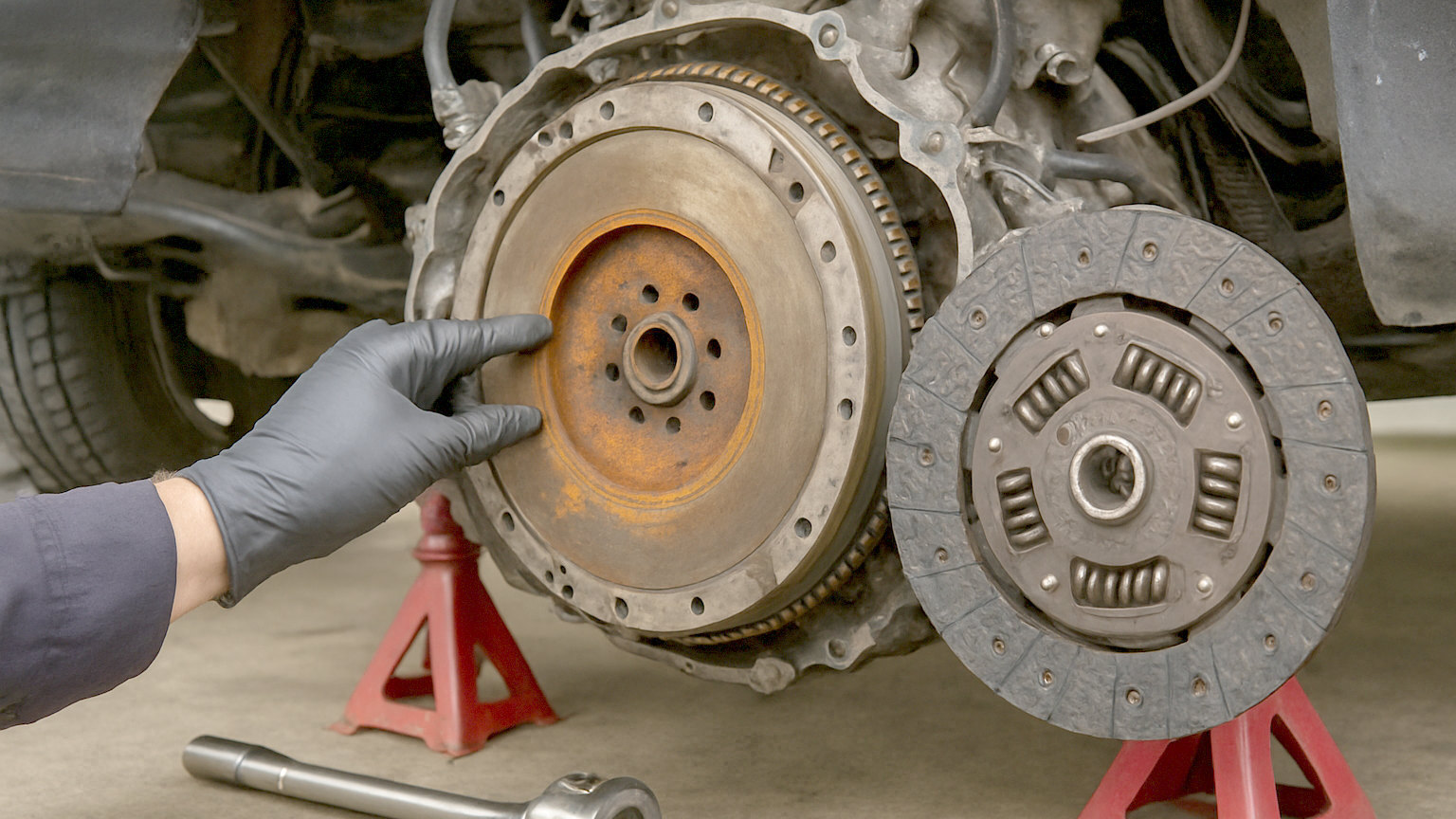
Clutch judder is a shuddering or chattering felt through the car as the clutch takes up drive, usually worst pulling away from rest and often worse on a hill or in reverse. It happens because the clutch is gripping unevenly, alternately catching and slipping many times a second rather than engaging progressively. Several quite different faults produce it.
What does oil contamination do?
It is the most common cause on an otherwise healthy clutch. Oil reaching the friction surface, usually from a leaking gearbox input shaft seal or an engine rear crankshaft seal, changes the friction characteristics unpredictably. The plate grips, slips as it meets an oily patch, then grips again, producing exactly the shudder described. Once contaminated, a clutch cannot be cleaned and must be replaced.
Why does the seal have to be replaced too?
Because a new clutch fitted behind a leaking seal will be contaminated within weeks and the whole job is wasted. Any clutch replacement where oil is found in the bellhousing must include renewing the offending seal, and a workshop that finds oil and does not mention it is not doing you a favour. It is worth asking specifically what was found when the gearbox came off.
How does a dual mass flywheel cause judder?
These flywheels contain springs and a friction damper between two rotating masses, designed to absorb engine vibration before it reaches the gearbox. As the internal components wear, the damping becomes uneven and the flywheel allows a rotational oscillation that feels exactly like clutch judder. It is one of the most common causes on modern diesels and it usually comes with a rattle at idle.
Could the friction plate itself be distorted?
Yes. Overheating from repeated slipping can warp the plate or the pressure plate, and a plate whose cushioning springs have collapsed engages abruptly rather than progressively. Hot spots on the flywheel surface, caused by a previously slipping clutch, produce raised areas that grip inconsistently. All of these become visible when the gearbox is removed.
Might it not be the clutch at all?
Frequently, and this is worth ruling out first because it is far cheaper. Worn or collapsed engine and gearbox mounts allow the powertrain to move under load, producing a shudder as drive takes up that feels identical to clutch judder. Worn driveshaft joints and rear suspension bushes on some cars do the same. Watching the engine move as someone blips the throttle takes a minute.
Does it get worse over time?
Almost always. Contamination spreads across the friction surface, flywheel wear increases, and each pull away with judder adds more heat and more uneven wear. Judder that appears only occasionally on a cold morning tends to become judder on every departure within a few months. It also makes smooth driving genuinely difficult, particularly in traffic.
Can driving technique reduce it?
Slightly. Using a few more revs and taking up the clutch slightly more quickly reduces the time spent in the slipping zone where judder occurs, though that increases wear. Some drivers find it disappears entirely if they pull away in second gear on the level. These are coping strategies rather than solutions and they do not slow the underlying deterioration.
What should be checked before quoting?
The engine and gearbox mounts, since they are cheap and commonly responsible. Any evidence of oil leaking around the bellhousing. Whether there is a rattle at idle that changes when the clutch pedal is pressed, which points at the dual mass flywheel. Those three observations shape the quote considerably, since a flywheel roughly doubles the parts cost of a clutch job.
Is it safe to keep driving?
Mild judder is not dangerous, though it makes smooth progress in traffic difficult and it will worsen. What justifies prompter attention is judder combined with slipping, since that suggests the friction surface is contaminated or worn rather than simply gripping unevenly, and continued slipping generates heat that damages the flywheel face.


