
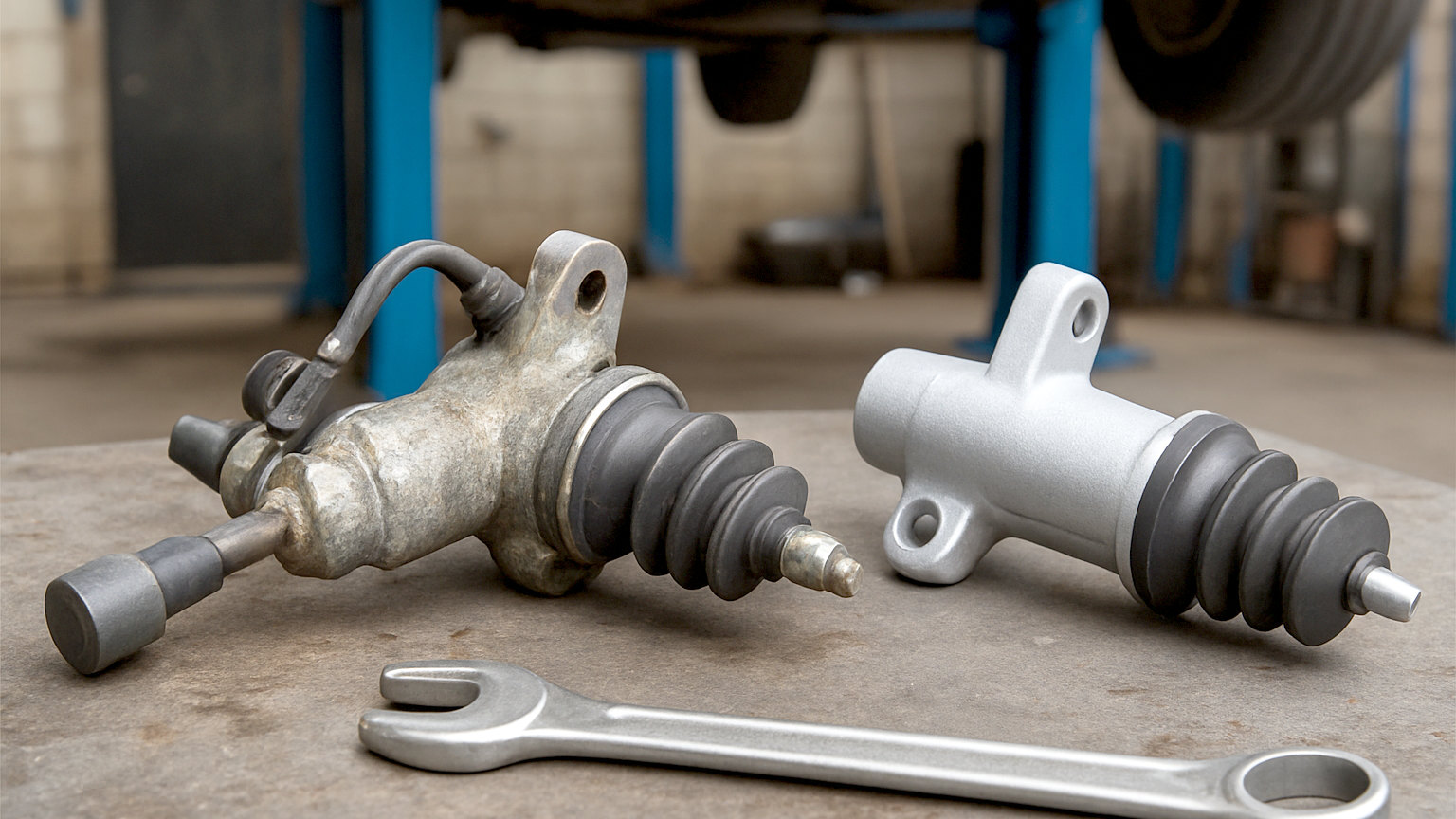
A dragging clutch is one that fails to fully disconnect the engine from the gearbox when the pedal is pressed. The input shaft therefore continues turning while you try to select a gear, which makes selection difficult, causes grinding and wears the synchromesh. It is the opposite fault to slipping and it is far more often hydraulic than a worn out clutch.
What are the symptoms?
Difficulty engaging gears with the engine running, particularly first and reverse, which are usually unsynchronised or weakly synchronised. Grinding as gears engage. A car that creeps forward when in gear with the clutch fully depressed. Gears that select perfectly with the engine switched off but fight you with it running. That last observation is close to definitive.
Why is reverse the giveaway?
Because reverse generally has no synchromesh at all, so it relies entirely on the input shaft having stopped turning. Any drag at all produces a graunch as the gear tries to engage. Many drivers learn to wait a second or two in neutral before selecting reverse, which lets the shaft slow naturally. That habit is a workaround for drag rather than good practice.
What hydraulic faults cause it?
Air in the system, which compresses rather than transmitting movement, so the slave cylinder does not travel far enough. A failing master or slave cylinder leaking internally. A collapsed flexible hose that has swollen shut. Low fluid level. All of these reduce the movement reaching the release mechanism, and all are relatively inexpensive compared with a clutch replacement.
What about cable operated clutches?
Older cars with a cable can drag because the cable has stretched, the adjustment has drifted, or the outer casing has compressed. Most have an adjustment with a specified free play at the pedal, and setting it correctly frequently resolves the problem entirely. Too little free play causes slipping instead, so the specification matters rather than adjusting to preference.
Can the clutch itself be at fault?
Yes, though less often. A warped friction plate, usually from overheating, will not release cleanly. A plate whose hub splines have corroded or worn can stick on the input shaft rather than sliding back. A failed release bearing or a broken diaphragm spring finger prevents proper release. These all require the gearbox to come off, which is why the cheaper causes are checked first.
Why does it matter beyond inconvenience?
Because every difficult gear change is grinding the synchromesh, and synchros are inside the gearbox. Living with a dragging clutch for months converts a modest hydraulic repair into a gearbox rebuild, which is a substantially different bill. The damage accumulates quietly, and by the time the gearbox is crunching in normal use the cost has multiplied.
Does it happen after the car has stood?
A specific version worth knowing. A car left for weeks or months, particularly in damp conditions, can develop surface rust bonding the friction plate to the flywheel, so the clutch will not release at all on the first attempt. The traditional remedy is to start the engine in gear with the clutch down and use the drive to break the bond, which usually works.
What should you check first?
The fluid level and pedal feel, since a soft or sinking pedal identifies a hydraulic fault immediately. Try selecting gears with the engine off to confirm the gearbox itself is fine. On a cable system, check the free play against specification. Those checks take fifteen minutes and cover the causes that account for most cases.
Is it worth bleeding the system?
Yes, as a first step, since air is a common cause and bleeding is inexpensive. If the pedal improves and then deteriorates again over days or weeks, air is entering through a failed seal and the cylinder needs replacing. A system that stays firm after bleeding was simply carrying air, and the problem may be solved.
Should the fluid be replaced at the same time?
Yes, and it is worth doing regardless. Old fluid has absorbed moisture and corrodes cylinder bores from the inside, which is what damaged the seals in the first place. Bleeding through fresh fluid of the correct specification costs very little extra while the system is already open.


