
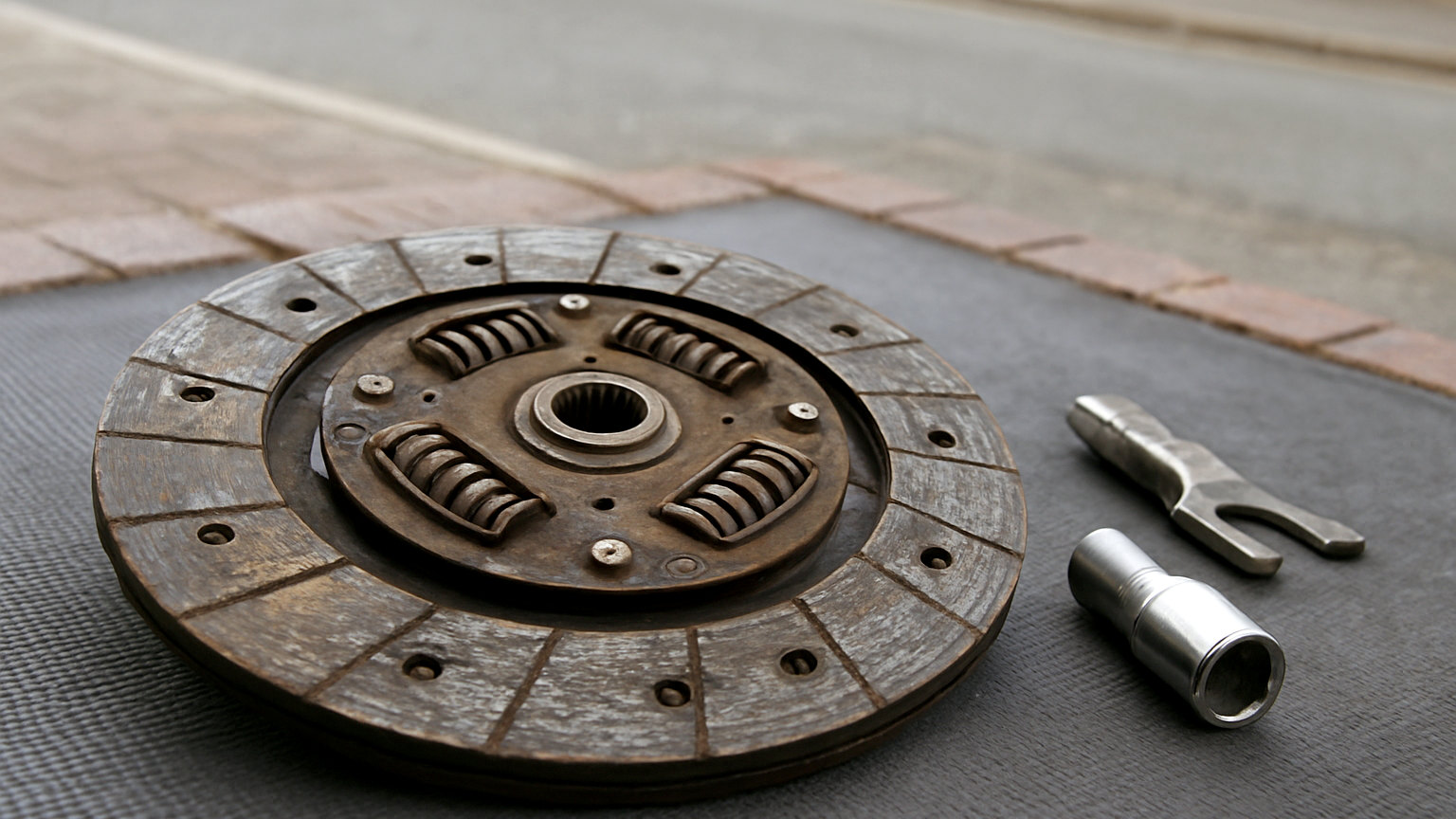
The smell of a burning clutch is distinctive and unpleasant, often described as burning paper or scorched carpet, and it is the smell of friction material getting hotter than it was designed to get. A single occasion after a difficult hill start is survivable. Repeated overheating changes the surface of the friction material permanently and starts a decline that does not reverse.
What is actually happening?
Every moment the clutch slips, the difference between engine speed and gearbox speed is being converted into heat at the friction surface. That is unavoidable and normal in small doses. When the slipping continues for long enough, the temperature rises beyond what the material can handle, and the resins binding it begin to break down and give off that smell.
What is glazing?
The lasting consequence. Overheated friction material develops a hard, shiny surface where the resins have melted and re-solidified, and glazed material has a lower coefficient of friction than fresh material. A glazed clutch therefore grips less effectively, slips more easily, and generates more heat, which glazes it further. It is a self reinforcing decline and it is why one bad episode can shorten a clutch life noticeably.
When does it usually happen?
Steep hill starts, particularly with a loaded car. Manoeuvring on a slope or a slipway. Towing a trailer away from rest. Learning to drive, where extended slipping is part of the process. Reversing up a driveway repeatedly. Anything requiring the car to move slowly against gravity or weight while the engine turns considerably faster than the wheels.
How do you tell it from burning brakes?
Brakes smell sharper and more chemical, and the smell comes from the wheels rather than from under the car centrally. It usually follows heavy or prolonged braking, particularly downhill, or a handbrake left partly applied. Clutch smell follows pulling away rather than stopping. If in doubt, feel whether any wheel is unusually hot, being careful because they can be extremely hot.
Could it be the belt or something else?
A slipping auxiliary belt produces a rubbery burning smell from the engine bay and is usually accompanied by squealing. Electrical burning smells sharply of hot plastic. Oil dripping onto the exhaust smells acrid and comes with visible smoke. Each is distinguishable with attention, and identifying which matters because the responses are quite different.
What should you do when you smell it?
Stop slipping the clutch immediately. Get the car moving in a way that lets the clutch engage fully, or stop and let it cool. Do not continue attempting the same hill start repeatedly, since each attempt adds heat to an already overheated plate. Once fully engaged and driving normally, the clutch cools quickly and the smell dissipates.
How can it be avoided?
Use the handbrake for hill starts rather than balancing on the clutch. Use enough revs to engage the clutch briskly rather than feathering it for several seconds. On a very steep slope, moving off in a lower gear reduces the slip required. Avoid holding the car stationary on clutch slip at junctions, which is the single most common cause of unnecessary heat.
Does one episode ruin a clutch?
Usually not, and it is worth saying because it causes disproportionate worry. A clutch with plenty of material left will survive an occasional overheating with only minor glazing, and normal driving will wear through the glazed layer over time. What does the damage is repetition, or overheating a clutch that was already worn, where the material is thin and the temperature rises faster.
What if the smell keeps returning?
Then the clutch is slipping in normal use rather than only under exceptional demand, and it is near the end. Check for slipping with the high gear test, and note whether the biting point has risen. A clutch that smells during ordinary driving, without a hill or a load, has effectively announced that replacement is due.


