
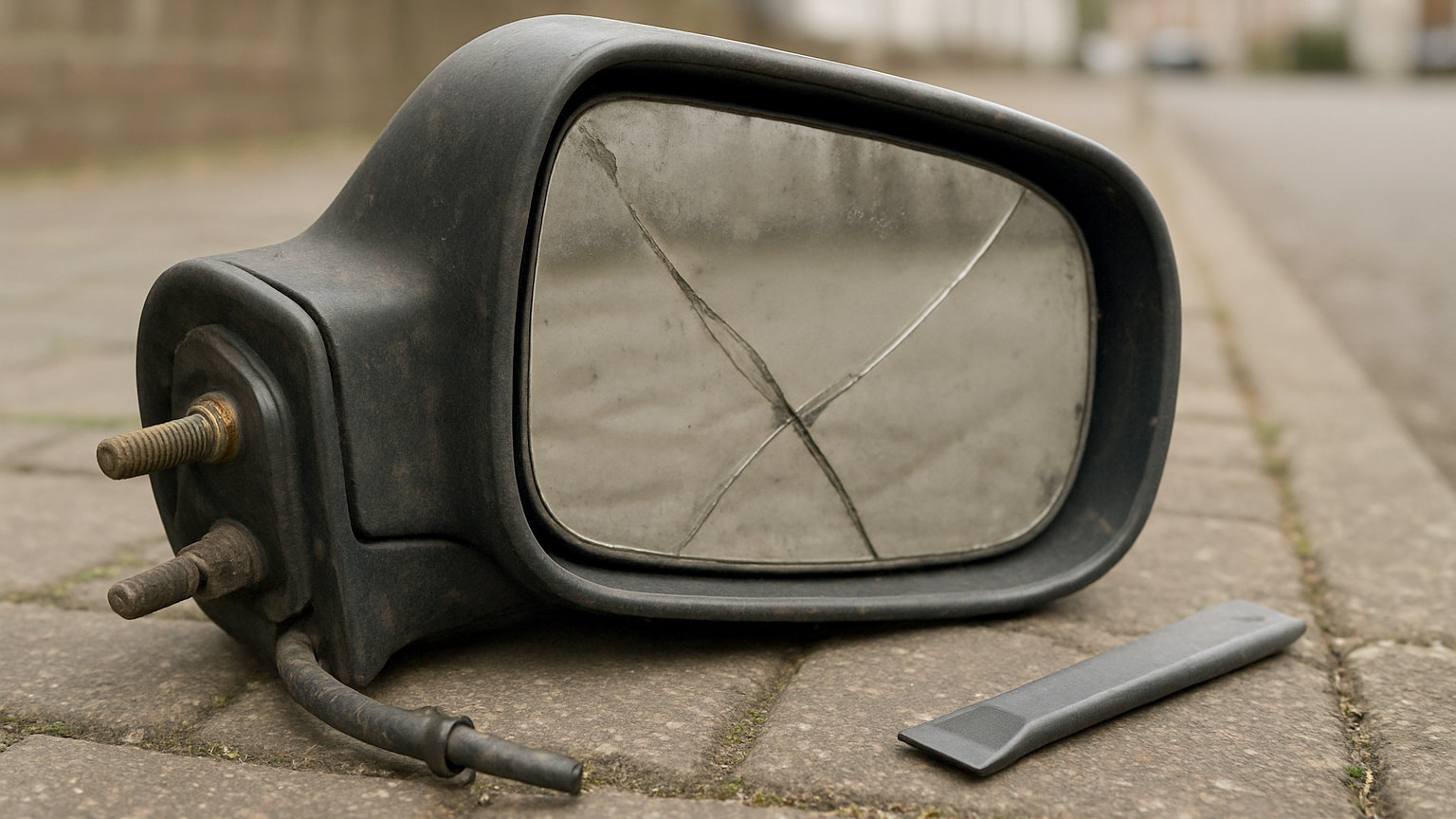
Windows and mirrors are assessed at the MOT on a single principle: whether the driver can see adequately. Convenience features are largely irrelevant, so an electric window that no longer works or a mirror that will not adjust electrically will pass without comment, while a small chip in the wrong place will fail.
How is windscreen damage assessed?
By zone. The area directly in front of the driver within the swept area is held to a tighter limit, where damage larger than about ten millimetres fails. The remainder of the swept area allows damage up to around forty millimetres. Outside the swept area the standard is more relaxed still. The zones are why a chip that seems trivial can fail.
What about mirrors?
A car must have a minimum number of mirrors providing an adequate rearward view, typically an interior mirror and at least one exterior. Each must be secure, undamaged and not so obscured that the view is inadequate. Electric adjustment and heating are not tested, so a mirror set by hand and working perfectly well will pass.
Do broken mirror glass and casings fail?
Cracked or missing glass that impairs the view is a failure, and so is a mirror hanging loose or insecure. A scuffed casing is cosmetic. If the interior mirror provides the required view, some vehicles can pass with a damaged exterior mirror, though relying on that is unwise since it varies with the vehicle configuration.
Are window tints tested?
Yes, and the limits are stricter than many people expect. The windscreen must allow at least seventy five percent of light through, and the front side windows at least seventy percent. Rear side windows and the rear screen are unrestricted. Aftermarket tint applied to front windows is a common and expensive mistake, since removing it properly is laborious.
What about stickers and accessories?
Anything in the swept area that obstructs the driver view is assessed, which includes parking permits, dash cameras, phone mounts and air fresheners hanging from the mirror. Positioning a dash camera behind the mirror rather than beside it usually avoids the problem, and it is worth checking before the test rather than being asked to remove something on arrival.
Are the wipers included?
Very much so, since they are what makes the glass usable. Blades that are split, missing or that do not clear the screen adequately are a failure, as is a washer system that does not deliver fluid to the windscreen. Both are inexpensive to put right and both account for a meaningful number of avoidable failures.
Do electric windows matter at all?
Only indirectly. There is no requirement for them to function, so a window stuck closed will pass. A window stuck open is also not itself a failure, though it raises the practical question of a car that cannot be secured. The test is concerned with the view rather than with the convenience of operating the glass.
How should you prepare?
Check the windscreen carefully in good light for chips, paying particular attention to the area in front of the steering wheel. Confirm every mirror is present, secure and undamaged. Look at the wiper blades and test the washers. Remove anything hanging from the mirror or stuck in the swept area. That covers almost everything a tester will look at.
Are advisories worth acting on?
On glass, particularly. A chip noted as an advisory is one that has not yet reached the failure limit, and chips spread. Repairing it while a repair is still possible costs a fraction of a replacement, and it is one of the few advisories where acting promptly makes a genuine financial difference.
The same applies to wiper blades noted as marginal, since they are inexpensive and they also protect the glass from the scratching a worn blade causes over a winter of use.
Checking the washer jets are aimed correctly at the same time costs nothing and prevents the dry wiping that damages a screen.


