
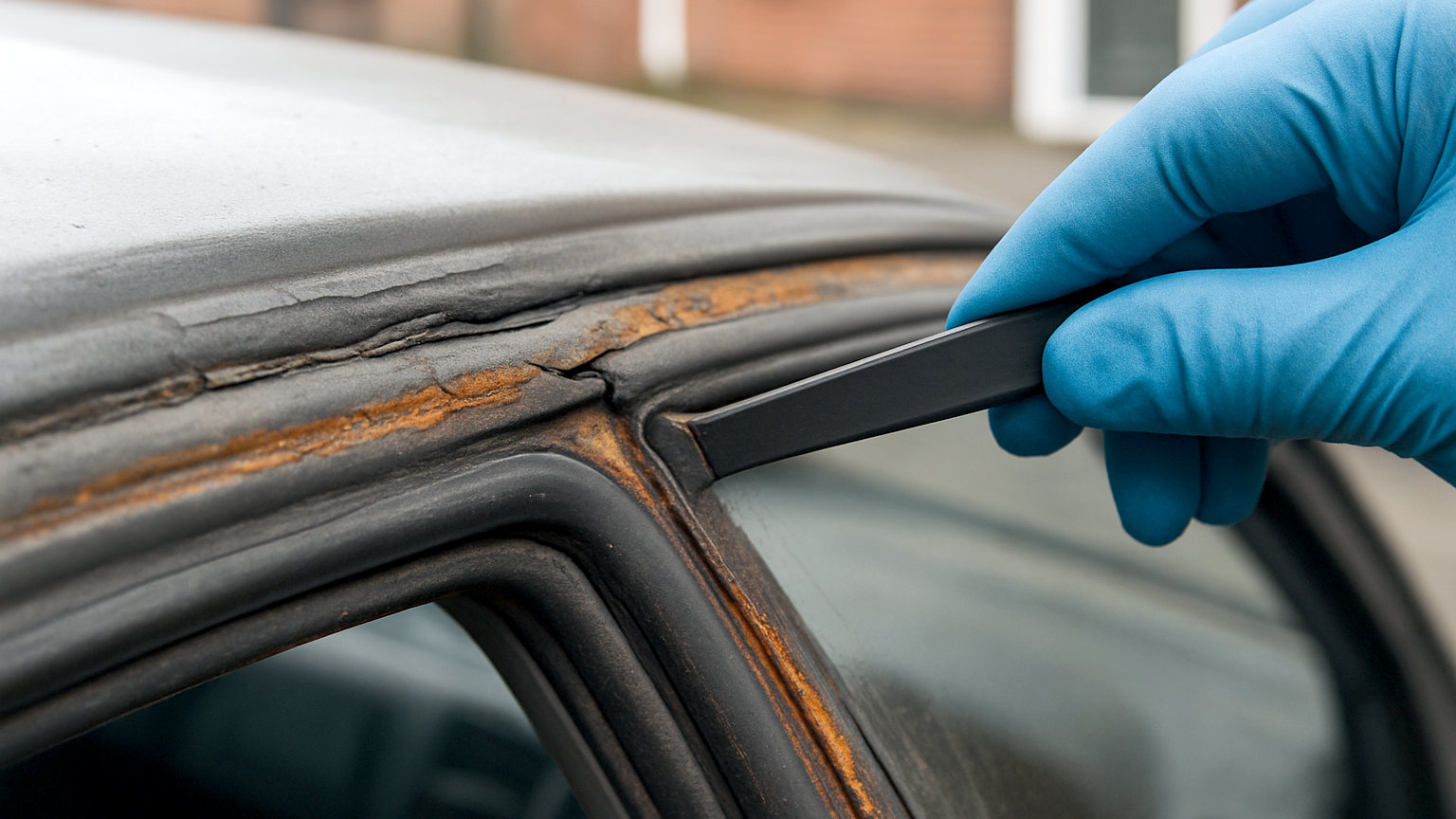
A whistle from a window at speed and water finding its way into the car are frequently the same problem viewed two different ways. Both indicate that a seal or a channel is no longer forming a proper barrier between the glass and the body, and locating the gap is usually a matter of methodical testing rather than any specialist equipment.
What is the paper test?
Close a sheet of paper in the door with the window up, then pull it out, repeating at intervals around the whole perimeter. Where the paper slides out freely, the seal is not gripping. It is a crude test and it works remarkably well, and it identifies the general area in a couple of minutes without any dismantling.
Why do seals fail?
Rubber hardens, shrinks and tears with age, ultraviolet exposure and repeated compression. Corners suffer first, since that is where the material is most stressed. Frost damages seals that have frozen to the glass and been torn when the door was opened. And seals contaminated with oil or aggressive cleaners degrade faster than those left alone.
Can seals be revived?
To an extent. Cleaning them and applying a silicone or dedicated rubber conditioner restores some flexibility and helps them seal, and it also prevents them freezing to the glass in winter. It will not repair a torn or shrunken seal, and it is worth doing routinely as prevention rather than only as an attempted cure.
Where does water normally go?
Into the door, deliberately. Water running down the outside of the glass passes the outer scraper seal and drains down inside the door skin, exiting through holes at the bottom. That is by design. A weather membrane behind the door card keeps that water out of the cabin, and the system works perfectly until the drain holes block.
What happens when drains block?
The door fills with water, which then finds its way over the inner sill and into the car, soaking the carpet. It also accelerates corrosion of the door bottom and the window regulator mechanism. Clearing the holes with a piece of wire takes minutes and it prevents several expensive problems, and almost nobody does it.
What is the weather membrane?
A plastic or foil sheet bonded to the inner door skin behind the trim panel, whose job is to keep the wet side of the door separate from the cabin. It is frequently damaged during window or lock repairs and refitted with the sealant no longer continuous. Water then enters at the bottom corner and appears in the footwell.
Are frameless windows worse?
They demand more precision, since the glass has to seal against the roof rail with no frame to guide it. They are adjustable, and a window that has drifted out of adjustment whistles at speed and can let water in. Most also drop slightly when the door is opened and rise when it closes, and a fault in that function produces both symptoms.
How do you find a leak?
With a helper inside the car and a hose outside, running water slowly over one area at a time rather than soaking the whole car, starting low and working upwards. That identifies the entry point rather than simply confirming there is one. Lifting the carpet first is worthwhile, since water tracks along the floor and appears well away from where it entered.
What if the carpet is already wet?
Lift it and check the underlay, since the surface can feel dry while the foam beneath is saturated. Wet underlay will not dry on its own in a closed car, and it produces persistent misting and eventually a smell. Removing it to dry properly is unpleasant work and it is the only thing that actually resolves it.
Fixing the leak first is essential, since drying a carpet while water is still entering achieves nothing at all beyond a temporary improvement.


