
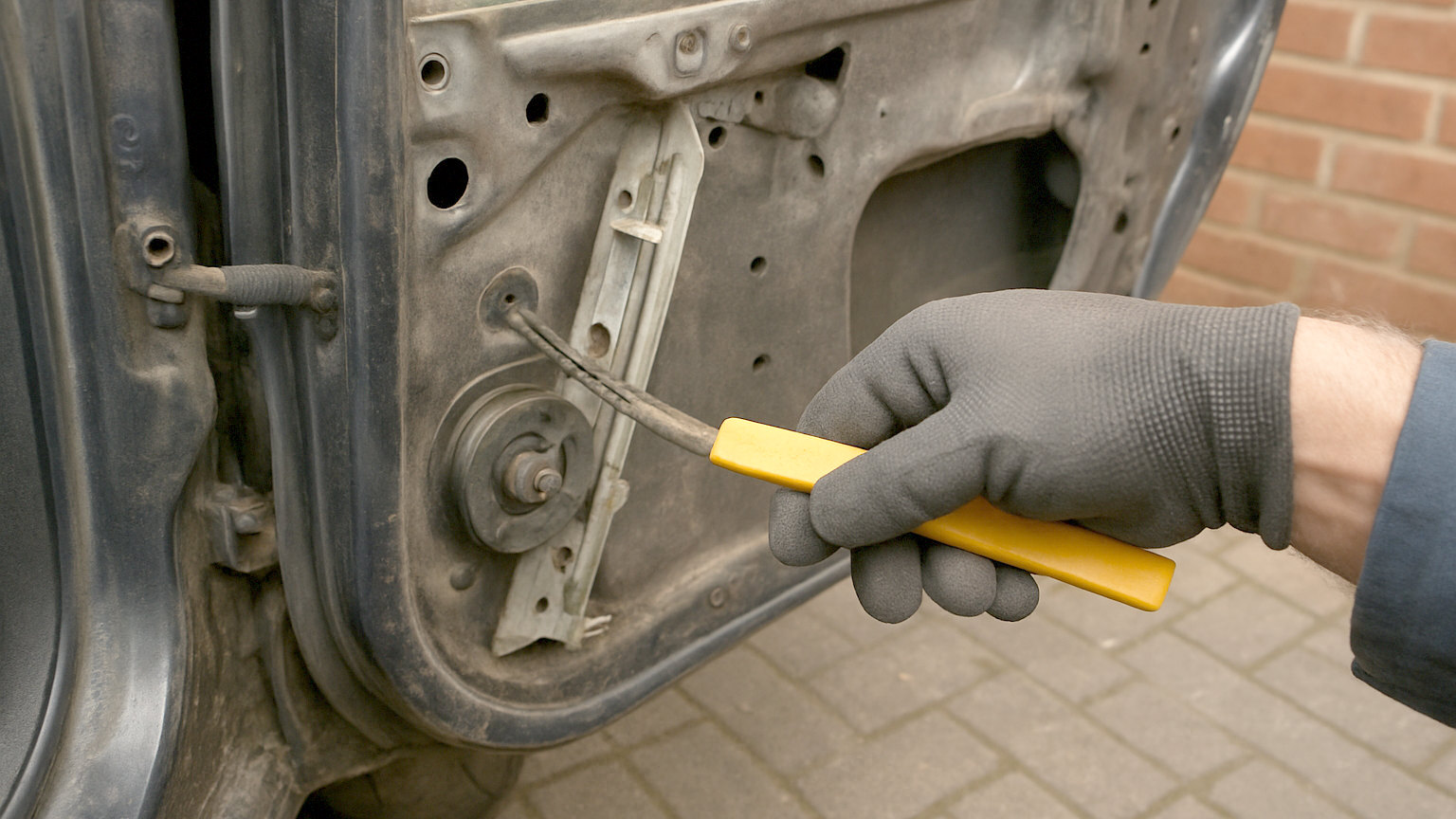
The window regulator is the mechanism inside the door that converts the rotation of a small electric motor into the vertical movement of a heavy piece of glass. It has to do that smoothly, hold the glass square in its channel, and keep working through tens of thousands of cycles in a damp environment. It is one of the more commonly replaced components on any modern car.
What are the two main designs?
The older scissor type uses a toothed quadrant and linked arms, rather like a pair of scissors, and it is robust and heavy. The cable type, used on most modern cars, has a drum driven by the motor pulling steel cables over pulleys to raise and lower a carrier that the glass bolts to. Cable designs are lighter and cheaper and they fail considerably more often.
Why do cables fail?
They fray where they run over the pulleys, and eventually a strand breaks and the cable jumps off or snaps. The plastic pulleys themselves crack with age, and the plastic carrier that holds the glass can break away from its mounting. Any of those produces the same symptom: the motor runs and the glass either does not move or drops into the door.
What does a tilting window mean?
That one side of the carrier has let go while the other is still attached, so the glass is being lifted at one edge only. It jams in the channel and can crack if forced. It is a clear sign of regulator failure rather than a motor or switch problem, and continuing to operate the switch usually makes the damage worse.
Does water contribute?
Considerably. The inside of a door is damp by design, since water running down the glass drains through the bottom. When the drain holes block with debris, water sits in the door and accelerates corrosion of the cables and the mechanism. Keeping those drain holes clear is one of the few pieces of preventative maintenance available here.
Can the glass be damaged?
Yes. Toughened side glass shatters into small fragments when it fails, and a jammed or tilted window forced by the motor can produce enough stress to break it. That turns an inexpensive regulator job into a regulator and a new pane, plus the considerable effort of vacuuming thousands of fragments out of the door and the interior.
What does replacement involve?
Removing the door card and peeling back the weather membrane behind it, supporting the glass, undoing the bolts that clamp it to the carrier, then unbolting the regulator through access holes and manoeuvring it out. It is fiddly rather than technically difficult. The membrane must be resealed properly afterwards, since it is what keeps water out of the cabin.
Should the motor be replaced too?
On many cars there is no choice, since they are supplied as a single assembly. Where they are separate, and the motor is the same age and has been straining against a failing mechanism, fitting both while the door is open is usually the better decision. The labour is the same and returning to the job in a year is not appealing.
Is a used part sensible?
Sometimes, on an older car where a new assembly is expensive. The risk is that a used regulator has similar wear on its cables and pulleys, so it may not last. Aftermarket replacements vary considerably in quality, and given that the labour dominates the cost, a reputable part is usually worth the modest difference.
Can failure be prevented?
To a degree. Keeping the door drain holes clear stops water accumulating around the mechanism, and cleaning and lubricating the window channels reduces the effort the regulator has to make on every cycle. Neither will make a cable design last forever, and both meaningfully extend its life on a car that is being kept.
Avoiding the habit of resting an elbow on a partly open window also helps, since the sideways load is not something the mechanism was designed to carry.


