
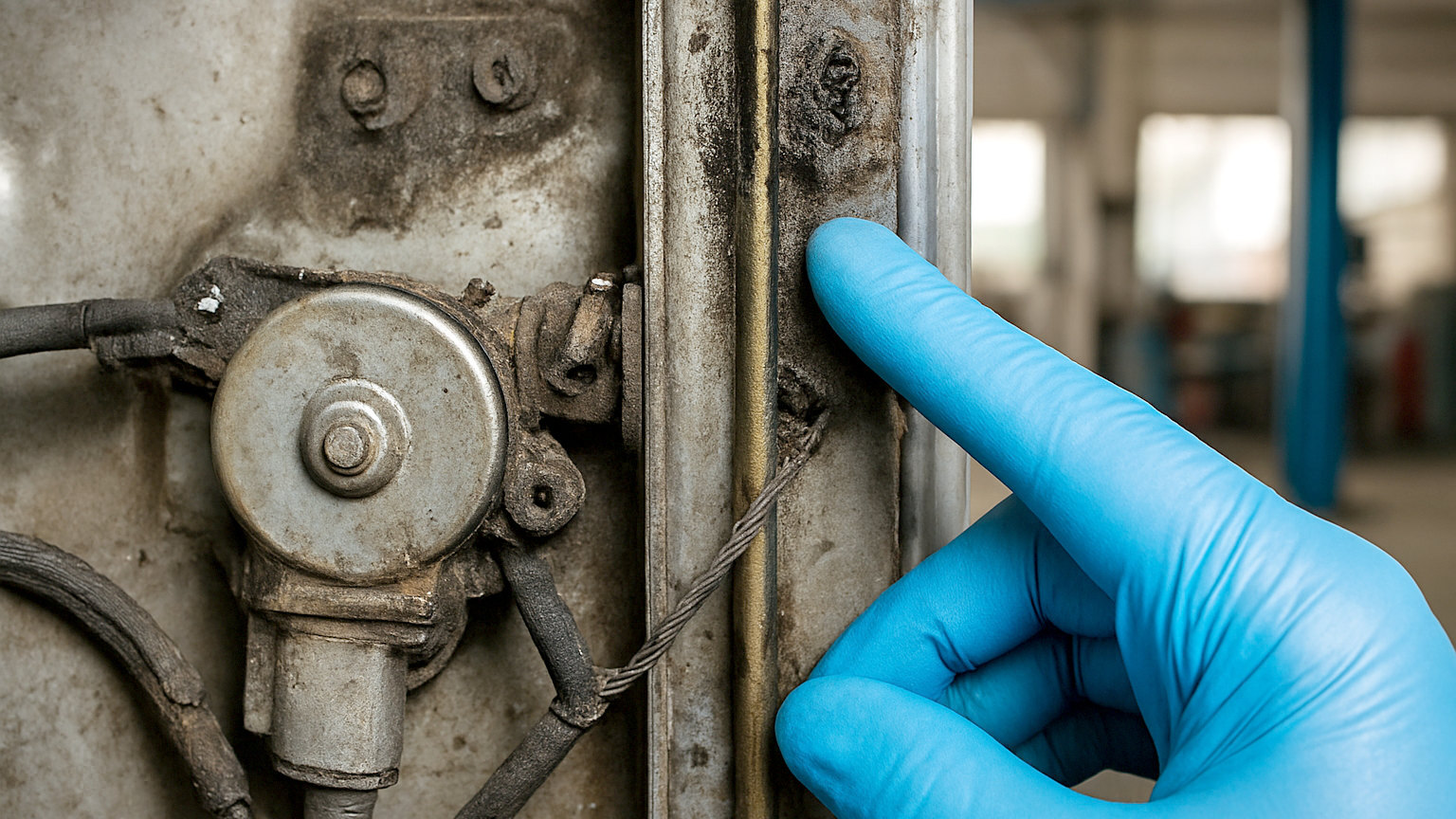
A window that lowers happily and refuses to rise is displaying a very specific fault pattern, and it is more informative than it first appears. Lowering the glass is assisted by gravity while raising it means lifting a heavy pane against friction in the channels. Any weakness in the motor, the mechanism or the switch therefore shows up in the up direction first.
Why is one direction harder?
Because the motor has to lift the weight of the glass and overcome the friction of the rubber channels it slides in, whereas lowering it is largely a matter of controlling a descent. A motor with worn brushes, a partially seized mechanism or a dry channel may still manage the easy direction while failing the hard one, which produces exactly this symptom.
Could it be the switch?
Frequently, since most window switches use separate contacts for each direction. One set can burn out or corrode while the other continues working perfectly. It is one of the more common causes and one of the cheapest to fix. Testing the same window from the driver door master switch quickly establishes whether the individual switch is responsible.
What are the channels?
The rubber lined guides at the front and rear edges of the aperture that the glass slides within. They dry out, become dirty and can perish, and the friction increases substantially as they age. Cleaning them and applying a suitable silicone lubricant frequently transforms a sluggish window, and it costs almost nothing to try before anything is dismantled.
What is an anti pinch system?
A safety feature on cars with one touch windows that detects resistance while closing and reverses the glass to avoid trapping fingers. If the channels have become stiff, the system interprets the extra effort as an obstruction and stops or reverses the window. The result is a car that will not close its window even though nothing is actually in the way.
How do you tell that apart?
By whether the glass moves at all. Anti pinch intervention usually produces a short upward movement followed by the window dropping back down, which is quite different from no movement at all. Many cars also allow the system to be overridden by holding the switch continuously, which will close the window if the mechanism is capable of it.
Does it need a reset?
Often, particularly after a battery disconnection or a regulator replacement. The module needs to relearn the fully open and fully closed positions, and until it does the anti pinch behaviour can be erratic. The procedure usually involves holding the switch in the closed position for several seconds after the window has reached the top, then repeating in the other direction.
Can it be the regulator?
Yes, particularly where the mechanism is binding rather than broken. A frayed cable jumping its pulley, a cracked plastic guide or a bent channel all increase the effort required, and the motor manages the easy direction only. If the movement is also noisy or the glass tilts as it moves, the regulator is the likely suspect rather than the motor.
What is worth trying first?
Clean and lubricate the channels with a silicone spray, which takes ten minutes and resolves a surprising proportion of cases. Try the window from the other switch. Attempt the reset procedure for your model. If none of those helps, the fault is mechanical or electrical inside the door and the card will have to come off.
Is it safe to leave?
Only if the window can be closed by some means, since a car that cannot be secured is a poor thing to leave on a street overnight. If the glass will rise while the switch is held even though the automatic function has failed, that is workable in the short term while the repair is arranged.
What is not workable is leaving the glass down in wet weather, since a soaked carpet and underlay causes problems that outlast the window fault by months.


