
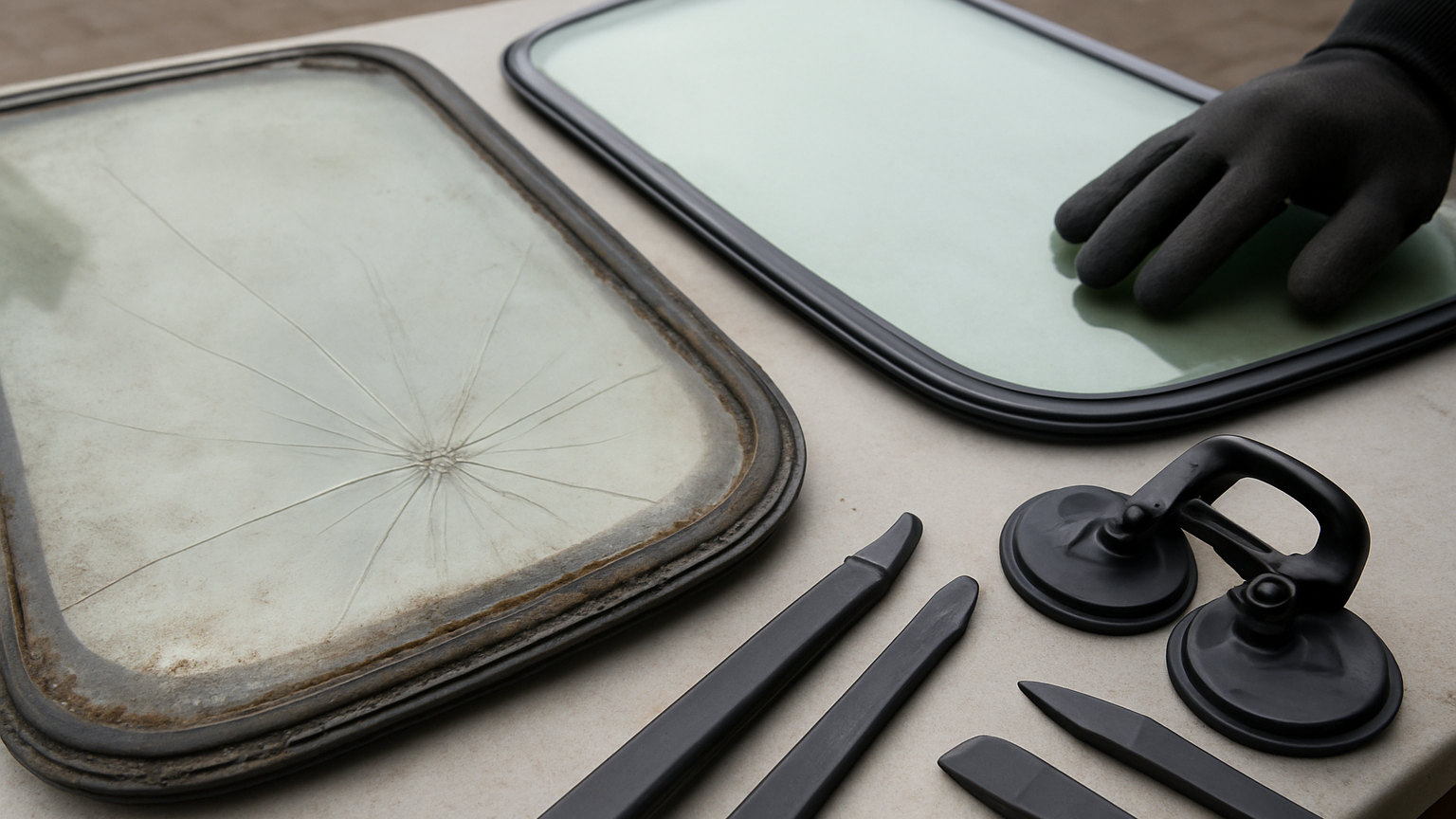
It is one of the more frustrating experiences in motoring: a chip that has sat harmlessly for months suddenly runs into a crack across the screen overnight. Understanding why explains both the urgency of repairing chips and the specific things that trigger the spread, most of which are entirely avoidable once you know about them.
How is a windscreen made?
From two layers of glass bonded either side of a plastic interlayer, which is why it is called laminated. In an impact the glass cracks while the interlayer holds everything together, so the screen stays in place rather than showering the occupants. Side and rear windows are usually toughened glass instead, which shatters into small blunt fragments.
Why does a chip weaken it so much?
Because the outer surface of glass carries most of the tensile stress, and a chip is a break in that surface. Glass is remarkably strong in compression and weak in tension, so any surface flaw becomes the point where a crack will start. The chip itself may be tiny; what matters is that it provides somewhere for a crack to begin.
What is thermal shock?
Uneven expansion caused by a rapid temperature difference across the glass. Pouring warm water on a frozen screen is the classic example, and it can crack a perfectly sound windscreen let alone a chipped one. Blasting the demister at maximum onto very cold glass does the same more slowly. Both are common and both are avoidable.
Why does it happen overnight?
Because the temperature falls steadily and the glass contracts, and a screen that has been warmed by a day of driving cools unevenly. That is when many chips choose to run. It is also why a crack often appears with no obvious event to explain it, and why owners report a screen cracking while parked rather than while being driven.
Does the body flex contribute?
Considerably. The windscreen is a structural component bonded into the shell, contributing meaningfully to the rigidity of the car and supporting the roof in a rollover. Every pothole and speed bump flexes the body slightly, and that flexing puts stress into the glass. A chip near the edge of the screen is particularly vulnerable, since that is where the stress is highest.
Why are edge cracks so serious?
Because damage close to the bonded edge sits in the most highly stressed region and is rarely repairable. A crack that has reached the edge will continue to run, and it also compromises the structural contribution the screen makes. Damage in that region almost always means replacement rather than repair, whatever its size.
What can you do to prevent it?
Repair chips promptly. Never use hot water to clear ice, using a scraper and de-icer instead. Warm the car gradually rather than putting the demister straight to maximum on a frozen screen. Avoid slamming doors with all the windows closed, since the pressure spike flexes the glass. And ease over speed bumps rather than crossing them at pace.
Is a cracked screen an MOT failure?
Depending on size and position, frequently yes, with tighter limits in the driver primary view. Beyond the test, a cracked screen is weaker in an impact and contributes less to the structure, and it distracts. Insurance policies usually cover replacement with an excess, which is considerably more than a repair that could have been done for nothing.
Does a crack always spread?
Almost always, eventually, since the stresses that started it are still present and glass has no way of healing. Some cracks run quickly and others take months, and the direction is unpredictable. Treating a crack as something that will get worse rather than something that has stopped is the realistic assumption.
Arranging the replacement at a convenient moment is therefore better than waiting until the crack reaches a point where the car cannot legally be driven, or until it fails a test you had not planned around.


