
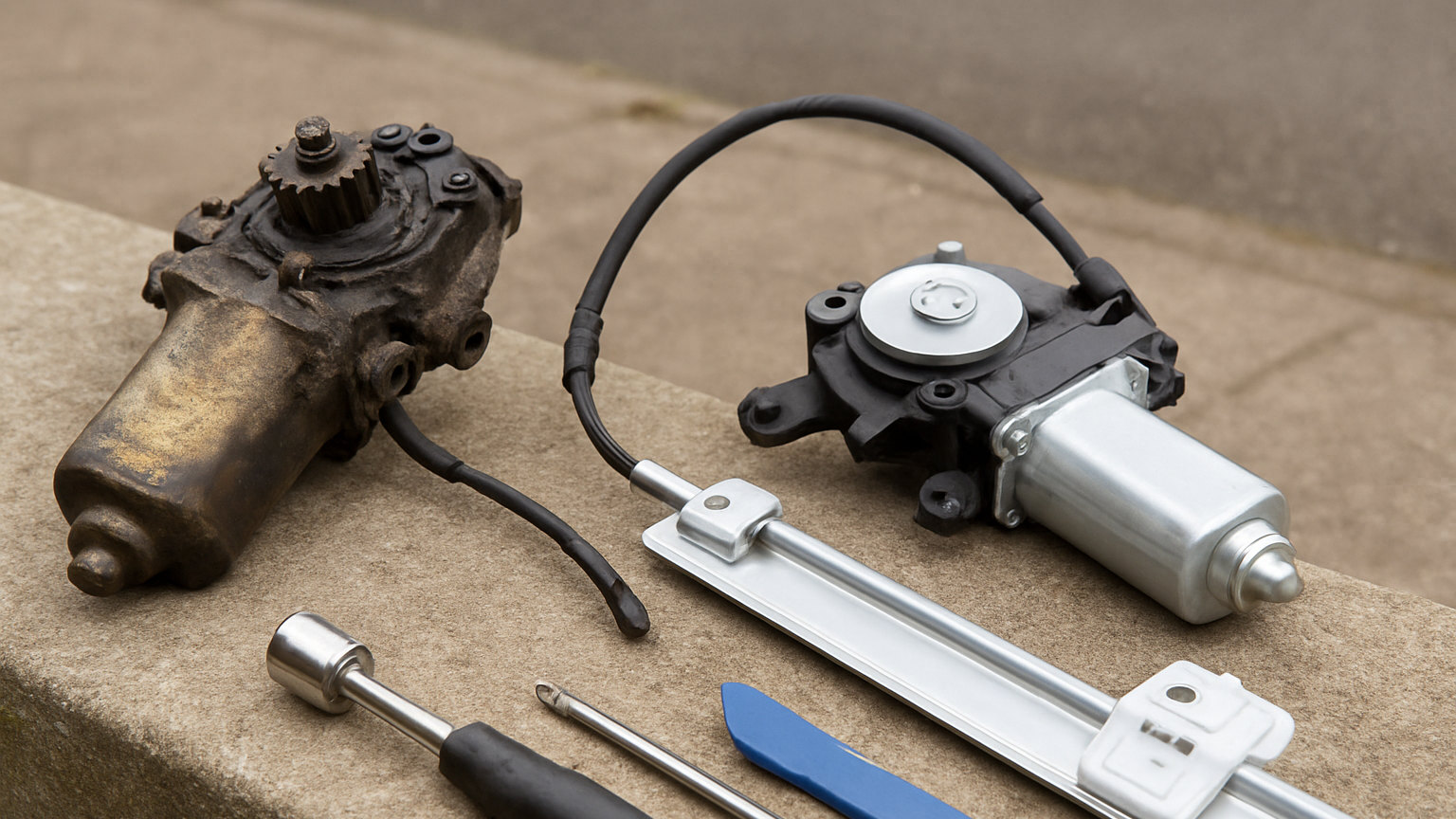
Windows rarely fail without warning. A regulator that is about to let go, a motor approaching the end of its life or a channel that has dried out will nearly always produce a slower, noisier operation for weeks or months first. Recognising that as a warning rather than a quirk gives you the chance to deal with it before the glass drops into the door.
What do the different noises mean?
A grinding suggests the motor gear or the regulator drum is damaged. A clicking or ticking that repeats with movement points at a frayed cable or a cracked pulley. A squeal usually comes from the glass moving in a dry channel rather than from the mechanism at all. And a straining hum with slow movement suggests a motor working harder than it should.
How do you clean the channels?
Lower the window fully, then wipe inside the front and rear guides with a cloth wrapped around a thin blade to remove accumulated grit and old grease. Apply a silicone based lubricant to the rubber and run the window up and down several times to distribute it. It takes ten minutes for all four and it frequently produces an immediate improvement.
Which lubricant should be used?
A silicone spray designed for rubber, applied sparingly. Petroleum based products attack rubber and will eventually destroy the channel seals, so ordinary general purpose lubricant is a poor choice here. Dry film lubricants also work well and attract less dirt, which matters since anything sticky simply collects grit and makes matters worse over time.
Why do the channels dry out?
Age, ultraviolet exposure and constant washing, which removes whatever lubrication remains. Cars parked outside suffer sooner. Once the rubber hardens, friction rises sharply and the motor is asked to work considerably harder every time the window moves, which is what eventually kills it. It is entirely preventable with occasional attention.
What does a judder indicate?
The glass sticking and releasing as it moves, usually because one channel is dragging more than the other. It can also mean the regulator carrier is loose on one side so the glass is not being lifted squarely. If the top edge of the glass is visibly not level as it rises, that second explanation is the likely one and it needs attention promptly.
Can the motor be the cause?
Yes. Worn brushes reduce the torque available, so movement becomes slow and laboured, and the motor may stop altogether when hot. Bearings dry out and rumble. A motor drawing excessive current can also blow fuses or damage the switch it runs through, so a slow window is worth resolving rather than tolerating for years.
Do the drain holes matter?
Considerably. Water runs down the inside of the glass and drains through holes at the bottom of the door, and when those block with leaves and dirt the door fills with water. The mechanism then corrodes and the cables rust. Clearing them with a piece of wire takes minutes and it prevents both regulator failure and water entering the cabin.
When should you act?
Before it stops. A window that has become noticeably slower over a few months is telling you something, and dealing with it while the car is dry and the weather is mild is considerably more pleasant than doing it in December with the glass jammed down. Cleaning and lubricating the channels first is free and often enough.
Does it affect anything else?
A motor drawing excessive current heats its switch and can eventually damage it, so a slow window can take a switch with it. On cars where the window drops slightly when the door opens, a sluggish mechanism can also leave the glass in the wrong position, which produces wind noise and can crack the glass against the frame.
Dealing with a slow window while it is merely slow is therefore cheaper than waiting, quite apart from being far more pleasant to work on in mild weather.


