
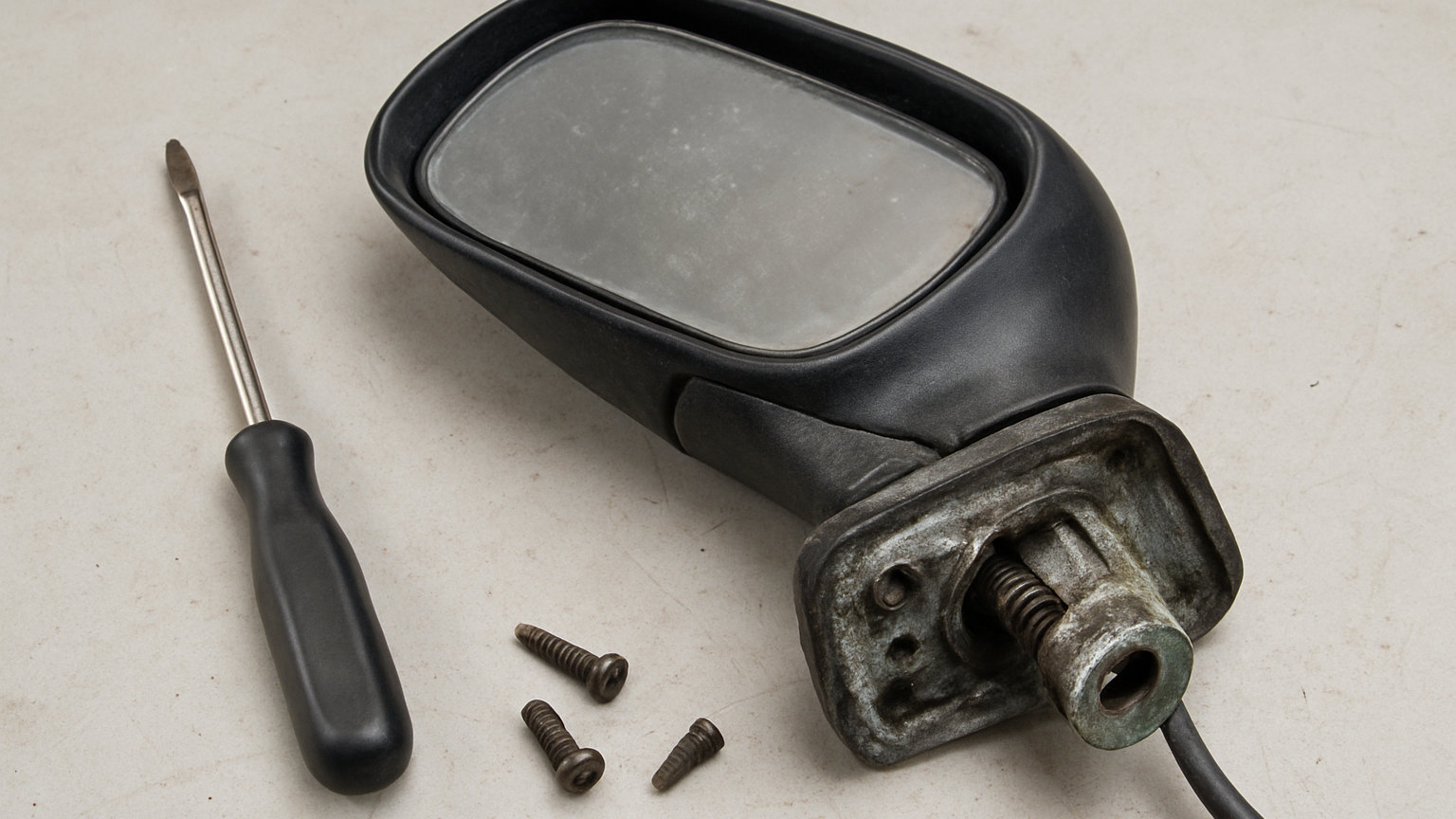
A door mirror that vibrates enough to blur the image at speed is genuinely irritating and it reduces your view of what is behind at exactly the moments it matters. The causes are almost always mechanical rather than anything to do with the glass, and most of them are inexpensive to correct once identified.
What is the most common cause?
A worn or loose folding mechanism. Mirrors that fold, whether electrically or by hand, pivot on a detented mechanism that wears over time, particularly if the mirror has been knocked or forced. Once the detent no longer holds firmly, the whole housing can move slightly in the airflow, and the image blurs at speed while looking perfectly steady when parked.
Can the mounting bolts loosen?
Yes, and it is worth checking first because it is free. The mirror is bolted to the door through the inner trim panel, usually with two or three fixings behind a small cover. They work loose over years of vibration, and tightening them can resolve the problem entirely. Access is usually simple, requiring only the small triangular trim to be prised off.
Could it be the glass itself?
Sometimes. The glass clips onto a backing plate and those clips break or lose tension, so the glass can buzz against the housing. It usually produces a rattle over rough surfaces rather than a blur at speed. Foam tape between the glass and the housing is a legitimate fix where the clips are worn, provided the glass still sits correctly.
Does it get worse in crosswinds?
Considerably, since the housing presents a large area to the airflow and any looseness is amplified. A mirror that is steady on a calm day and blurred in a crosswind is describing a mechanical looseness rather than an aerodynamic problem, and the same fault will worsen over time as the mechanism continues to wear.
Has the mirror been knocked?
A common cause and one people forget. Being clipped in a car park, or folding a powered mirror by hand rather than using the switch, strips the plastic gears or damages the detent. The mirror may still fold and unfold while no longer locking firmly in position. If the vibration appeared after a knock, that is almost certainly the explanation.
Can the mechanism be repaired?
Frequently. Repair kits containing replacement gears and detent components are available for many popular models, and they cost a fraction of a complete mirror. It is fiddly work involving small parts and springs, and it is entirely achievable with patience. Some designs allow the folding mechanism to be replaced as a module.
Is it a safety issue?
To a degree. A blurred mirror at motorway speed reduces your ability to judge what is behind, particularly at night when headlights smear. It is not dangerous in the way a failed brake is, and it does degrade an important part of your view. It is also the sort of fault that steadily worsens rather than stabilising.
What should you check first?
Grip the mirror housing and try to move it, which reveals looseness immediately. Check whether the glass moves independently of the housing. Look at the mounting bolts behind the inner trim. Those three checks take ten minutes and they distinguish a loose fixing from a worn mechanism, which is the difference between a free repair and a replacement part.
Can wind noise be part of it?
Frequently, since a mirror housing that is loose or not sitting correctly disturbs the airflow and produces a whistle as well as a vibration. If both appeared at the same time, they almost certainly share a cause. A mirror cover that has been refitted after a repair and is not fully clipped home is a common and easily missed explanation.
Checking that the cover and the glass are both properly seated is worth doing before assuming the folding mechanism itself is worn, since it costs nothing and takes a moment.


