
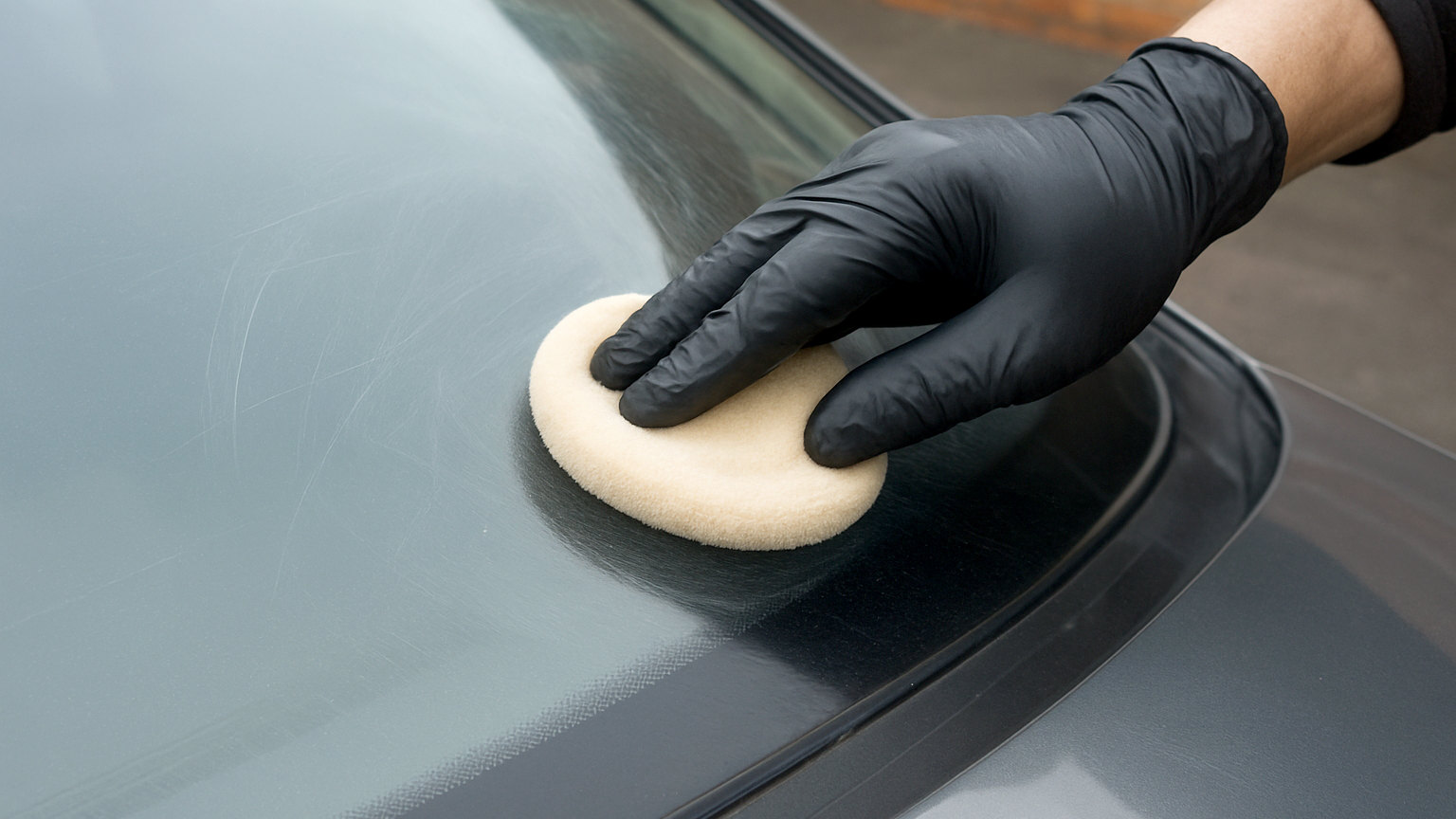
Scratched glass is more distracting than most people expect, particularly at night when oncoming headlights turn every mark into a starburst. Light surface marks can genuinely be polished out, and deeper ones cannot be removed without taking away enough glass to create optical distortion, which is a worse outcome than the scratch.
What is the fingernail test?
Run a fingernail across the scratch. If it glides over without catching, the damage is shallow and polishing is likely to help. If the nail catches in it, the scratch has depth and polishing it out would mean removing a significant amount of surrounding glass. That single test is the most reliable guide available and it costs nothing.
How does glass polishing work?
With cerium oxide, a fine abrasive compound used with a felt or wool pad on a slow speed polisher, kept wet throughout. It removes an extremely thin layer of glass, blending the edges of the scratch until it no longer catches the light. It is slow work and it generates heat, which is why keeping the surface wet matters.
What is the risk?
Distortion. Removing material from one area creates a very slight lens effect, and on a windscreen directly in the driver view that is more objectionable than the original scratch. Overheating the glass can also crack it. Working a large area lightly rather than a small area aggressively is the technique, and knowing when to stop is most of the skill.
What causes wiper scratches?
Grit trapped under a blade, or a blade worn down to the metal carrier. Both drag hard particles across the glass in an arc, producing the characteristic curved marks. Replacing blades before they deteriorate and rinsing the screen before wiping a dusty car prevents almost all of it, and a dry wipe on a gritty screen is the worst thing you can do.
What about ice scraper damage?
A plastic scraper used on a screen with grit on it produces fine scratches, and a metal scraper produces worse. Clearing loose debris and using de-icer to soften the ice first reduces the pressure needed. Never use a metal blade, and replace a scraper whose edge has become chipped, since a damaged edge concentrates the pressure.
Can side windows be polished?
More readily than a windscreen, since a small amount of distortion in a side window matters far less and it is not an MOT consideration. The same technique applies. Scratches from a window regulator problem or from a worn scraper seal are common, and polishing them out is a realistic weekend job with the right compound.
Does it fail an MOT?
Damage in the driver primary view that impairs vision is assessed, so heavy scratching can fail even though it is not a crack or a chip. Light marks elsewhere are generally acceptable. The practical test is whether it obstructs the view, which becomes far more relevant at night and in low winter sun.
When is replacement the answer?
When the scratches are deep enough to catch a fingernail and sit in the driver line of sight, since polishing them out would create distortion in the worst possible place. Insurance frequently covers windscreen replacement with an excess, and a badly scratched screen that causes glare at night is a legitimate safety reason rather than a cosmetic preference.
Can you prevent it?
Largely. Replace wiper blades before they harden, rinse the screen rather than wiping it dry, use plenty of washer fluid, and clear loose grit before scraping ice. Those four habits eliminate the great majority of glass scratching, and they cost almost nothing compared with a replacement screen.
Parking away from overhanging trees also reduces the sap and grit that ends up being dragged across the glass by the wipers, which is where a surprising amount of scratching originates on cars parked outdoors all year.
A quick rinse before the first wipe of the day is a small habit that saves a great deal of glass over time.


