
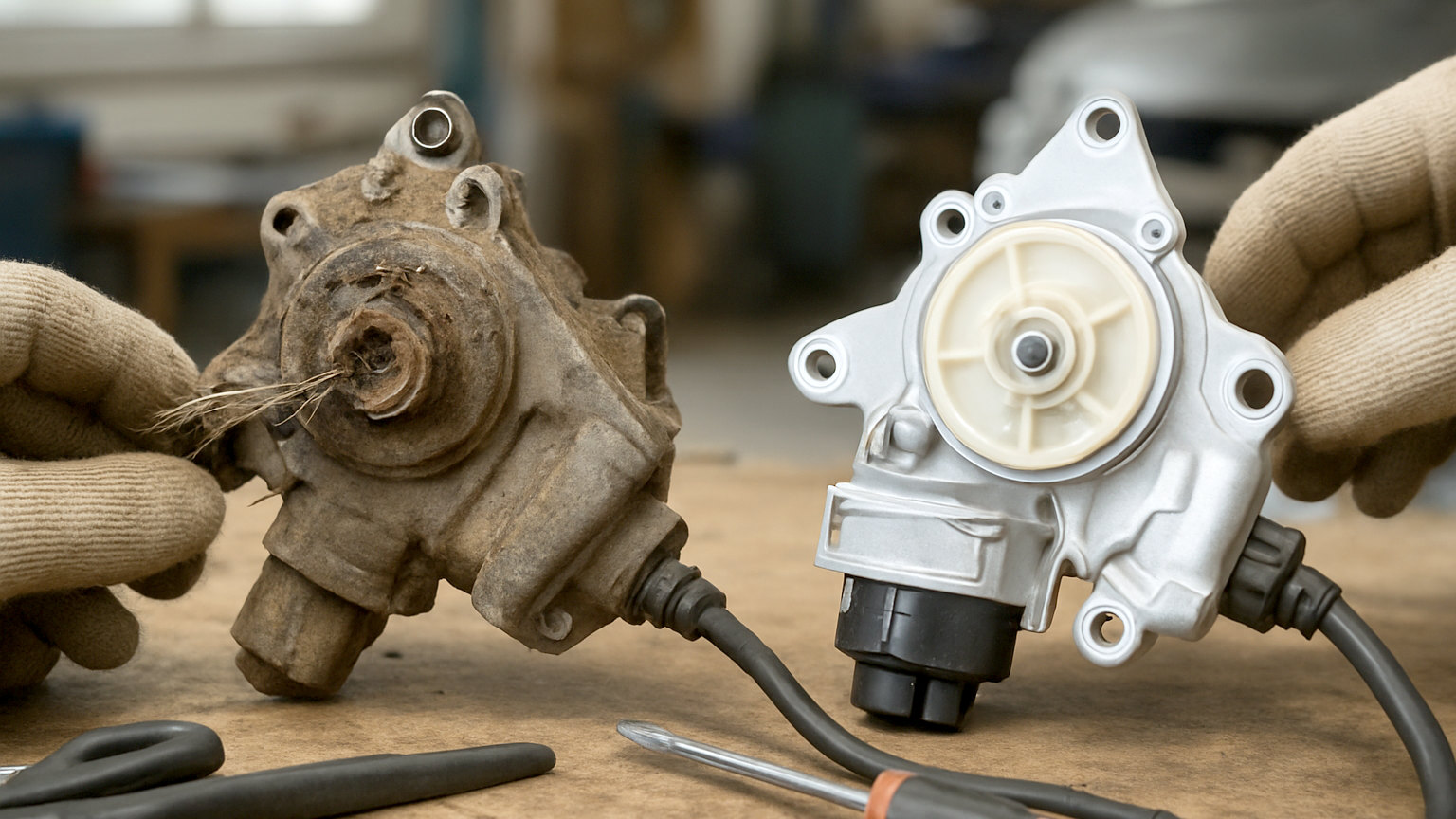
A window that will not close is considerably more of a problem than one that will not open, since it leaves the car insecure and exposed to the weather. The good news is that the causes are a short list, and the noise the door makes when you press the switch usually identifies which one you are dealing with before anything is dismantled.
What does the sound tell you?
A great deal. Complete silence suggests an electrical fault: the switch, the fuse, the wiring or the motor itself. A whirring or grinding with no glass movement suggests the motor is running but the regulator has failed, so the drive is no longer connected to the window. A slow laboured movement suggests a mechanism that is binding rather than broken.
What should you check first?
The fuse, which takes a minute and occasionally solves the whole problem. Then whether the window works from the driver door master switch as well as from its own switch, since a working master switch with a dead individual one identifies the switch immediately. Also check the window lock button has not been pressed, which disables the rear windows entirely.
Why do switches fail?
Because they carry the full motor current on many designs and they are pressed thousands of times, so the internal contacts wear and burn. Drinks spilled onto a door mounted switch cause corrosion. They are among the more common failures and they are usually inexpensive parts. Swapping a suspect switch with one from another door is a quick way to confirm it.
What happens when a regulator fails?
The mechanism that converts motor rotation into vertical glass movement lets go. On cable operated designs the cable frays or jumps its pulley, and the window drops suddenly or tilts in its channel. The motor still runs, which is why you hear it working. It is the most common mechanical failure and the reason the whole assembly is usually replaced together.
Can the window be closed manually?
Often, and it is worth knowing when the car has to be left outside. With the door card removed, the regulator can sometimes be manipulated by hand to raise the glass, then wedged or taped in place. Where the regulator has broken entirely, the glass can be lifted directly and supported with wedges. Neither is elegant and both keep the car secure overnight.
Is it worth replacing just the motor?
Sometimes, though many cars supply the motor and regulator as a single assembly. Where they are separate, replacing only the failed part is cheaper, and the labour to remove the door card is the same either way. Given that both components are the same age, fitting the complete assembly is often the more sensible decision on a high mileage car.
How difficult is the job?
Moderate rather than difficult. The door card comes off, the weather membrane behind it is peeled back, and the regulator unbolts through access holes with the glass supported. The awkward parts are removing the door card without breaking the clips, and handling the glass safely. Many cars also have wiring for speakers, mirrors and airbags to disconnect.
What should you do meanwhile?
Secure the glass in the closed position if you possibly can, and park somewhere covered or sheltered. Water entering through an open window soaks the carpet and the underlay, which then produces persistent misting and eventually smells. Removing valuables from the car is obviously sensible, and a temporary cover over the aperture is better than nothing.
How urgent is the repair?
More urgent than most interior faults, because an insecure car is a genuine risk and water entering the cabin causes damp that lingers long after the window is fixed. It is also a job that gets no cheaper for waiting, since a partially failed regulator often finishes the job by dropping the glass entirely, and a pane resting in the bottom of a door is easily broken.


