
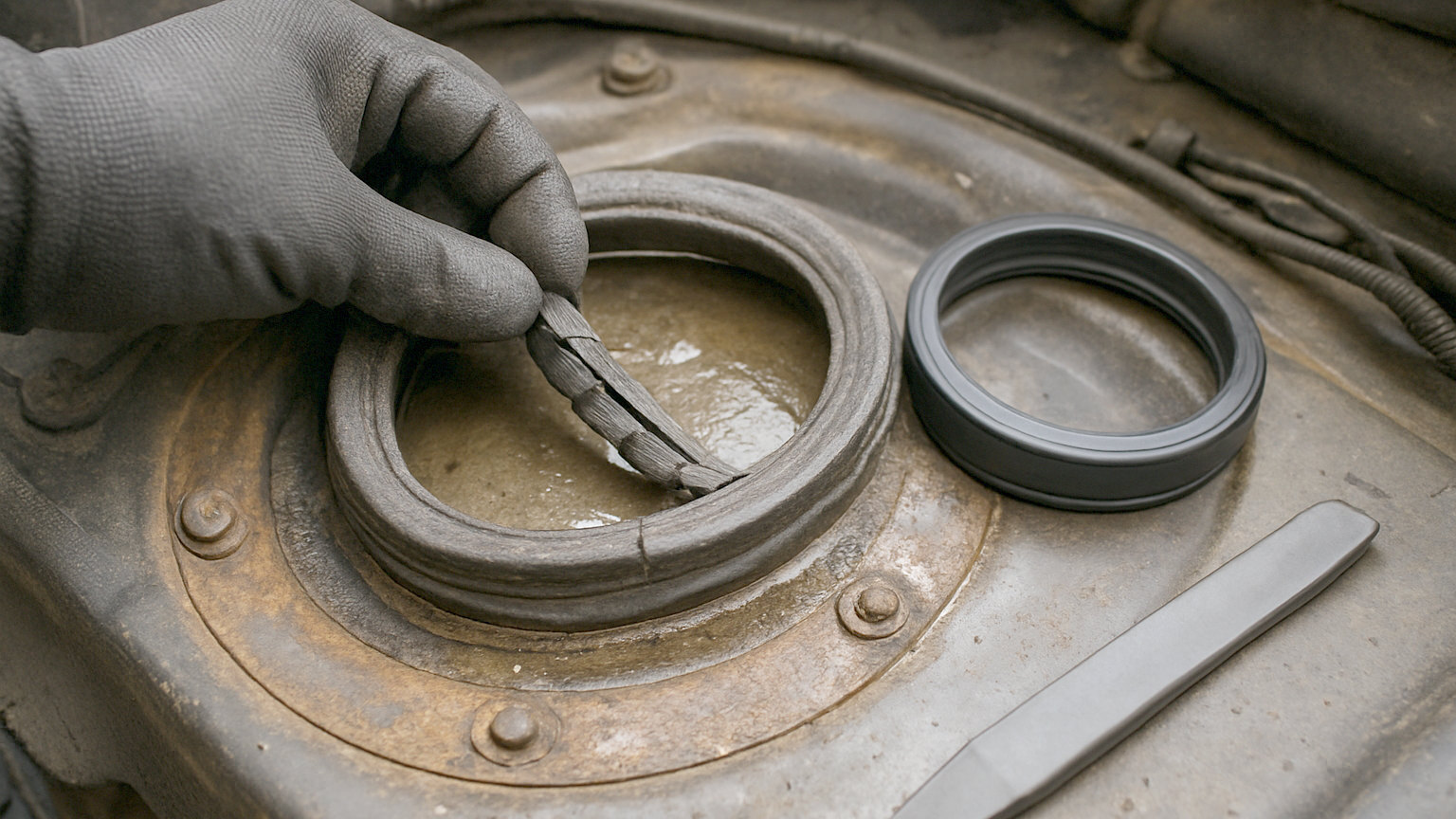
Finding water in the spare wheel well is common and it rarely means water is entering there. That recess is simply the lowest point in the boot floor, so anything getting in anywhere at the rear of the car eventually collects in it. The volume can be considerable, and it corrodes the floor while sitting there unnoticed under the boot carpet.
What is the most common cause?
Rear light cluster seals. Each lamp unit is bolted through the bodywork with a foam or rubber gasket, and those gaskets harden and shrink over years. Water then passes through the bolt holes and runs down inside the rear quarter panel into the boot. It is by some margin the most frequent explanation and the easiest to test.
How do you test the lights?
Remove the trim behind the cluster from inside the boot, then have somebody run water gently over the outside of the lamp while you watch the back of it with a torch. A leak is usually obvious within a minute. Replacement gaskets are inexpensive, and a bead of suitable sealant is an accepted repair where a gasket is unavailable.
What about the tailgate seal?
Worth checking, particularly at the lower corners where it is most compressed. The paper test works here as it does on doors: close a sheet in the aperture and pull it out at intervals around the perimeter, noting anywhere it slides freely. A seal that has hardened, shrunk or come out of its channel lets water past at exactly those points.
Does the boot have drains?
Many cars do, either in the spare wheel well itself or at the lowest corners of the boot floor, usually sealed with a rubber bung. They exist so that the factory can drain the shell during manufacture, and on some vehicles they also let ingress escape. A missing bung admits water from underneath, and a blocked one keeps it in.
Can the aerial leak?
Frequently, and it is often overlooked because it sits at the top of the car. A roof aerial base has a seal that perishes, and water then runs down the inside of the headlining or the rear pillar. Shark fin aerials on the rear of the roof are common culprits, and the water appears in the boot rather than anywhere near the aerial.
What about the rear screen?
Bonded rear screens can leak, particularly on a car where the glass has been replaced or where corrosion has started under the bonding. Water runs down inside the trim and into the boot. It is less common than light seals and it is worth testing if everything else has been eliminated, since a screen leak usually needs professional attention.
Why does it matter beyond the water?
Because standing water in the spare wheel well corrodes the floor from the inside, and that area is structural on many cars. It also soaks the boot carpet, which then produces a persistent damp smell throughout the cabin. And on cars with a battery, a control module or an amplifier mounted in the boot, water reaching them causes expensive faults.
What should you check first?
Lift the boot carpet and the spare wheel to see how much water there is and whether the floor has begun to corrode. Then test the rear light clusters, since they are the most likely cause. Then the tailgate seal and the drain bungs. That order deals with the common causes before anything more involved is considered.
Does it affect the MOT?
Not directly, though corrosion in the boot floor certainly can if it reaches a structural area or a seat belt or suspension mounting point. That is the practical reason to deal with standing water rather than emptying it periodically, since the floor is quietly rotting from the inside while the carpet hides it.
Checking the spare wheel well once a year is worth adding to the same routine as checking the spare tyre pressure.


