
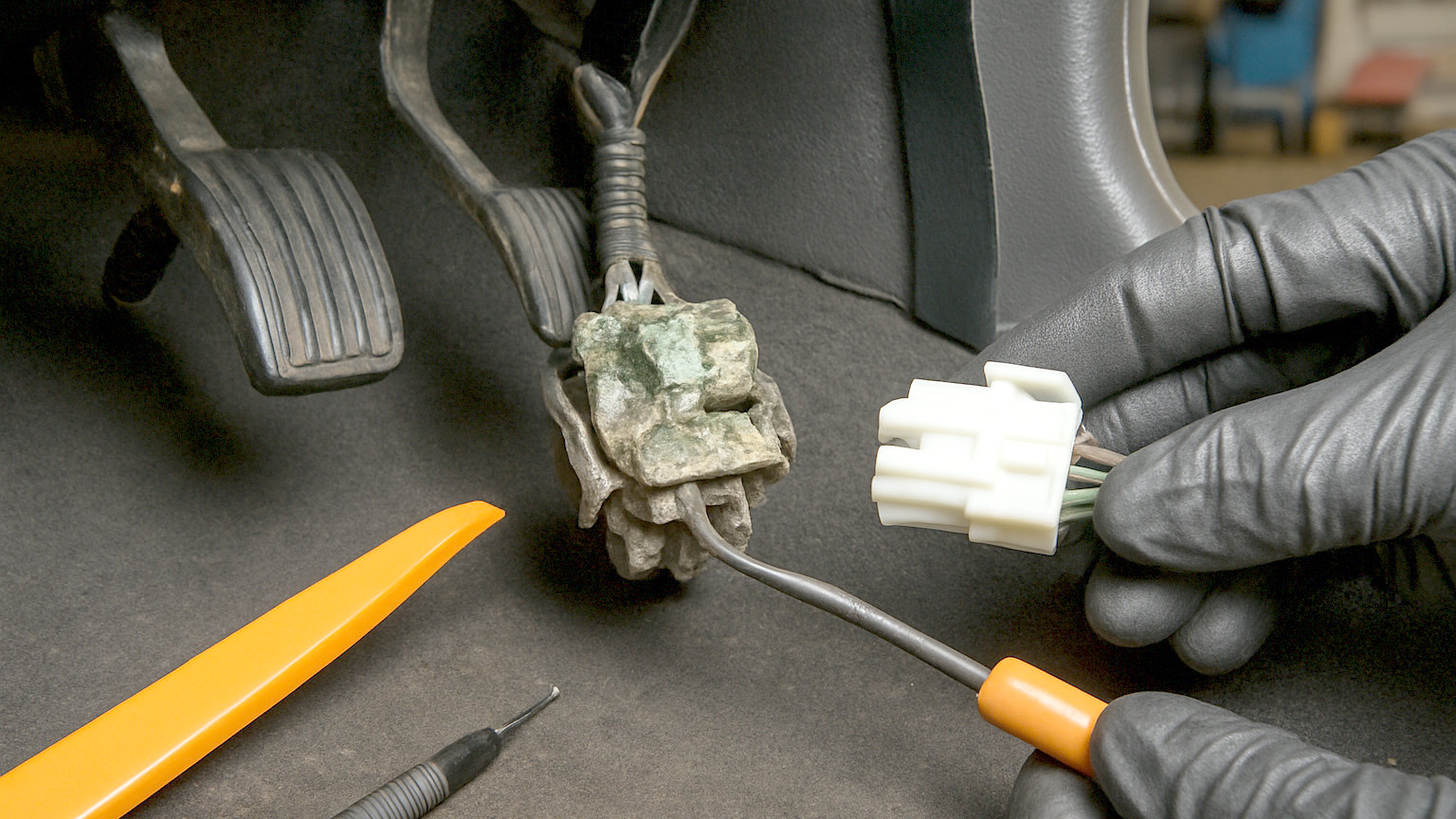
A water leak is easy to treat as a comfort problem, and the more expensive consequence is frequently electrical. Manufacturers mount control modules, connectors and earth points wherever there is space, and a good deal of that space is low in the cabin, beneath seats and behind kick panels. Those are exactly the places water reaches first.
What is mounted where water goes?
Body control modules, airbag control units, amplifiers, telematics units and comfort modules are commonly found under front seats or behind the kick panels at the base of the pillars. Connectors and earth points cluster in the same regions. On some cars a module sits in the scuttle area, which is precisely where a blocked drain puts water.
What symptoms does it produce?
Frequently ones that appear entirely unrelated to a leak. Intermittent warning lights, doors locking or unlocking randomly, windows behaving oddly, a radio that resets, an airbag light, or a battery that goes flat overnight. When several unconnected electrical faults appear at once, a common water ingress point is a more likely explanation than several coincidental failures.
Why is the airbag module a concern?
Because it is safety critical and it is often mounted low in the centre of the car, under the console or beneath a seat. Water reaching it can produce a fault light and, more seriously, an unreliable restraint system. It is also expensive to replace and frequently requires programming. Any airbag light appearing alongside a known leak deserves prompt attention.
How does corrosion develop?
Water wicks into a connector along the wires and sits there, and the combination of moisture, dissimilar metals and a small voltage produces corrosion surprisingly quickly. The connector may look sound from outside while the pins inside are green. That is why an intermittent fault that comes and goes with the weather so often traces back to a damp connector.
Can a leak flatten a battery?
Certainly. A damp connector or a module that will not shut down properly draws current continuously, and the result is a car that is flat after a few days standing. Chasing a parasitic drain without checking for damp carpets is a common way to spend a great deal of diagnostic time on the wrong thing.
Can components be dried and reused?
Sometimes, if caught quickly. A connector that is merely damp can be dried, cleaned and protected with a suitable electrical grease. A module that has been sitting in water for weeks is usually beyond saving, since corrosion works into the circuit board. The distinction is largely about how long it has been wet rather than how wet it got.
Does it affect the value?
Substantially, and it is worth being aware of. A history of water ingress and electrical faults is difficult to hide from an informed buyer, and cars with known leak problems carry a reputation. Fixing the leak properly and documenting it is worth more than repeated repairs to individual symptoms.
What should you do first?
Treat any electrical fault in a car with damp carpets as water related until proved otherwise, and find the leak before replacing anything. Lift the carpets and check beneath the seats for standing water and corroded connectors. Fixing the ingress first frequently resolves the electrical symptoms entirely, without any parts being fitted at all.
Where a module has clearly been sitting in water, photographing it before anything is disturbed is worth doing, since that evidence matters if a warranty or an insurance discussion follows.
Should you mention it at a garage?
Always, and it changes how a technician approaches the diagnosis. Being told the carpets have been wet points them at connectors and modules rather than at the component the fault code names, and it can save hours of chasing an intermittent fault that only ever appears when the weather is bad.
Mentioning when the carpets were last wet, even if they are perfectly dry now, is equally useful since corrosion in a connector continues developing long after the water itself has gone.


