
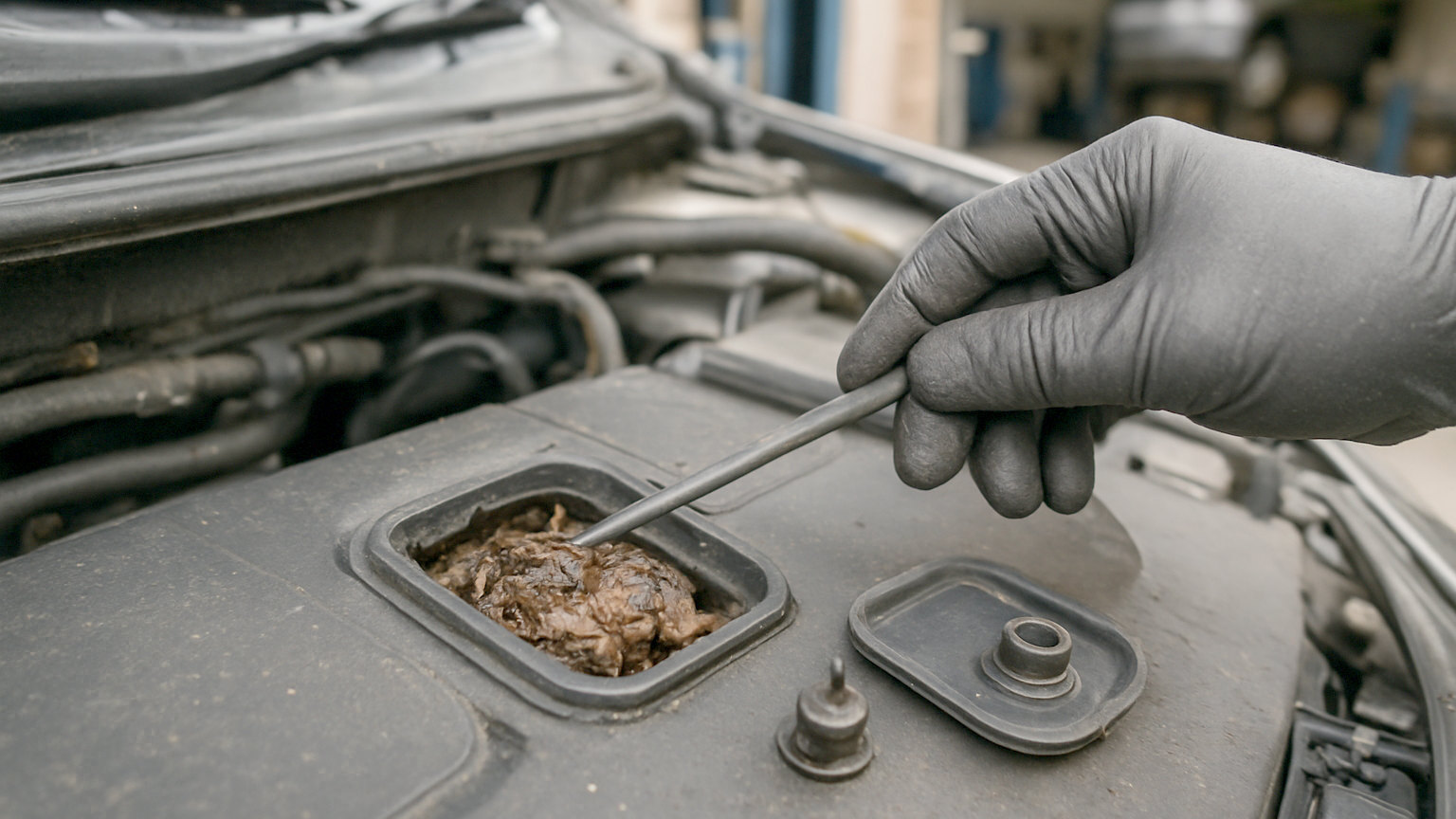
Water leaks have a reputation for being difficult, and the encouraging part is that most of them are preventable. The great majority come from drains that have blocked rather than seals that have failed, and drains block with material that can be cleared in a few minutes once a year. That makes this one of the few faults where an hour of maintenance genuinely prevents a day of diagnosis.
Which drains need clearing?
The scuttle channel beneath the windscreen and its tubes at each end. The sunroof drains at all four corners if one is fitted. The door drain holes at the bottom of each door. The air conditioning evaporator drain. And the boot or tailgate drains where they exist. That list covers essentially every drain on a normal car.
How often should it be done?
Annually for most cars, and twice a year for one parked under trees, where the volume of leaves and needles is far higher. Late autumn is the obvious moment, once the leaves have fallen and before winter rain arrives. The whole exercise takes under an hour and it prevents the most common causes of water inside a car.
How do you test a drain?
Pour water in and watch for it emerging beneath the car. It should run out within seconds. Anything that pools or drains slowly is partially blocked and worth clearing before it stops entirely. Doing this rather than simply poking the tube confirms it actually works rather than assuming it does.
What should you use?
Soft trimmer line or a length of flexible cable, fed gently, and low pressure compressed air. What should never be used is a coat hanger, a screwdriver or anything rigid, since drain tubes are thin plastic and puncturing one inside a pillar creates a leak far worse than the blockage. Gentleness matters more than force.
What about the seals?
Clean and condition them two or three times a year with a silicone product designed for rubber, which keeps them flexible and stops them freezing to the door. A torn seal is usually the result of a door being forced open when frozen, so conditioning prevents the most common cause of failure rather than just delaying it.
Does parking matter?
Considerably. Parking away from overhanging trees reduces the debris reaching every drain on the car, and it is the single most effective preventative measure available. Where that is not possible, a more frequent clearing routine compensates. Parking under cover also protects the seals from ultraviolet degradation.
What should you check after any work?
Anything involving a windscreen, a door card, a sunroof or bodywork. Weather membranes behind door cards are frequently refitted with the sealant no longer continuous, screens are occasionally bonded imperfectly, and trim removed and refitted can trap a seal. A hose test after major work is a sensible precaution rather than a suspicion.
What is the routine worth adopting?
Once a year, ideally in autumn, clear the scuttle and all the drains, test each with water, condition the seals and check the boot well is dry. It takes an hour, it costs the price of a can of silicone spray, and it prevents the soaked carpets, the damp smell and the electrical faults that follow from a leak nobody noticed.
Is it worth doing on a newer car?
Yes, since drains block regardless of age and the consequences are the same. A three year old car parked under a lime tree will block its scuttle just as readily as a fifteen year old one. Starting the routine while the car is new means the leak never happens rather than being repaired after the damage is done.
It also means you know where every drain on your car is, which is exactly the knowledge that makes diagnosing a leak straightforward if one ever does appear in spite of the routine.
Writing down where each drain exits, the first time you find them, turns the annual job into a ten minute task rather than a fresh investigation every autumn.


