
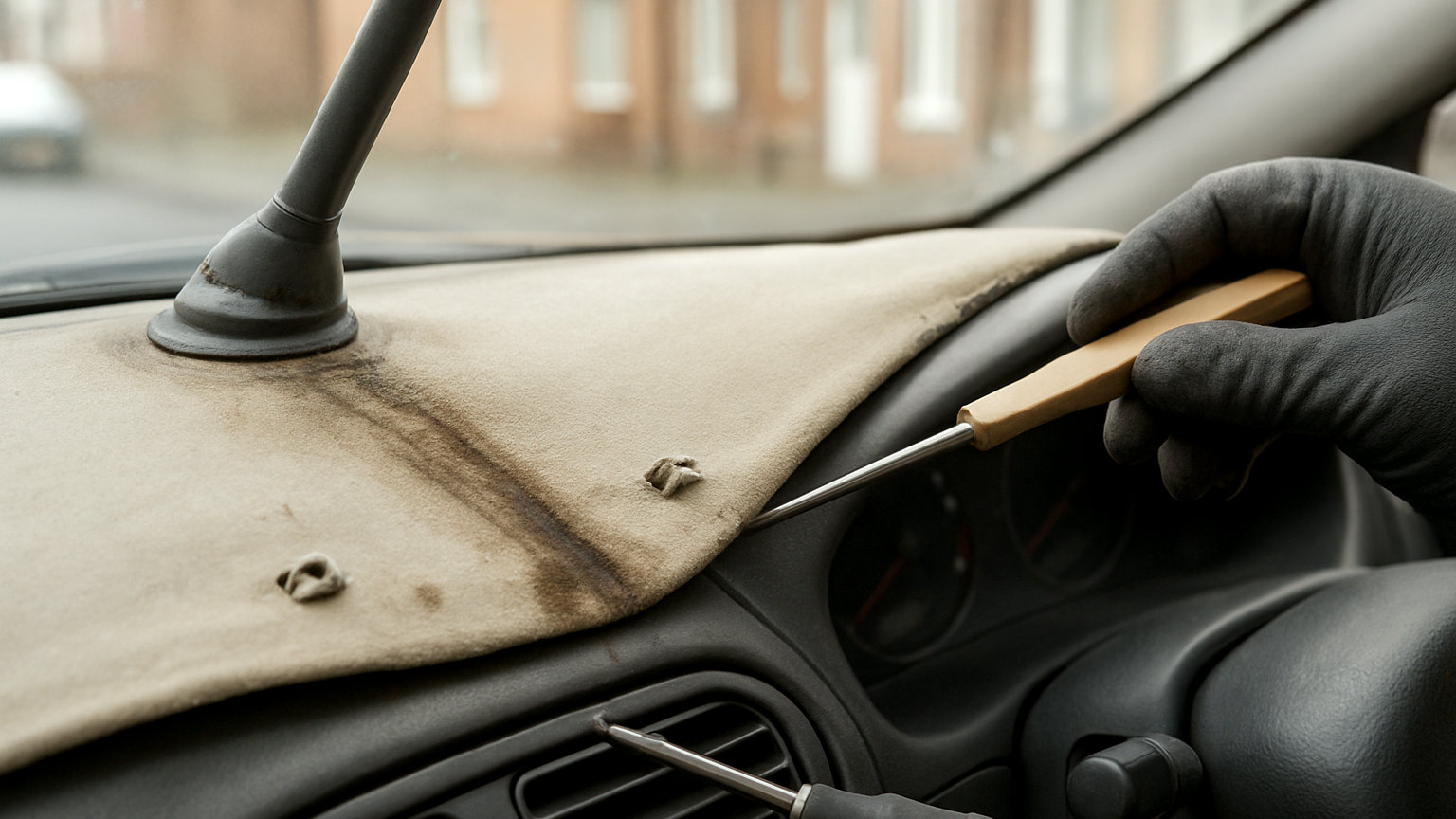
Water dripping from a headlining or a stain spreading across it is disconcerting, and it means water is inside the roof structure. The roof looks like a single smooth panel and it carries a surprising number of holes: aerial bases, roof rail mountings, sunroof apertures, seams and, on some cars, drainage channels along the gutters.
Is the stain above the leak?
Almost never, which is the difficulty. Water entering the roof runs along the metal frame beneath the headlining until it finds a low point or a seam, and that is where it soaks through. A stain above the rear seat can easily originate from an aerial base at the front. Following the roof frame rather than looking directly above the mark is the productive approach.
What about the aerial?
A very common cause and frequently the first thing to check. Roof aerial bases have a rubber seal that hardens over years, and shark fin housings on the rear of the roof are particularly prone. Removing the base, cleaning the area and refitting with fresh sealant is a straightforward repair, and it requires access to the underside from within the headlining.
Do roof rails leak?
Frequently, particularly where they bolt through the roof rather than clamping to a rail. The mountings are sealed with rubber gaskets or sealant that perishes, and vibration from roof bars works on them. On a car where roof bars have been fitted and removed several times, those mounting points deserve close attention.
What about the sunroof?
The most likely cause on any car fitted with one. Blocked drain tubes cause water to back up in the tray and overflow into the headlining, which produces staining around the aperture. Testing by pouring water into each corner of the tray and watching it emerge beneath the car identifies it quickly, and clearing the tubes usually resolves it.
Can the seams fail?
Yes, though less often. The roof is joined to the sides along seams that are sealed at the factory, and that sealer can crack with age or be disturbed by accident repair. A car that has had roof or pillar work and then started leaking is a candidate. Repairing it means removing trim and applying fresh seam sealer properly.
Does the headlining have to come down?
Frequently, both to trace the water and to dry the material. Headlining boards are large, awkward and easily creased, and on many cars removing one means taking out seats, pillar trims, grab handles and sometimes the windscreen surround. That is why a roof leak is one of the more labour intensive to put right properly.
Can a stained headlining be saved?
Sometimes, with careful cleaning while the fabric is still attached, though water marks frequently remain. The bigger problem is that the foam backing the fabric degrades once wet, and the material then sags away from the board. Where that has happened, recovering the board with new material is the realistic answer.
What should you check first?
The sunroof drains if fitted, then the aerial base, then any roof rail or roof bar mounting. Those three account for the great majority of roof leaks and all can be tested with a hose from outside while somebody watches from within. Only when they are eliminated is it worth considering seams or the screen surround.
Can it be dried in place?
Partly, with a dehumidifier and time, and the fabric backing frequently remains marked. What matters more is that water sitting inside the roof structure corrodes it, so drying the headlining without finding the entry point simply delays the same conversation. The leak comes first, as with every water problem.
Once it is fixed, a dehumidifier left in the car for a day or two removes far more moisture from the headlining and its backing board than simply airing the car with the doors open ever will.
Where the fabric has already sagged away from the board, recovering it is a specialist job and one worth having done properly, since a badly fitted headlining is obvious from the driving seat every day.


