
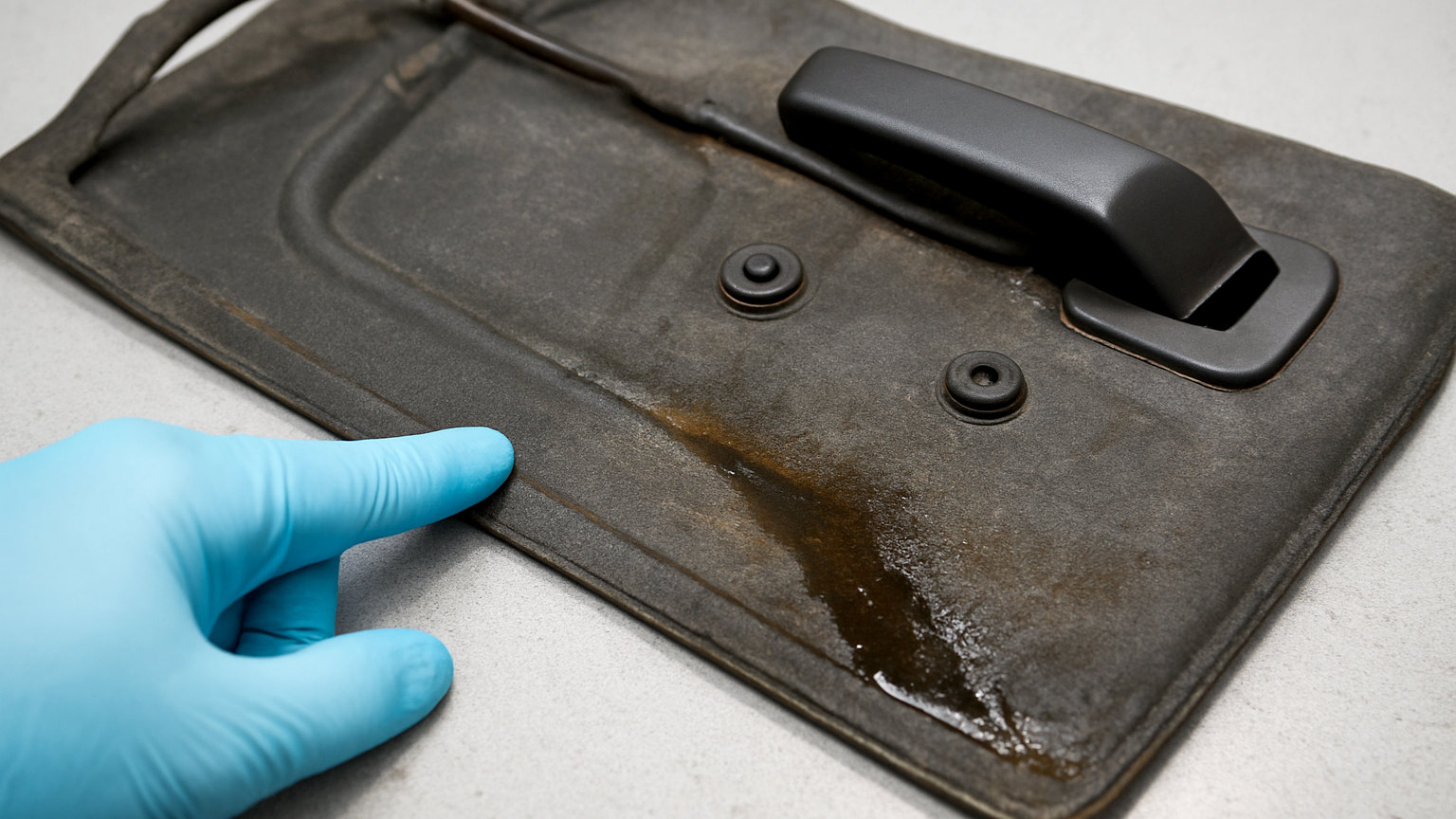
Finding a water leak in a car is a genuinely methodical job, and the thing that catches most people out is that water travels. It enters at one point, runs along a seam, a wiring loom or the underside of the carpet, and appears somewhere entirely different. Chasing the wet patch is therefore usually the wrong approach, and it is why leaks develop a reputation for being impossible to trace.
What should you do first?
Lift the carpet rather than feeling it. The surface can be dry to the touch while the foam underlay beneath is completely saturated, and only by pulling it back can you see how far the water has spread and where it is deepest. Working from the deepest point upwards and outwards is a far better guide than where the damp first appeared.
How does the hose test work?
With one person inside the car with a torch and another outside with a hose running at low pressure. Start at the bottom of the car and work upwards, spending several minutes on each small area before moving on. Soaking the whole car at once tells you nothing except that it leaks. Patience here is the entire technique.
Why start at the bottom?
Because water only runs downwards, so if you begin at the roof and water appears inside, it could have entered anywhere between the roof and the floor. Starting low and working up means that when water appears, the entry point must be at or just above the level you are currently testing, which narrows it immediately.
Where do leaks usually come from?
Blocked drains far more often than failed seals. The scuttle area beneath the windscreen, the sunroof drain tubes, the door drain holes and the boot lid drains all block with leaves and debris, and once they do the water backs up and finds another route. Sealing a car that is leaking because a drain is blocked achieves nothing.
Which seals are worth checking?
Door and boot seals, particularly at the corners where they are most stressed. The windscreen and rear screen bonding, especially on a car where the glass has been replaced. Grommets where wiring, cables and aerials pass through the body. And the tailgate spoiler or roof aerial mountings, which are frequently overlooked and sit at the highest point.
Can you use anything to see it better?
Ultraviolet leak detection dye added to the water shows up under a lamp and makes a faint trickle far easier to spot. Talcum powder dusted along a seam changes colour where water passes. And on a dark evening, a bright torch shone from inside while somebody looks from outside will reveal light through any gap large enough to pass water.
What if it only leaks when driving?
Then a static hose test may find nothing, since driving creates pressure differences, flexes the body and forces water into places it would not otherwise reach. Leaks that appear only in motion frequently come from seams, windscreen bonding or door seals that only fail under load, and they usually need a road test in the wet to confirm.
How long does it take?
Longer than people expect, which is why garages charge accordingly. A straightforward blocked drain might be found in twenty minutes; an intermittent seam leak can take several sessions. Being realistic about that, and doing the free checks yourself first, makes the eventual bill considerably easier to accept.
What should you do once it is found?
Fix the cause, then deal with the water already inside. Drying the carpet while water is still entering achieves nothing, and wet underlay left in place produces persistent misting and a smell that never quite goes. Removing it to dry properly is unpleasant work and it is the only thing that genuinely resolves it.
Is it worth paying a specialist?
For an intermittent leak that has resisted your own efforts, frequently yes. Specialists have ultraviolet dye, smoke machines and the experience of knowing which models leak where, and they will often find in an hour what takes an amateur several weekends. The cost compares well against replacing carpets and chasing electrical faults caused by water nobody located.


