
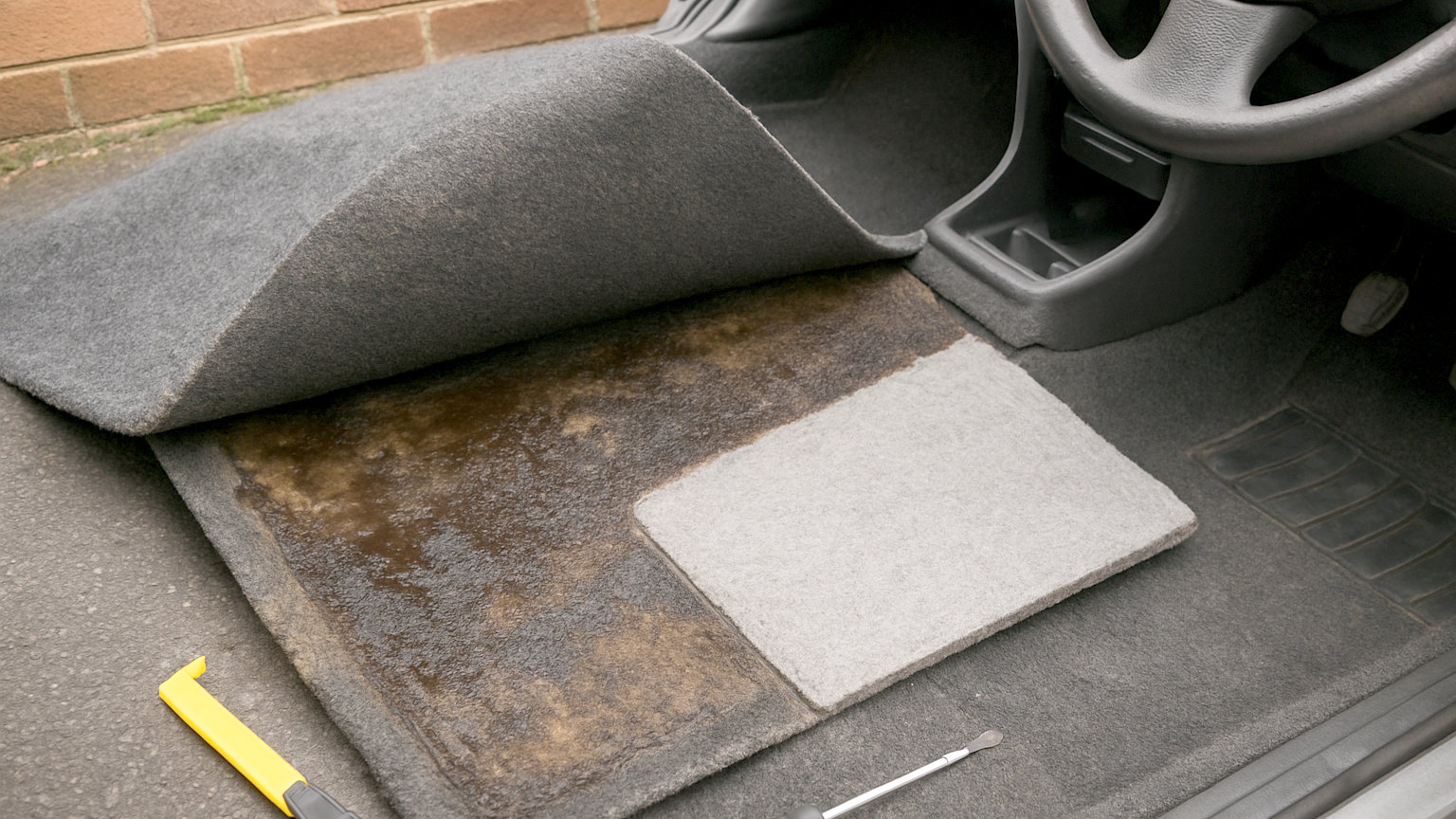
Drying a car properly is more involved than most people expect, and the reason is the underlay. Beneath the visible carpet is a layer of dense foam, and once that has absorbed water it holds it like a sponge. Wiping the carpet, leaving the windows open and running the heater achieves almost nothing while the foam beneath remains saturated.
What has to come out?
Ideally the seats and the carpet, so the underlay can be removed and dried separately or replaced. That is a substantial job and it is what a professional would do. At minimum, the carpet needs lifting and propping so air can circulate beneath it, and the underlay pulled back far enough to expose the wet area to moving air.
Does a wet vacuum help?
Considerably, and it is the single most effective first step. A wet and dry vacuum removes standing water and a surprising amount from the carpet pile, and pressing down firmly with the nozzle draws moisture out of the foam. Several passes over the same area, allowing time between them for water to wick upwards, works better than one attempt.
What about a dehumidifier?
Very effective, and it is what many specialists use. A domestic dehumidifier placed inside the car with the doors closed and an extension lead run out through a slightly open window will remove a remarkable quantity of water over a day or two. It works far better than heat alone because it actually removes the moisture rather than moving it around.
Does running the heater work?
Partly, and only with fresh air rather than recirculation and with a window open. Warm air holds more moisture, so heating the cabin and then venting it does move water out. What it will not do is dry saturated foam, and running the engine for hours to dry a car is expensive and slow compared with a dehumidifier.
Are moisture absorbing products useful?
As a finishing touch rather than a solution. Silica or calcium chloride tubs absorb a modest amount of airborne moisture and help keep a dried car dry, particularly over winter. They cannot dry saturated underlay, and relying on them while the foam is still wet simply means the car smells for months.
Why does the smell persist?
Because mould and bacteria grow in the wet foam within days, and they continue to produce odour long after the surface feels dry. That is the practical reason for removing the underlay rather than attempting to dry it in place. Antibacterial treatments help once everything is genuinely dry and they do nothing while moisture remains.
Should the underlay be replaced?
Where it has been soaked for a long period, frequently yes. It is not expensive, it is available in sheet form, and cutting new pieces to fit is straightforward once the carpet is out. Given the effort of removing the interior, fitting fresh foam rather than attempting to rescue mouldy foam is usually the better decision.
What must be done first?
Fix the leak. Drying a car while water is still entering is entirely wasted effort, and it is the most common mistake. Find and repair the source, confirm it with a hose test, and only then begin drying. Doing it in that order once is considerably less work than doing it in the wrong order twice.
How long should it take?
With the underlay removed and a dehumidifier running, a day or two for most cars. Attempting it with everything still in place can take weeks and frequently never quite finishes, which is how a car ends up smelling damp permanently. The effort of stripping the interior is what determines whether the job actually works.
Warm dry weather helps considerably, so tackling it in summer rather than deferring until winter makes a genuine difference to both how quickly it finishes and how thoroughly everything actually dries.
Removing the seats gives far better access and it is less daunting than it sounds on most cars, though anything involving side airbags means disconnecting the battery first and allowing time for the system to discharge.


