
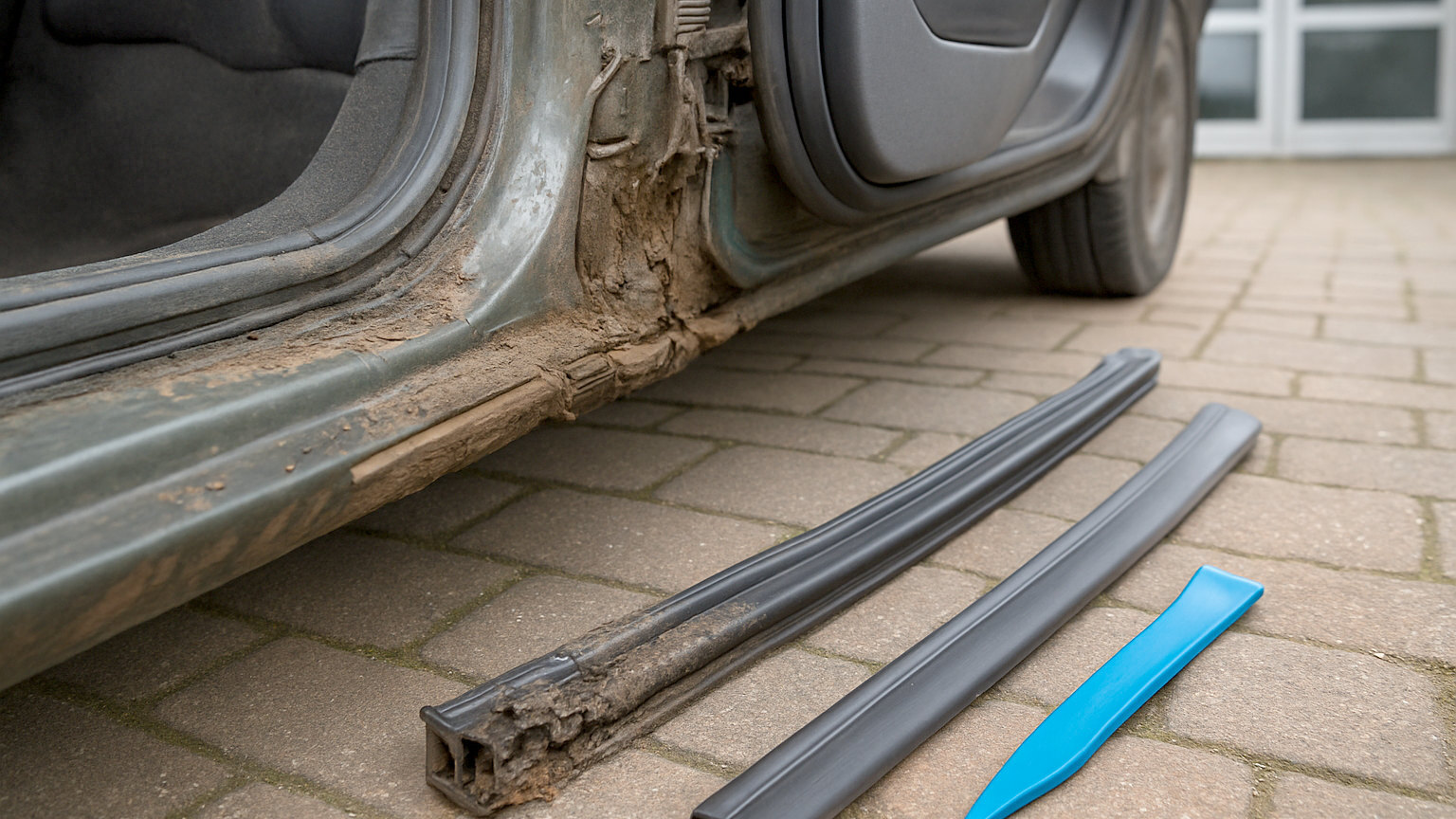
Door seals do more than keep water out. They control wind noise, they hold the door firmly against the body, and they keep dust and exhaust fumes from entering the cabin. They are also made of rubber, exposed to ultraviolet light, compressed thousands of times and frozen every winter, so it is unsurprising that they eventually stop doing the job.
How do they fail?
By hardening, which means they no longer conform to the body when compressed. By shrinking, which opens gaps at the corners where the material is most stressed. By tearing, frequently after being frozen to the door and torn when it was opened. And by coming out of their retaining channel, which produces an obvious gap and a door that will not close properly.
What is the paper test?
Close a sheet of paper in the door with the window up, then pull it out, repeating at intervals around the whole perimeter. Where the paper comes out freely, the seal is not gripping. It is crude and it works remarkably well, and it identifies the failing section in a couple of minutes without any equipment at all.
Can seals be revived?
To a degree, and it is worth trying first. Cleaning them thoroughly and applying a silicone or dedicated rubber conditioner restores some flexibility and helps them sit properly. It also prevents them freezing to the door, which is the most common way a seal gets torn. It will not repair a seal that has shrunk or split.
Which products should be avoided?
Anything petroleum based, since it attacks rubber and accelerates the hardening you are trying to prevent. Silicone based products designed for rubber are the right choice, and applying them two or three times a year is enough. Wiping the seals clean first matters, since conditioner over accumulated grit simply holds the grit against the rubber.
Are they replaceable?
Usually. Most door seals are a single moulded loop that pushes onto a flange around the aperture, sometimes with clips or adhesive at intervals. Removal is a matter of pulling it away steadily, and fitting the new one means working it evenly around rather than stretching it to fit. It is a job that rewards patience over force.
Are aftermarket seals any good?
Variable. A good quality reproduction fits properly and lasts, while a poor one is the wrong section and never seals correctly, which is worse than the perished original. On a common vehicle the original part is often not expensive, and given the labour involved in fitting it, the difference is usually worth paying.
Does a leaking seal always mean replacement?
Not necessarily. A seal that has simply come out of its channel can be refitted. One that is dirty and hardened often improves with cleaning and conditioning. And a door that has dropped on its hinges no longer compresses the seal evenly, which produces a leak that no new seal will cure until the hinges are addressed.
How do you prevent failure?
Clean and condition them two or three times a year, particularly before winter. Free a frozen seal gently rather than yanking the door open. And avoid using strong cleaners on them when washing the car. Those three habits cost almost nothing and they extend seal life by years, which matters given how much a leak eventually costs to resolve.
Do they cause wind noise too?
Frequently, and a whistle at motorway speed often shares a cause with a leak, since both mean the seal is not gripping. The paper test finds the same failing section for both symptoms. That makes it worth investigating a new wind noise before it becomes a wet carpet as well.
Noise is also the earlier symptom of the two, which gives you a chance to act before any water has reached the interior and long before the carpets have been soaked.
Replacing a seal is considerably cheaper than replacing carpets and underlay, which is the practical argument for treating a whistle as a warning rather than an irritation.


