
A damp or mouldy smell in a car is not a mystery to be solved with an air freshener. It means water is present, mould and bacteria are growing on it, and they will continue to do so until the moisture is removed. The useful question is therefore not how to mask the smell but where the water is, since everything else follows from that.
Where is the water usually?
In the foam underlay beneath the carpets, which holds water like a sponge and is invisible without lifting the carpet. In the boot beneath the spare wheel. In the cabin filter and its housing. And on the air conditioning evaporator, which is permanently damp by design and grows mould readily if the system is not used and dried properly.
How do you tell where it is coming from?
By when the smell appears. A musty smell that hits you the moment the fan starts points at the evaporator or the cabin filter. A general damp smell present whenever you open the door points at the carpets or the boot. A sweet smell rather than a musty one is coolant, which means the heater matrix rather than a water leak.
Why do treatments fail?
Because they treat the growth rather than the conditions that produced it. An antibacterial treatment applied to a system that is still damp will work briefly and the smell returns within weeks. That is not a fault with the product; it is being asked to do something it cannot. Removing the moisture first is what makes any treatment last.
What about ozone treatment?
Effective at killing mould and neutralising odour, and it is widely used by valeters. It works, and it is not a substitute for drying the car, since new growth begins as soon as the machine is switched off if the moisture remains. Used as a final step after the water has gone, it is a genuinely good way of clearing lingering smell.
Is it a health concern?
For most people it is unpleasant rather than dangerous, and mould spores circulating through the ventilation in an enclosed cabin are worth taking seriously if anybody using the car has asthma or a respiratory condition. That is a reasonable additional argument for dealing with the cause rather than living with a smell.
Does the cabin filter matter?
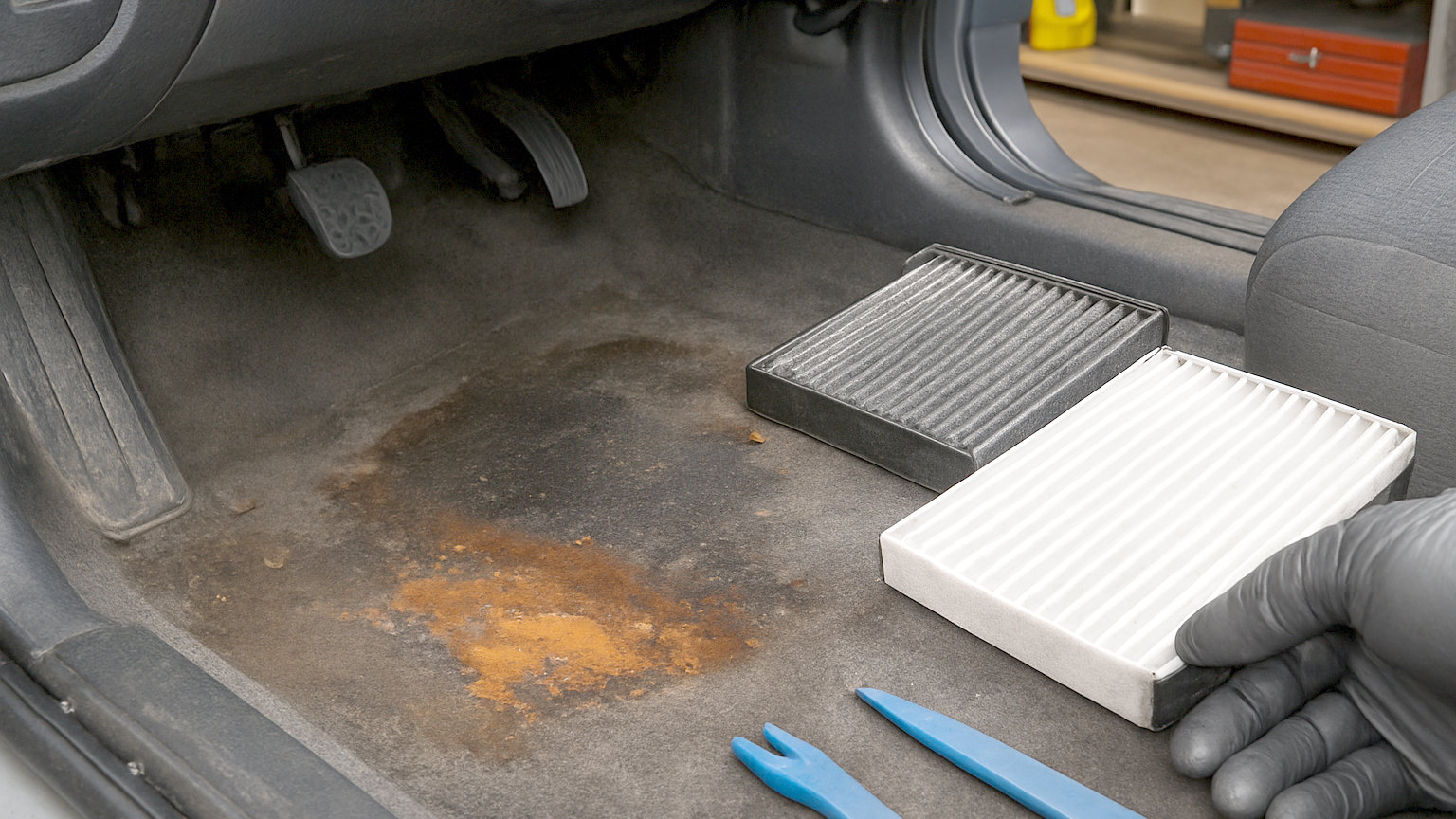
Considerably, and it is the cheapest thing to change. Filters collect damp organic debris and become a growth medium in their own right, and they sit directly in the airflow so anything growing on them is blown straight into the cabin. Replacing one is inexpensive and it should always accompany any attempt to treat a ventilation smell.
How do you prevent it returning?
Fix the leak, dry everything properly including the underlay, replace the cabin filter and treat the evaporator. Then switch the air conditioning off a few minutes before the end of each journey while leaving the fan running, which dries the evaporator before the car is parked. That single habit prevents most recurrence.
Does it affect the car value?
Noticeably. A damp smell is one of the first things a prospective buyer notices and it suggests a leak they will inherit, which is exactly what it is. Resolving it properly before selling is worth doing, and masking it temporarily is both dishonest and easily detected once the car has stood for a day.
What should you do first?
Lift the carpets and check the underlay, look under the spare wheel, and change the cabin filter. Those three steps cost very little and between them they identify where the moisture is in the great majority of cases. Only once you know that is it worth spending anything on treatments.
If everything is dry and the smell persists, the air conditioning evaporator is the remaining suspect, and an antibacterial treatment combined with a new cabin filter is then worth trying.


